 Go Back

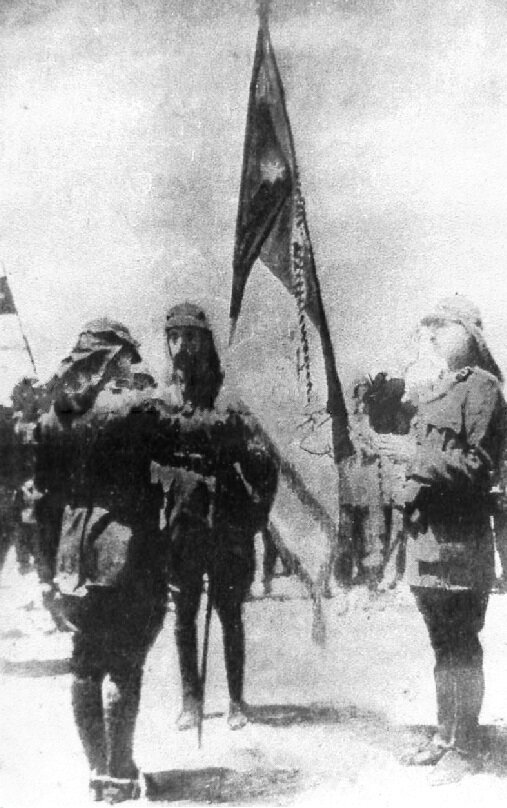
French Mandate Syria and Lebanon. French rule in Syria and Lebanon began in blood. When the Ottoman Empire collapsed, the Arab Kingdom of Syria - proclaimed at Damascus in 1920 under Faisal, the Hashemite leader of the Arab Revolt - claimed the whole of geographical Syria; but at San Remo the Allied powers had already assigned Syria and Lebanon to France as a League of Nations mandate. In July 1920 General Gouraud's French army crushed the Syrian army at Maysalun and occupied Damascus; Faisal went into exile.
France ruled by division: it carved the mandate into statelets - Damascus, Aleppo, the Alawite and Druze states, and the expanded 'Greater Lebanon', proclaimed in 1920 with borders drawn to give the Maronite Christians a viable state - and governed through urban notables, a bureaucracy of French officials, and soldiers recruited disproportionately from the minorities, against the hostility of an Arab nationalist majority that had expected independence after the Ottoman collapse.
The early mandate years were a running contest. France abolished Faisal's institutions, imposed its currency and its advisers, and answered protest with arrests, while Syrian notables carried their case to the League of Nations in Geneva. Resentment smouldered in the countryside, above all in the Druze Jabal in the south, where the great Druze families chafed under the French officers sent to administer them. In Lebanon the new state's communities argued over its shape: many Muslims resented inclusion in a Christian-led Greater Lebanon, while the Maronite patriarchate defended the enlarged borders.
By 1924 the mandate was four years old and firmly in French hands, but its settlement was visibly provisional: the borders France had drawn, the sectarian balance it had codified, and the nationalism it had suppressed were all still in place, and the tensions of the early 1920s - in Damascus, in the Druze Jabal, and between Lebanon's communities - were already gathering toward confrontation.
 Britannica: Conference of San Remo
Britannica: History of Lebanon
 Humanities LibreTexts: Old Empires and New Colonies