 Go Back

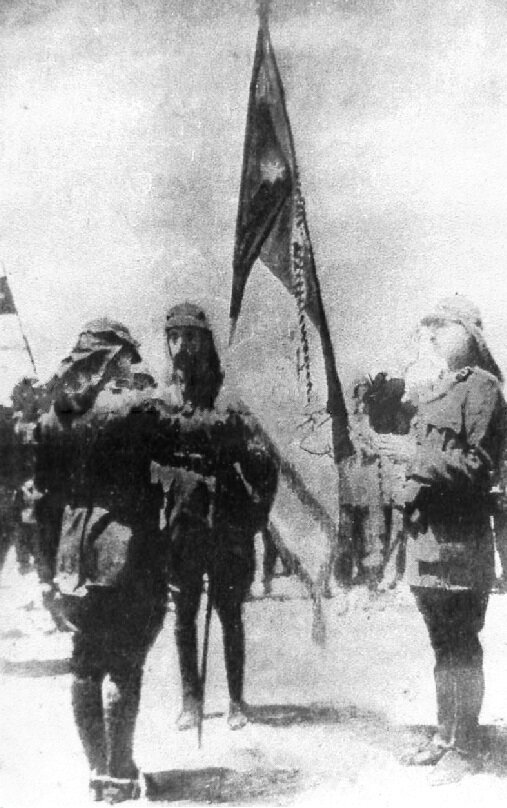
French Mandate Syria and Lebanon. French rule in Syria and Lebanon (1920-1946) began in blood and ended in bloodshed. When the Ottoman Empire collapsed, the Arab Kingdom of Syria - proclaimed at Damascus in 1920 under Faisal, the Hashemite leader of the Arab Revolt - claimed the whole of geographical Syria; but at San Remo the Allied powers had already assigned Syria and Lebanon to France as a League of Nations mandate. In July 1920 General Gouraud's French army crushed the Syrian army at Maysalun and occupied Damascus; Faisal went into exile.
France ruled by division: it carved the mandate into statelets - Damascus, Aleppo, the Alawite and Druze states, and the expanded 'Greater Lebanon', whose borders, drawn in 1920 to give the Maronite Christians a viable state, remain Lebanon's today - and governed through urban notables and minority recruits, against the hostility of the Arab nationalist majority. The Great Syrian Revolt (1925-1927), sparked in the Druze Jabal by Sultan al-Atrash and spreading to Damascus itself, which the French bombarded, cost thousands of lives before it was broken.
Two decades of negotiations for a treaty of independence produced only deadlocks; the Franco-Syrian treaty of 1936 was never ratified in Paris. In the Second World War the mandate passed to Vichy, and in 1941 British and Free French forces conquered Syria and Lebanon - after which France's attempts to reimpose control provoked final crisis: nationalist governments took power in both republics in 1943, and in May 1945 French shelling of Damascus forced British intervention.
The last French troops left in 1946, and Syria and Lebanon took their seats as independent founding members of the United Nations. The mandate left both states its infrastructure, its francophone elite, Lebanon's confessional constitution - and a legacy of bitterness that shadowed Syrian politics for a generation.
 Britannica: Conference of San Remo
Britannica: History of Lebanon
 Humanities LibreTexts: Old Empires and New Colonies