 Go Back

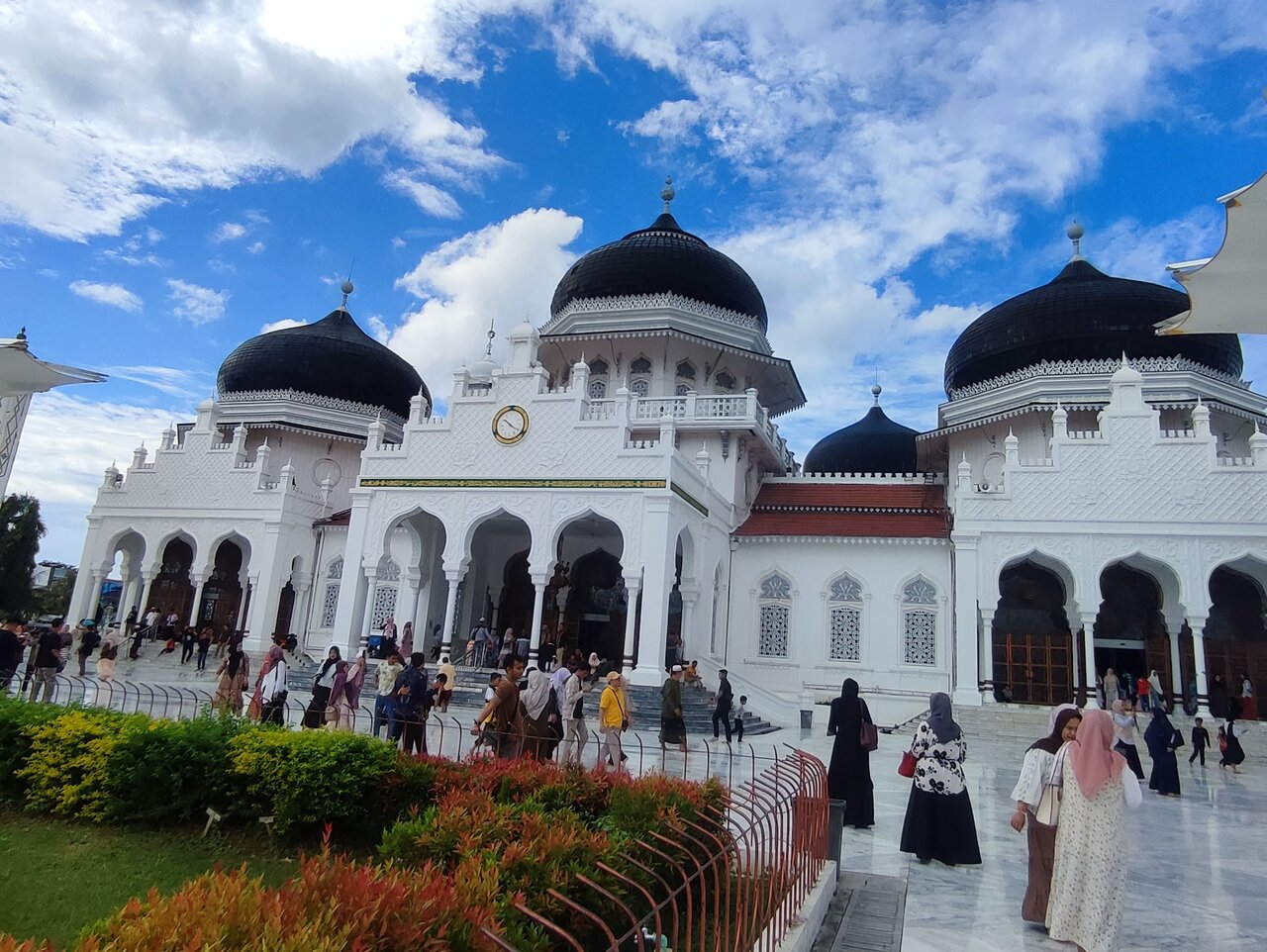
The Aceh Sultanate. The Aceh Sultanate (c. 1496-1903) of northern Sumatra was the greatest Muslim power of the Indonesian archipelago and the fiercest opponent of colonialism in its history. Rising as a pepper port after Malacca's fall, Aceh reached its zenith under Sultan Iskandar Muda (r. 1607-1636), whose fleets and armies dominated both sides of the Straits of Malacca, whose court dazzled foreign envoys, and whose assault on Portuguese Malacca (1629) - 19,000 men, hundreds of ships - failed by a hair.
Aceh's wealth was pepper, and its culture was scholarship: its 17th-century court hosted the great debates of Malay Sufism - the mystics Hamzah Fansuri and Shams al-Din versus the orthodox Nur al-Din al-Raniri - making Aceh 'the verandah of Mecca', the archipelago's gateway to Islam and its premier center of Malay letters. After Iskandar Muda the sultanate declined under four successive queens (1641-1699) and renewed itself in the 19th century as the world's leading pepper exporter.
Its destruction was a generation-long war. When the Dutch, freed by the Anglo-Dutch Treaty of 1824 and 1871 to act, invaded in 1873, Aceh resisted as no Indonesian state ever had: the sultan died of cholera, but the ulama proclaimed holy war - the Aceh War (1873-1903) - and the Dutch conquered the capital repeatedly while the countryside fought on, at a cost of 100,000 lives and most of the Dutch colonial army's strength, until the last sultan's surrender (1903) and the last guerrilla leaders' defeat by 1912-1914.
Aceh's memory of the war never died. Under Dutch rule the ulama who had led the jihad remained the region's real leaders, the pilgrimage ships carried Acehnese grievances to Mecca and back, and tales of the war were retold in every village and surau. The thirty years' resistance that ended the sultanate had made Aceh's modern identity: a land where Islam, pride and defiance were one - 'the verandah of Mecca', conquered but never quite subdued.
 Britannica: Aceh
Britannica: Iskandar Muda
Britannica: Acehnese War