 Go Back

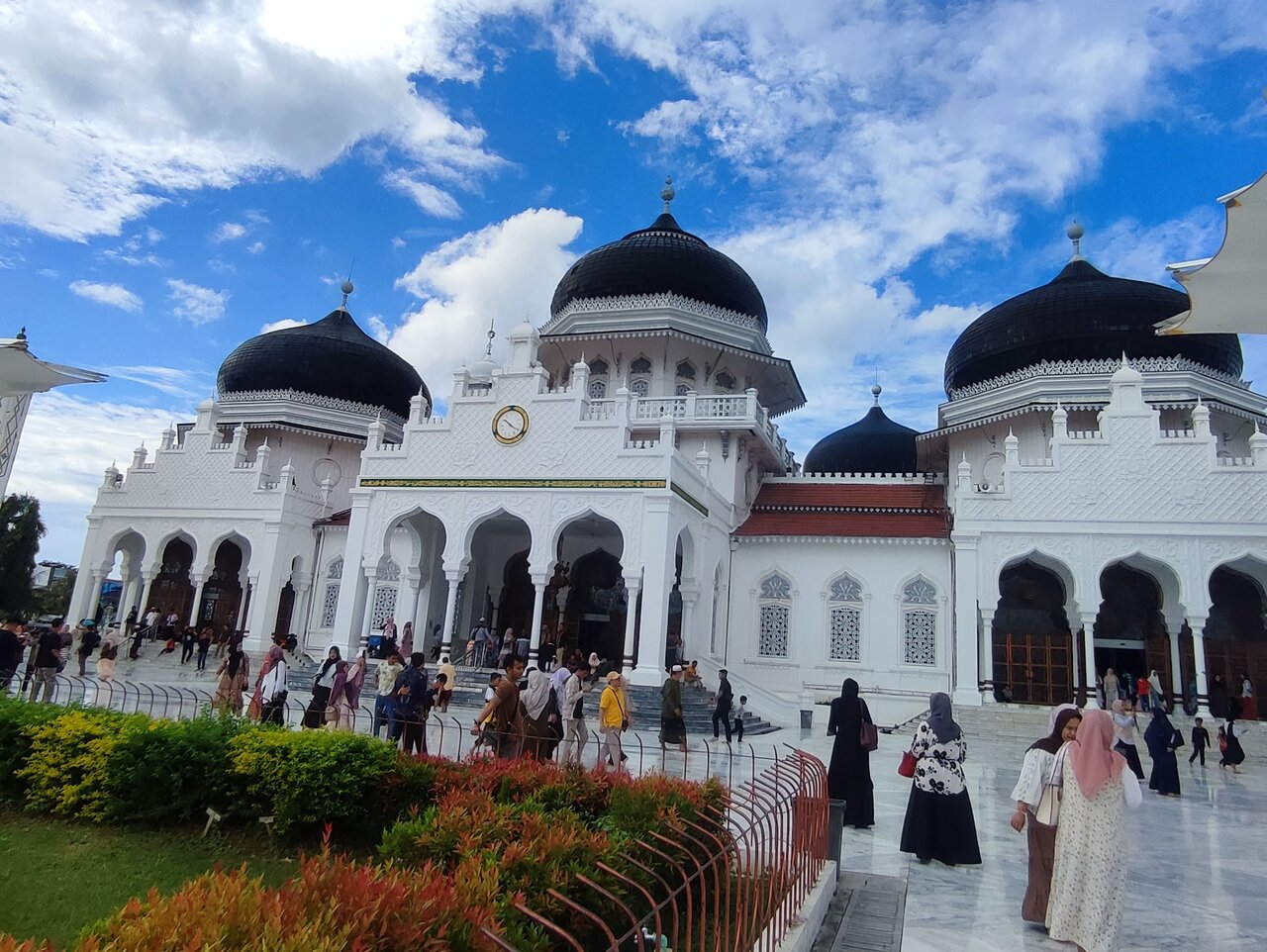
The Aceh Sultanate. The Aceh Sultanate (c. 1496-1903) of northern Sumatra was the greatest Muslim power of the Indonesian archipelago and the fiercest opponent of colonialism in its history. Rising as a pepper port after Malacca's fall, Aceh reached its zenith under Sultan Iskandar Muda (r. 1607-1636), whose fleets and armies dominated both sides of the Straits of Malacca, whose court dazzled foreign envoys, and whose assault on Portuguese Malacca (1629) - 19,000 men, hundreds of ships - failed by a hair.
Aceh's wealth was pepper, and its culture was scholarship: its 17th-century court hosted the great debates of Malay Sufism - the mystics Hamzah Fansuri and Shams al-Din versus the orthodox Nur al-Din al-Raniri - making Aceh 'the verandah of Mecca', the archipelago's gateway to Islam and its premier center of Malay letters. After Iskandar Muda the sultanate declined under four successive queens (1641-1699) and renewed itself in the 19th century as the world's leading pepper exporter.
Its destruction was a generation-long war. When the Dutch, freed by the Anglo-Dutch Treaty of 1824 and 1871 to act, invaded in 1873, Aceh resisted as no Indonesian state ever had: the sultan died of cholera, but the ulama proclaimed holy war - the Aceh War (1873-1903) - and the Dutch conquered the capital repeatedly while the countryside fought on, at a cost of 100,000 lives and most of the Dutch colonial army's strength, until the last sultan's surrender (1903) and the last guerrilla leaders' defeat by 1912-1914.
Aceh's memory of that war never died: it fueled the Darul Islam rebellion (1953-1959), the Free Aceh Movement (GAM, 1976-2005) and its thirty-year insurgency, and finally the autonomy and special Islamic status Aceh won in the 2005 Helsinki peace after the tsunami - a distinct identity, forged in resistance, within Indonesia.
 Britannica: Aceh
Britannica: Iskandar Muda
Britannica: Acehnese War