 Go Back

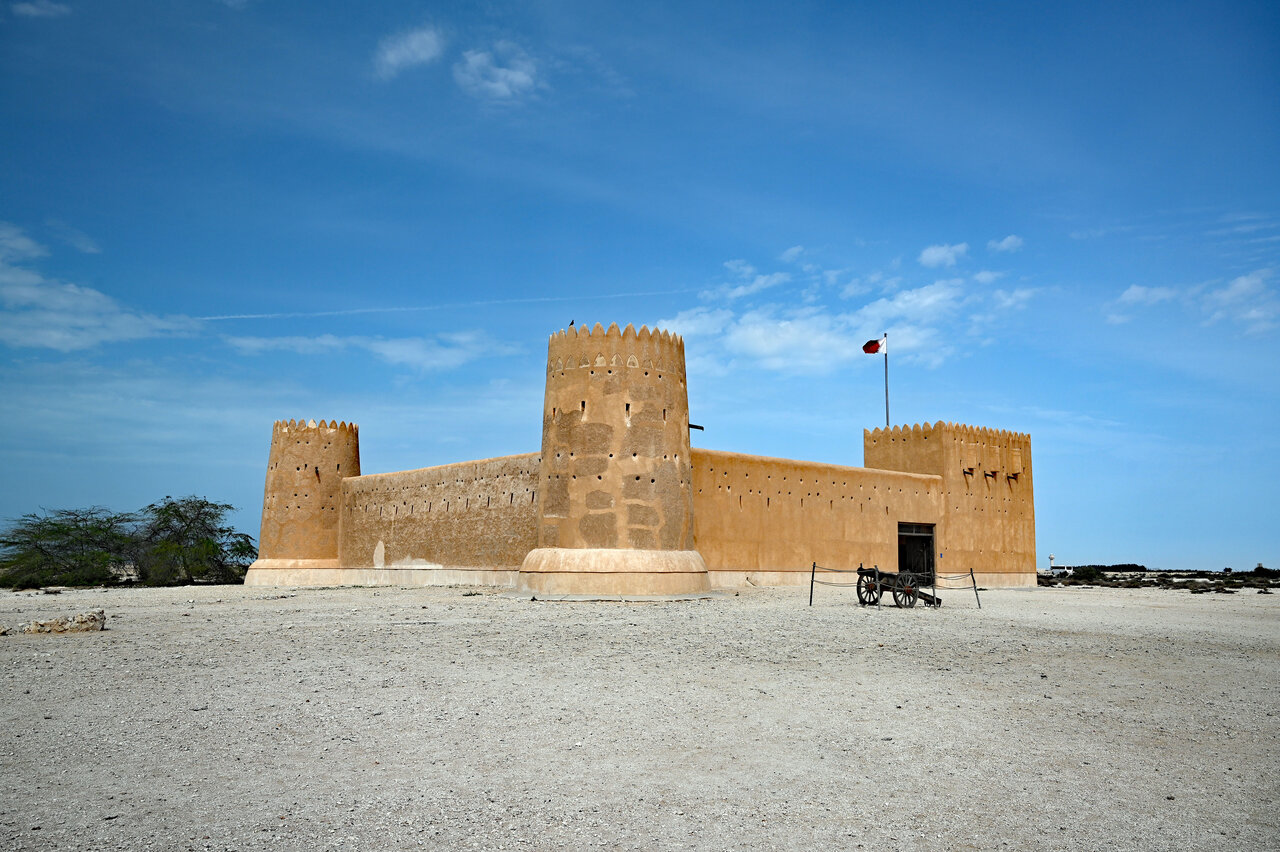
The Al Thani and the Al Khalifa. The Al Thani of Qatar and the Al Khalifa of Bahrain - the ruling houses of the two small Gulf states - both descend from the great 18th-century migrations of Arab tribes from Najd to the Gulf coast. The Al Khalifa, leading clans of the Bani Utub confederation, took Bahrain from its Persian garrison in 1783, ruling from Zubarah (on the Qatar coast, now a UNESCO site) before establishing themselves in Bahrain itself; the Al Thani, of the Tamim tribe, emerged as leading pearl merchants and sheikhs of Doha in the mid-19th century.
Both houses rose under the Pax Britannica: Bahrain signed its first treaties with Britain in 1820 and became the Gulf's pearling and commercial hub, seat of Britain's political resident in the Gulf; Qatar's founder-sheikh Jassim bin Muhammad Al Thani asserted independence from both Bahrain and the Ottomans - defeating an Ottoman force at al-Wajbah in 1893 - before accepting an Ottoman garrison and then British protection in 1916.
Both houses ruled maritime societies built on pearls. Each season Bahrain's and Qatar's fleets put out to the oyster banks - thousands of divers bound by debt to the merchants who financed them - and the pearling season fixed the calendar of the whole coast. In Bahrain the Al Khalifa divided the islands' revenues and palm groves among the ruling family, while British agents pressed reforms the notables resisted; in Qatar Sheikh Abdullah bin Jassim, who succeeded his father in 1913, kept a wary balance between the British at sea and the Saudis on his landward border.
By the early 1920s both sheikhdoms stood at the end of the pearling age's long prosperity: Bahrain the Gulf's established port of call, Qatar quieter under its cautious sheikh, each bound by exclusive treaties to Britain, each still ruled by the merchant houses that had won them in the eighteenth century.
 Britannica: Qatar
Britannica: Bahrain
Britannica: Thani dynasty