 Go Back

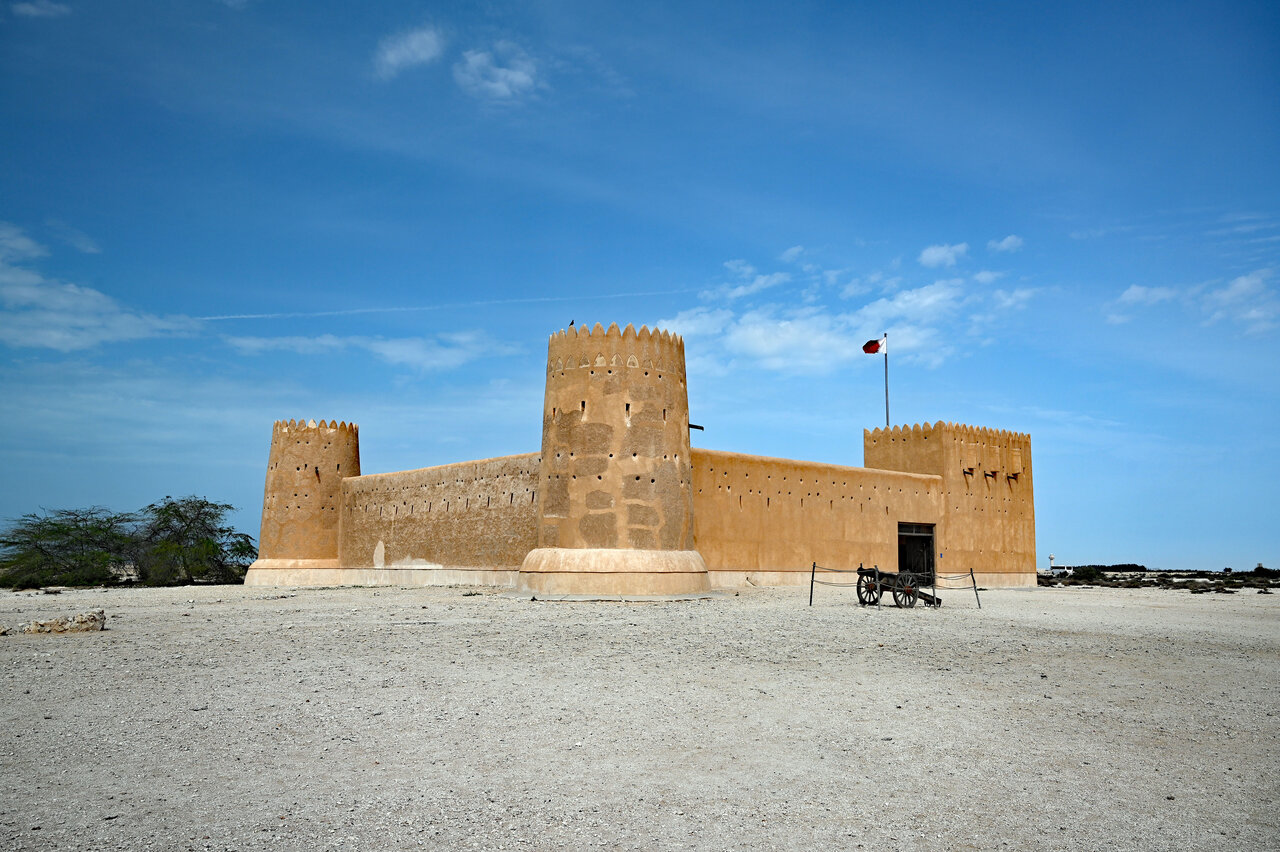
The Al Thani and the Al Khalifa. The Al Thani of Qatar and the Al Khalifa of Bahrain - the ruling houses of the two small Gulf states - both descend from the great 18th-century migrations of Arab tribes from Najd to the Gulf coast. The Al Khalifa, leading clans of the Bani Utub confederation, took Bahrain from its Persian garrison in 1783, ruling from Zubarah (on the Qatar coast, now a UNESCO site) before establishing themselves in Bahrain itself; the Al Thani, of the Tamim tribe, emerged as leading pearl merchants and sheikhs of Doha in the mid-19th century.
Both houses rose under the Pax Britannica: Bahrain signed its first treaties with Britain in 1820 and became the Gulf's pearling and commercial hub - where Britain's political resident and, from 1932, the Gulf's first oil strike and its refinery were based; Qatar's founder-sheikh Jassim bin Muhammad Al Thani asserted independence from both Bahrain and the Ottomans - defeating an Ottoman force at al-Wajbah (1893) - before accepting Ottoman garrison (1872-1915) and then British protection (1916).
Oil transformed both. Bahrain's modest reserves financed the Gulf's first modern schools, hospitals and infrastructure under the long reigns of Salman (1942-1961) and Isa (1961-1999); Qatar's vast oil and then North Field gas reserves made it, under Khalifa (1972-1995) and Hamad (1995-2013), the world's richest country per capita - home of Al Jazeera (1996), host of the 2022 World Cup, and a maverick middle power.
Both houses reign today - King Hamad Al Khalifa over Bahrain (independent 1971, kingdom since 2002) and Emir Tamim Al Thani over Qatar (independent 1971) - the Najdi merchants-turned-monarchs of the pearling coast now ruling two of the wealthiest and most assertive small states in the world.
 Britannica: Qatar
Britannica: Bahrain
Britannica: Thani dynasty