 Go Back

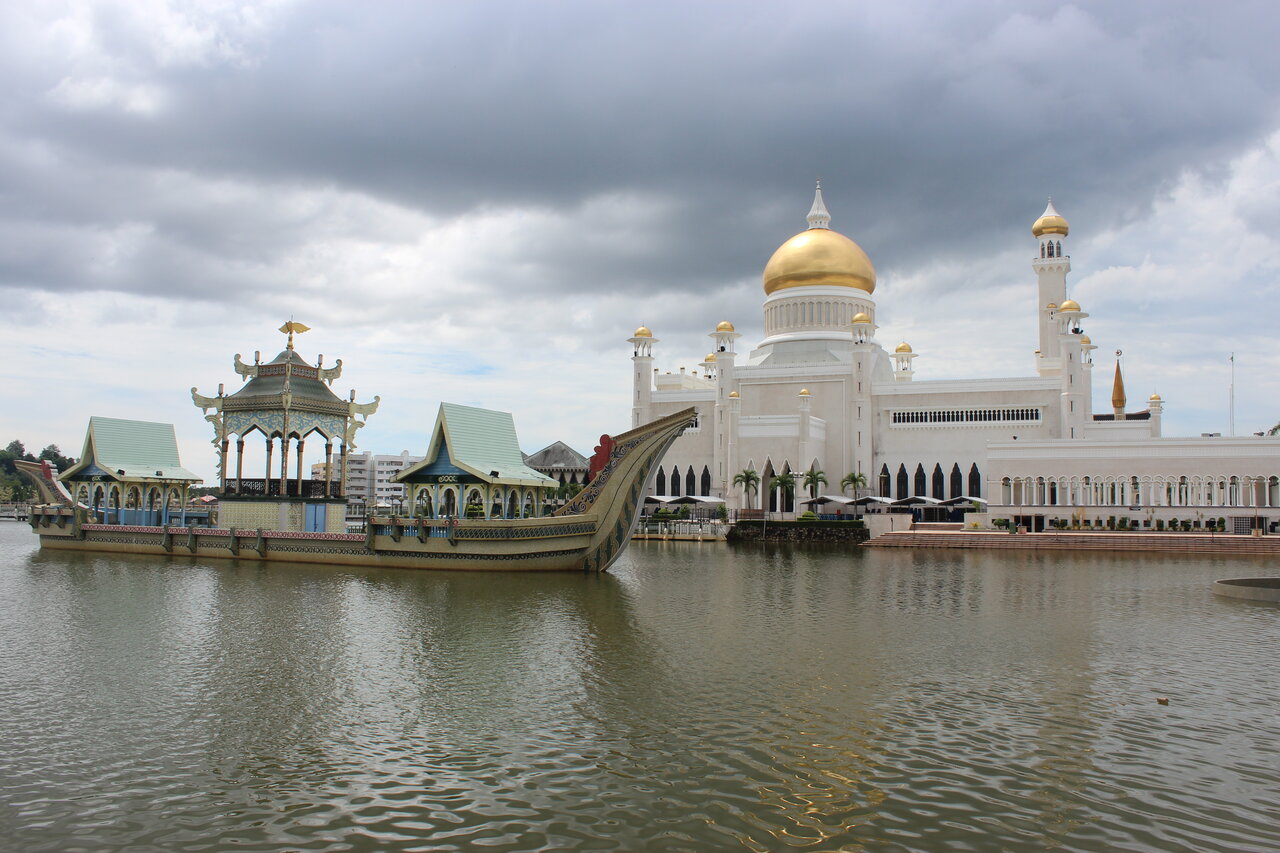
The Sultanate of Brunei. The Sultanate of Brunei (1363-) is among the world's oldest continuously reigning monarchies. Islamized under its first Muslim sultan, Muhammad Shah, Brunei rose in the 15th-16th centuries - after the fall of Malacca - into the thalassocracy of Borneo: under the fifth sultan, Bolkiah, its fleets and vassals ranged from Manila and Sulu to Borneo's whole coast, and Magellan's chronicler Pigafetta (1521) marveled at its water-city of 25,000 hearths, the court's elephants and the sultan's gold.
Brunei's long decline began with the Castilian War (1578), when Spain briefly seized and burned the capital, and continued through civil wars and the loss of Sulu and the Borneo coasts. The 19th century brought the fatal amputations: Sarawak was ceded to the British adventurer James Brooke (1841-1842), founding the 'White Rajah' dynasty that ate Brunei's western lands piece by piece; Sabah passed to the British North Borneo Company (1881); and in 1888 the rump sultanate became a British protectorate.
By 1906, when a British Resident took control of the administration, Brunei was nearly gone - its remaining lands split into two enclaves by the loss of the Limbang valley to Sarawak in 1890. The Residency governed in the sultan's name: it reorganized the finances, built roads and a land office, and tidied the succession, while the sultan - from 1918 the young Ahmad Tajuddin - reigned over a protectorate that was a fragment of the empire Bolkiah had ruled.
Yet the protectorate preserved what it diminished. Surrounded by the lands taken by the Brookes and the North Borneo Company, the rump sultanate survived every scheme to partition or absorb it, and the monarchy that had crowned sultans since the fourteenth century passed intact into the twentieth - the oldest reigning house in Southeast Asia, guarded, impoverished, and enduring.
 Britannica: Brunei
Britannica: Sarawak
Britannica: Borneo