 Go Back

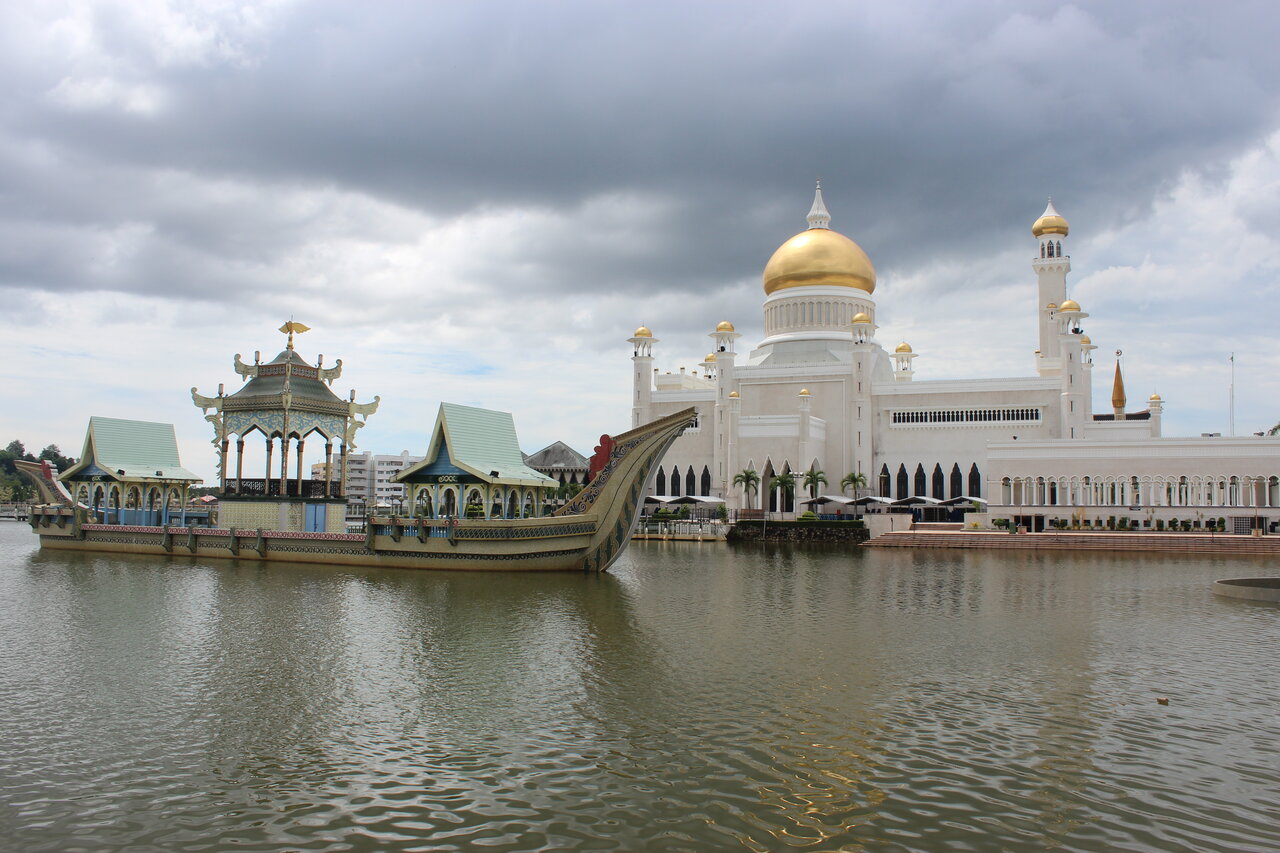
The Sultanate of Brunei. The Sultanate of Brunei (1363-) is among the world's oldest continuously reigning monarchies. Islamized under its first Muslim sultan, Muhammad Shah, Brunei rose in the 15th-16th centuries - after the fall of Malacca - into the thalassocracy of Borneo: under the fifth sultan, Bolkiah, its fleets and vassals ranged from Manila and Sulu to Borneo's whole coast, and Magellan's chronicler Pigafetta (1521) marveled at its water-city of 25,000 hearths, the court's elephants and the sultan's gold.
Brunei's long decline began with the Castilian War (1578), when Spain briefly seized and burned the capital, and continued through civil wars and the loss of Sulu and the Borneo coasts. The 19th century brought the fatal amputations: Sarawak was ceded to the British adventurer James Brooke (1841-1842), founding the 'White Rajah' dynasty that ate Brunei's western lands piece by piece; Sabah passed to the British North Borneo Company (1881); and in 1888 the rump sultanate became a British protectorate.
By 1906, when a British Resident took control of the administration, Brunei was nearly gone - its remaining lands split into two enclaves. Then, in 1929, oil was found at Seria, and everything changed: revenues from oil and later liquefied natural gas made the tiny protectorate rich, funded its water-village mosques and modern capital, and preserved the sultanate when its neighbors entered Malaysia - Brunei alone declined, resuming full independence on 1 January 1984 under Sultan Hassanal Bolkiah.
Hassanal Bolkiah, 29th of his line, reigns today as an absolute monarch - for decades the world's richest head of state - over a Malay Islamic Monarchy whose oil wealth, Sharia criminal code (phased in 2014-2019) and gilded Omar Ali Saifuddien Mosque continue a sultanate older than most European dynasties.
 Britannica: Brunei
Britannica: Sarawak
Britannica: Borneo