 Go Back

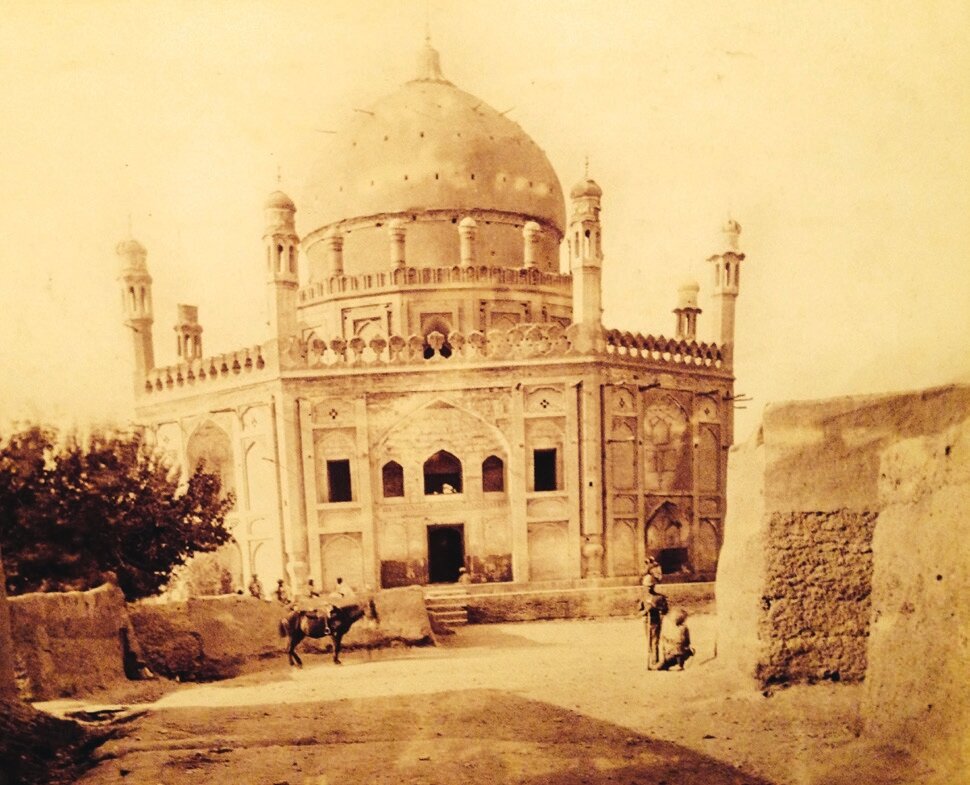
The Durrani Empire. The Durrani Empire (1747-1823) created Afghanistan. When the Persian conqueror Nader Shah was assassinated in 1747, his Afghan cavalry commander Ahmad Khan Abdali - a 25-year-old chief of the Sadozai clan - was chosen king by a jirga of the Afghan tribes at Kandahar, taking the title Durr-i-Durran ('Pearl of Pearls'), from which his Durrani dynasty and the renamed Durrani (formerly Abdali) tribal confederacy took their names.
Ahmad Shah Durrani built in twenty-five years what his founder-kingdom became: from Kandahar he took Kabul, Herat and the Afghan highlands, then campaigned ceaselessly - into Khorasan, Central Asia, Kashmir, and above all India, which he invaded nine times. His climactic victory came at the Third Battle of Panipat (1761), where his Afghan and allied Muslim forces annihilated the Maratha army - one of the largest battles of the 18th century - halting Maratha expansion and reshaping India's future, though he could not hold the Gangetic plain himself.
Ahmad Shah was more than a raider: a poet in Pashto and Persian, he welded the fractious Pashtun tribes into a state, fixed its capitals at Kandahar and Kabul, and is honored by Afghans as Ahmad Shah Baba, the father of the nation. At his death in 1772 the empire stretched from the Oxus to the Arabian Sea and from Persia to the Indus.
His successors squandered it in fratricidal wars between the Sadozai and Barakzai clans, losing Punjab and Kashmir to the Sikhs and Sindh and Baluchistan to local rulers; in 1823 the last Sadozai shah lost Kabul to the Barakzai Dost Muhammad Khan, and the empire contracted to its Afghan core - but the idea of Afghanistan, as a Durrani state between Persia and India, survived into the modern nation.
 Britannica: Ahmad Shah Durrani
 Encyclopaedia Iranica: Dorrani (Durrani)
Encyclopaedia Iranica: Afghanistan: Political History