 Go Back

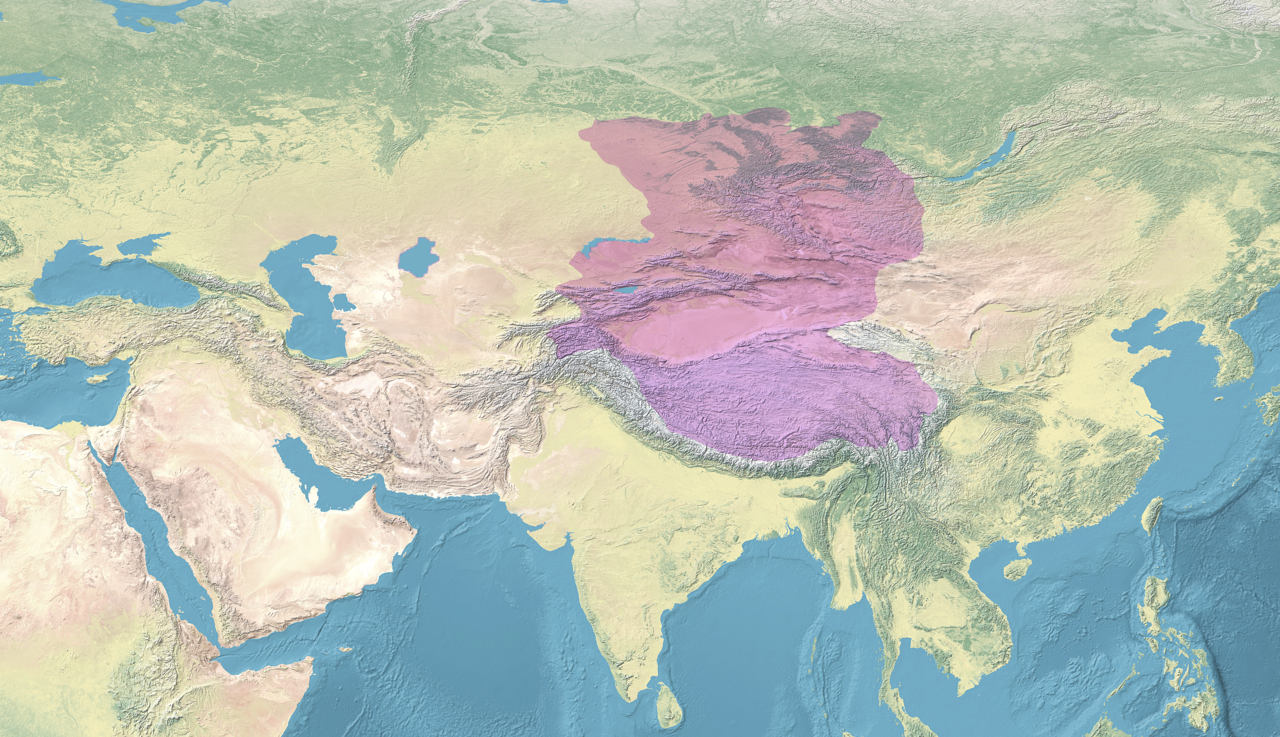
The Dzungar Khanate. The Dzungar Khanate (1634-1758) was the last great nomadic empire of the steppe - the state of the Oirat, the western Mongols, who from their homeland in Dzungaria (northern Xinjiang) built a realm stretching from southern Siberia to Tibet. Tibetan Buddhism was its faith, the horse its power, and for a century it stood as the Qing dynasty's most dangerous rival for the mastery of Inner Asia.
The Oirats united in the Junggar Basin around 1620, and the khanate took shape under Erdeni Batur. Its greatest khans were conquerors: Galdan, who received the title Boshugtu Khan from the Dalai Lama in 1678, conquered the Tarim Basin and crushed the Khalkha Mongols before the Qing defeated him and stripped him of Outer Mongolia in 1696. His successor Tsewang Rabtan went further - in 1717 Dzungar cavalry seized Lhasa itself, holding Tibet until the Qing drove them out in 1720. Under Galdan Tseren (r. 1727-1745) the khanate's armies ranged as far west as Tashkent and the Fergana Valley.
The end came from within. After Galdan Tseren's death the khanate tore itself apart in civil war - and the Qing emperor Qianlong saw his chance. Between 1755 and 1758 Qing armies conquered Dzungaria and, in a campaign of annihilation remembered as the Dzungar genocide, wiped out the Dzungar people - a whole nation erased from its homeland.
The destruction of the Dzungars redrew the map of Asia: it opened the way to the Qing conquest of Mongolia and Tibet, and created 'Xinjiang' - the 'New Frontier' - as a province of China on the emptied land. The last nomadic empire of the steppe had fallen, and with it ended the age when horsemen could challenge empires.
 Britannica: Dzungar
 BBC: Overview and expansion of the Qing dynasty - The Qing dynasty - KS3 History - homework help for year 7, 8 and 9. - BBC Bitesize
 Encyclopaedia Iranica: CHINESE TURKESTAN vi. Iranian Groups in Sinkiang since the 1750s
 Wikipedia: Dzungar Khanate