 Go Back

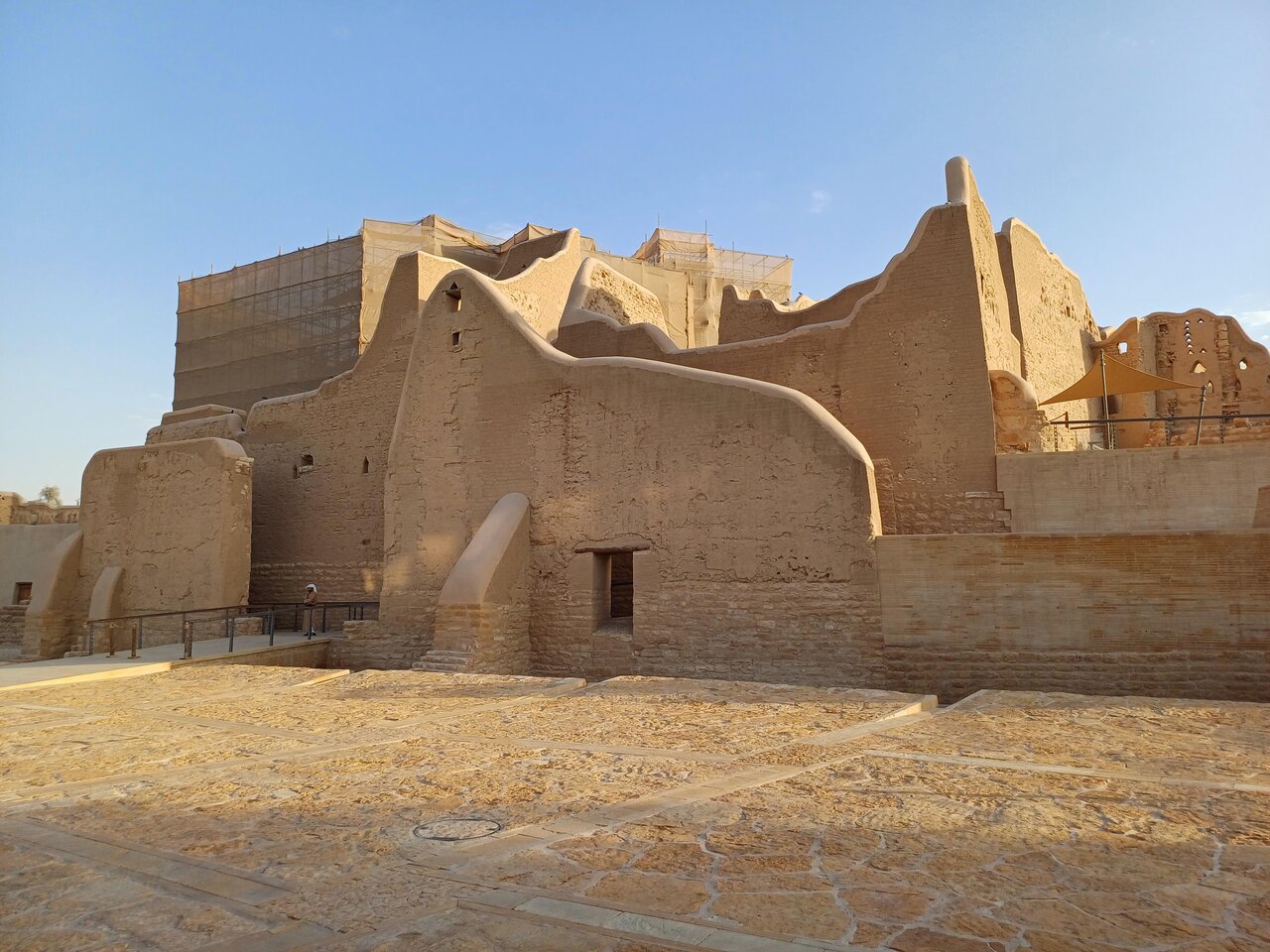
The First and Second Saudi States. The First Saudi State (1744-1818) was born of an alliance that still shapes Arabia: in 1744 Muhammad ibn Saud, emir of the oasis town of Diriyah, joined his sword to the religious mission of Muhammad ibn Abd al-Wahhab, whose austere call to pure monotheism condemned the veneration of saints, tombs and trees sweeping the peninsula. Saudis supplied the army; the preacher supplied the creed; and in two generations their state conquered most of Arabia.
From Diriyah, the Saudi-Wahhabi forces subdued Najd, then broke the power of the sharifs: they took al-Ahsa, raided into Ottoman Iraq - sacking Karbala in 1802 and shocking the Muslim world - and seized Mecca (1803) and Medina (1804), closing the holy cities to the pilgrimage caravans and purging their shrines. The Ottoman sultan, unable to answer from Baghdad, unleashed Muhammad Ali of Egypt, whose modernized army under his son Ibrahim Pasha fought its way into Najd and destroyed Diriyah in 1818; the first emir, Abdullah, was sent to Istanbul and beheaded.
Within years the Saudi house rose again: Turki ibn Abdullah re-established the emirate at Riyadh (1824), and the Second Saudi State (1824-1891) ruled Najd for two generations - notably under Turki's son Faisal, whose long reign reasserted Saudi power from the Gulf to the Rub al-Khali - before dynastic feuds after Faisal's death let the rival Rashidi emirs of Hail take Riyadh (1891) and drive the Sauds into exile in Kuwait.
The exile was brief: in 1902 Abd al-Aziz ibn Saud retook Riyadh in a famous night raid, founding the Third Saudi State that became the modern Kingdom of Saudi Arabia. Diriyah's ruins - now restored as a UNESCO site - and the enduring Saudi-Wahhabi compact remain the foundation stones of the Saudi state.
 Britannica: Saudi Arabia
Britannica: Saud dynasty
Britannica: Najd