 Go Back

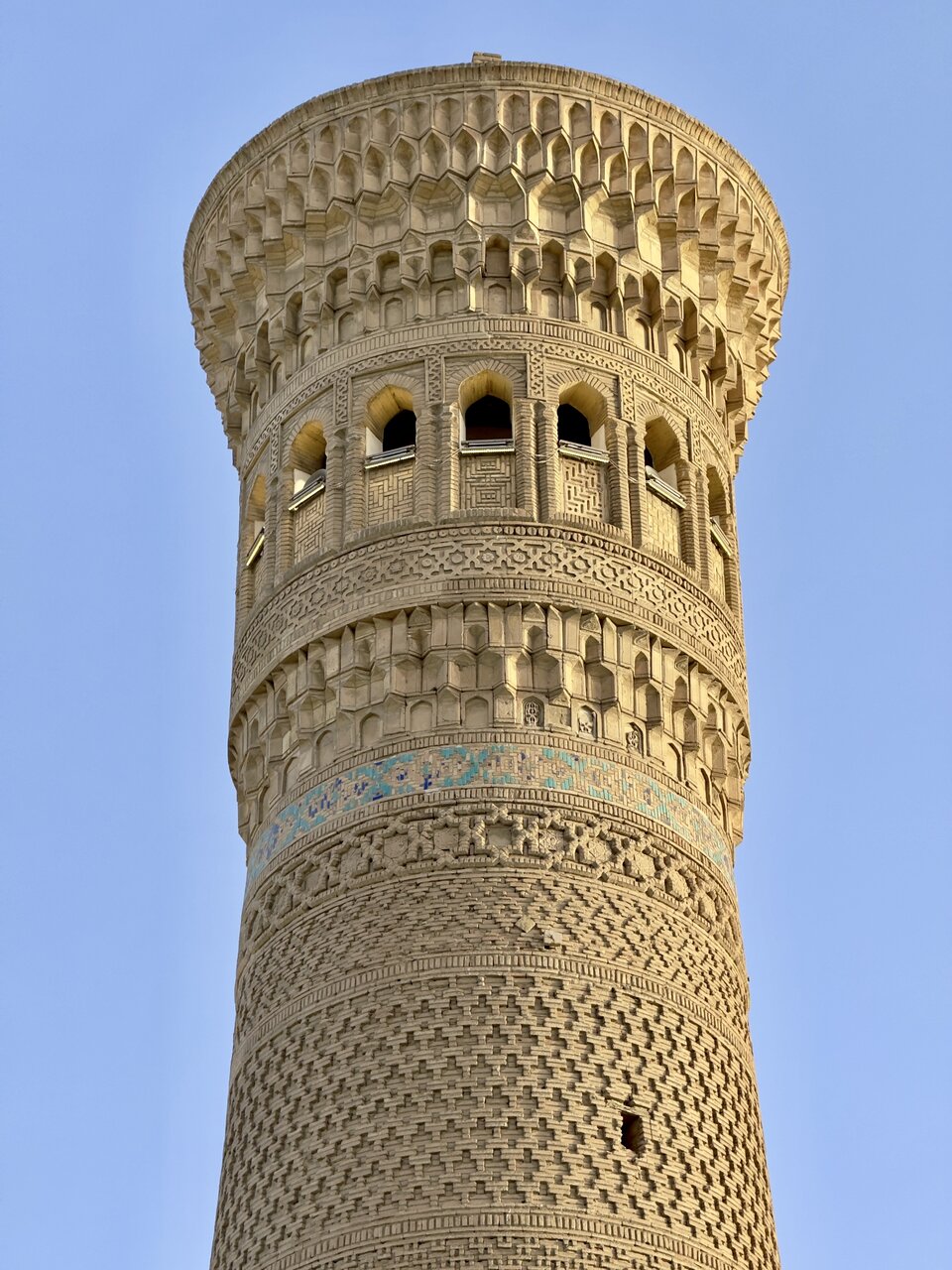
The Khanate of Bukhara. The Khanate of Bukhara (1500-1785) was the Uzbek state that inherited Timur's Central Asia. When Muhammad Shaybani Khan, a Chinggisid of the Golden Horde line, swept down from the steppe in 1500, he took Samarkand and Bukhara from the last Timurids and drove the young Babur toward India; his Uzbeks - tribal cavalry organized around oasis cities - made Bukhara their capital and Transoxiana an Uzbek land for four centuries.
Under the early Shaybanids - above all Abdullah Khan II (r. 1583-1598), the last great builder of Uzbek power, who reunified the khanate, campaigned from Khorasan to the steppe, and raised Bukhara's grand architectural ensembles - the khanate controlled the Silk Road's heartland: Samarkand, Bukhara, Tashkent, Balkh and the Ferghana valley. Bukhara became 'the Noble, the Dome of Islam', a city of over a hundred madrasas, where the Naqshbandi Sufi order shaped public life and Persian letters flourished beside Turkic rule.
The 17th-18th centuries under the Janid (Ashtarkhanid) dynasty brought slow decline: the Silk Road trade drained to the sea routes, the khanate fractured against Khiva and Kokand, nomad raids and succession wars multiplied, and the Persian conqueror Nader Shah broke Bukhara's power in 1740, imposing tribute and carrying off its treasures. In the chaos, the Uzbek Manghit clan rose as ataliqs (kingmakers), ruling through puppet khans before taking the throne themselves in 1785 as emirs.
The khanate's legacy is Bukhara itself: its madrasas, the Kalyan complex and the trading domes date overwhelmingly from these centuries, and its world - Uzbek khans, Persian culture, Sunni orthodoxy and Sufi orders - defined Central Asian identity until the Russian conquest.
 Britannica: Bukhara
Britannica: Uzbek khanate
 Encyclopaedia Iranica: Bukhara after the Mongol Invasion