 Go Back

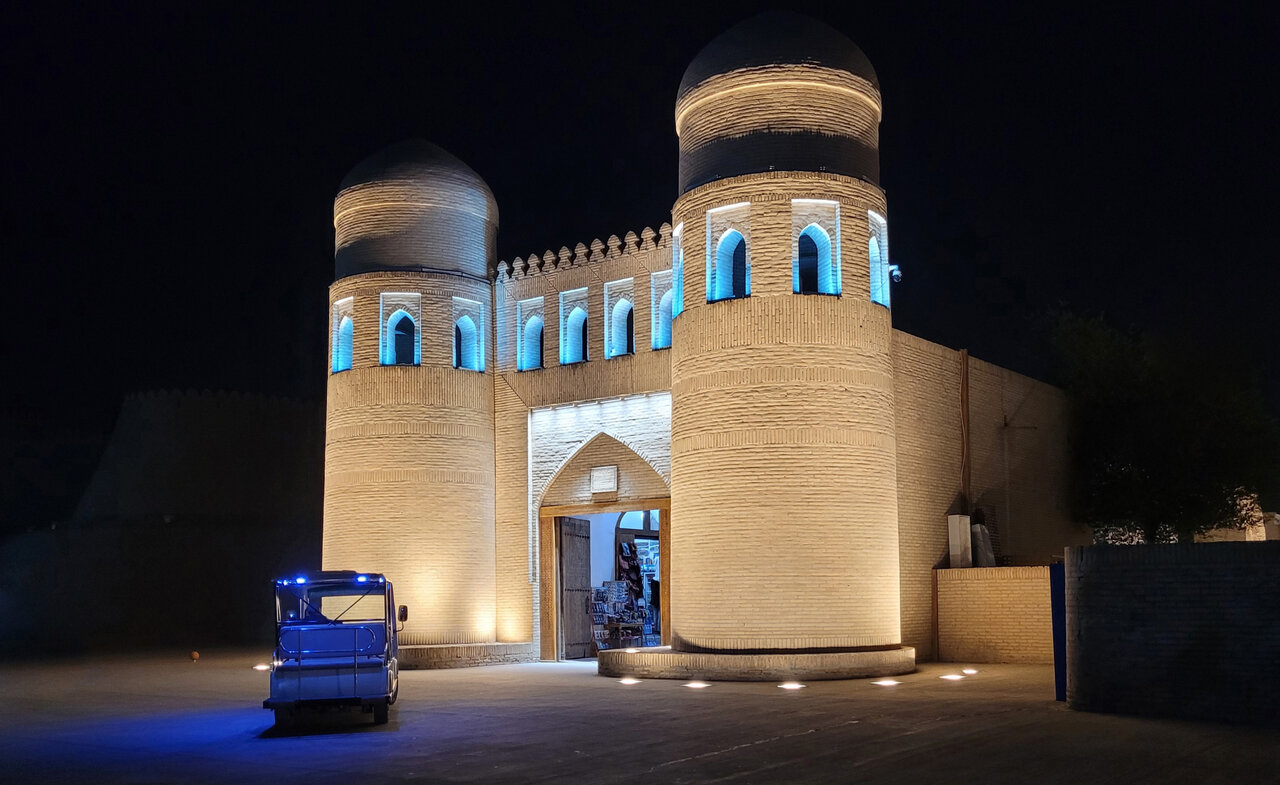
The Khanate of Khiva. The Khanate of Khiva (1511-1920) ruled Khwarezm, the oasis at the Amu Darya's delta, for four centuries under Uzbek dynasties of Chinggisid descent. Founded when the Uzbek Ilbars Khan seized Khwarezm from the Safavids, the khanate lived from the oasis's canals and from the slave trade - its raiders carried off Persian, Russian and Kazakh captives for the markets of Khiva and Bukhara - a trade that drew Russian and Persian punishment expeditions for three hundred years.
Khiva's 19th-century khans of the Qungrat dynasty presided over a late flowering: Muhammad Rahim Khan I (r. 1806-1825) subdued the steppe tribes and patronized letters, and under his successors Khiva became a center of Chagatai-Turkic literature and historiography - the court poets and historians Munis and Agahi chronicled the khanate itself - while building the city that survives today: Itchan Kala, Khiva's walled inner city with its blue-tiled Kalta Minor minaret, is a UNESCO site and the best-preserved royal city of Central Asia.
Russia had failed once - the disastrous 1839-1840 winter expedition of General Perovsky lost most of its men and camels to the steppe - but by the 1860s-70s the conquest of Turkestan made Khiva's fall inevitable: in 1873 General Kaufmann's converging columns crossed the desert, took the city, and imposed a protectorate; the khan kept his throne as a Russian vassal, and the slave markets were closed at last.
The protectorate staggered on until the Russian Revolution: in 1920 the Red Army deposed the last khan, and the Khorezm People's Soviet Republic - absorbed into the USSR in 1924 - divided the old khanate between Uzbekistan and Turkmenistan. Khiva's Itchan Kala preserves the khanate's whole world in sun-baked mud-brick and tile.
 Britannica: Khiva
 Encyclopaedia Iranica: Khiva
Encyclopaedia Iranica: Abu'l-Ghazi Bahador Khan