 Go Back

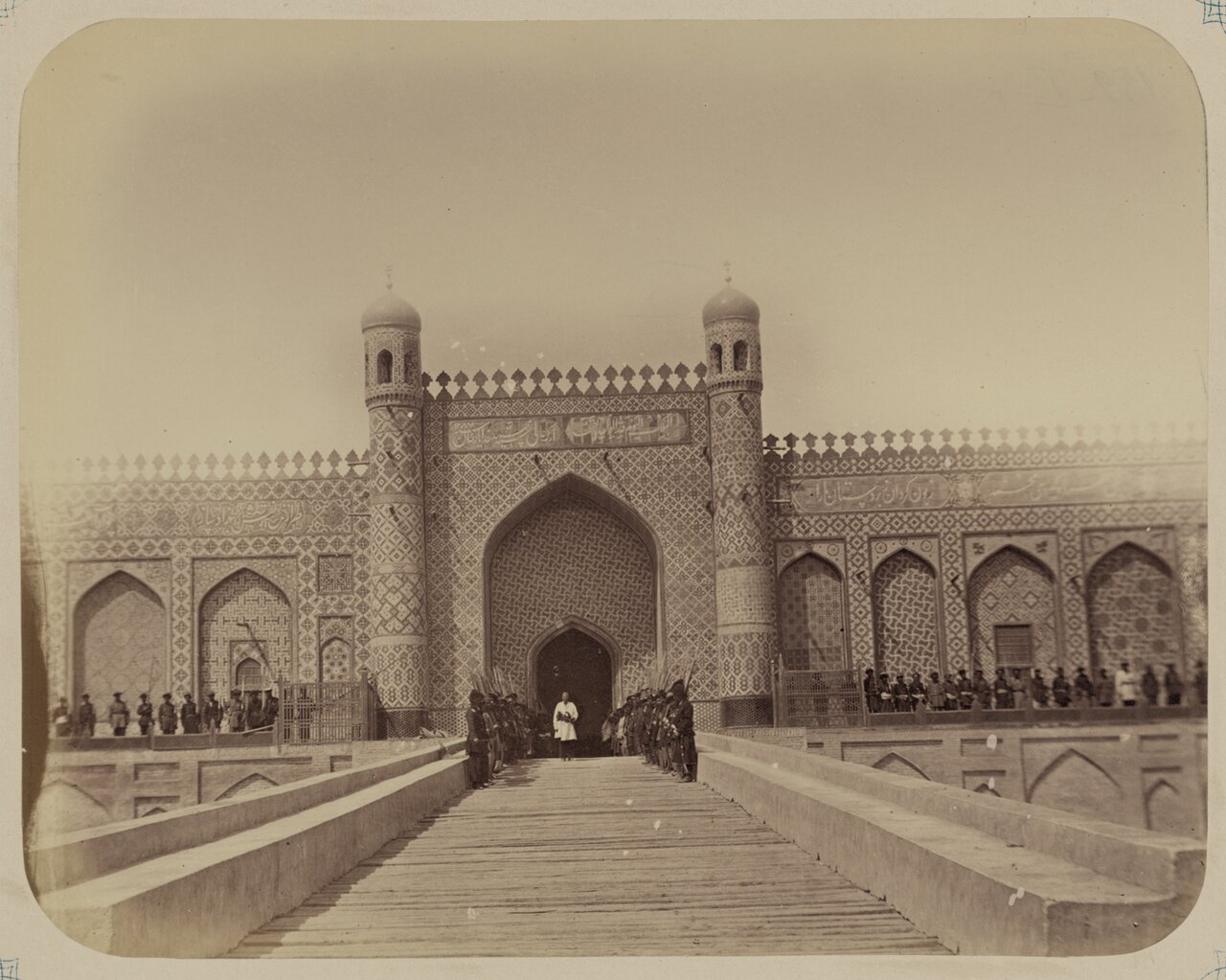
The Khanate of Kokand. The Khanate of Kokand (1709-1876) was the youngest, most dynamic, and most expansionist of Central Asia's Uzbek khanates, ruling the rich Ferghana Valley. Founded by Shah Rukh of the Ming tribe when Bukhara's hold on Ferghana slipped, Kokand rose in the early 19th century under khans like Alim and Omar Khan and the poet-king Umar's widow Nadira, building an empire from Tashkent to the Pamirs on the valley's cotton, silk, horses and the caravan trade between Russia, Kashgar and India.
Kokand's khans were builders and patrons: Omar Khan's court drew poets and chroniclers; the khans raised the great madrasas and palaces of Kokand city and forts across the steppe; and their state was famously cosmopolitan - Uzbek rulers, Tajik clerks and merchants, Kyrgyz and Kazakh cavalry, and a stream of envoys, spies and travelers from Russia, Britain (the Great Game ran through Kokand) and China.
But Kokand was chronically unstable - palace coups, wars with Bukhara, and revolts of the Kyrgyz nomads - and Russia was coming. After taking Tashkent (1865), Russia reduced the khanate to a protectorate (1868), and when the unpopular Khudoyar Khan's exactions sparked the great Ferghana uprising of 1875, Russia used the chaos to annex the khanate outright in 1876, making Ferghana a province of Turkestan. The last resistance flickered as a jihad under the pretender Pulat Khan.
Kokand's legacy is Ferghana itself: the valley it organized remains Central Asia's demographic and agricultural heartland - divided in Soviet times among Uzbekistan, Kyrgyzstan and Tajikistan - and the khanate's memory fueled the 1898 Andijan uprising and later Central Asian unrest. Its khans' palace, the Khudoyar Khan Palace, still stands in Kokand.
 Britannica: Kokand
 Encyclopaedia Iranica: Kokand Khanate
Encyclopaedia Iranica: Central Asia in the 18th-19th Centuries