 Go Back

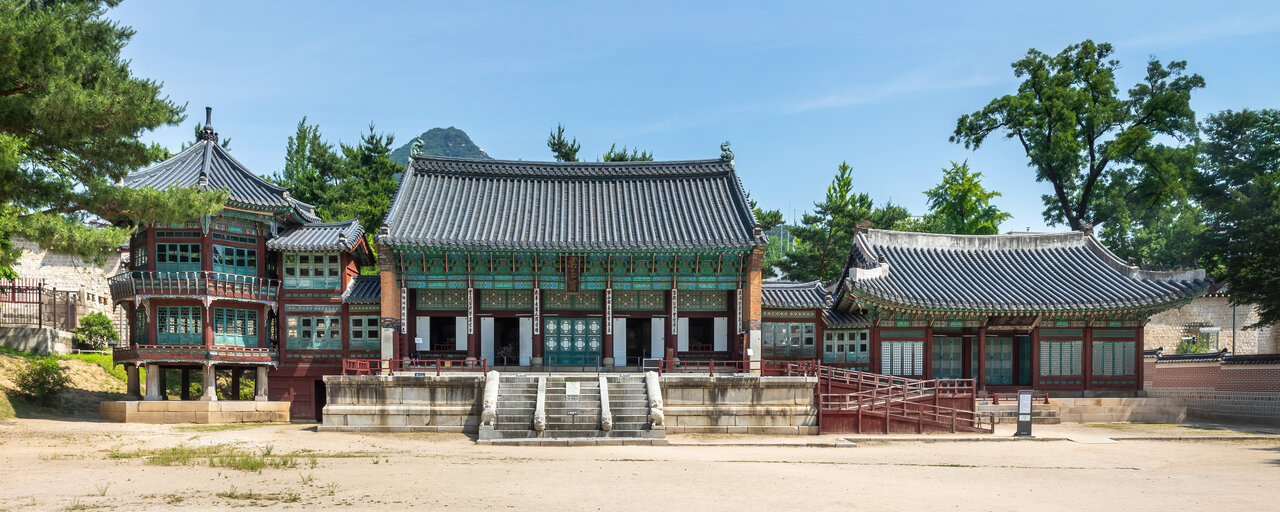
The Korean Empire and the Protectorate. The Korean Empire (1897-1910) was Joseon Korea's last, doomed attempt to save itself by proclaiming empire. After the Sino-Japanese War (1894-1895) broke China's ancient suzerainty, King Gojong - fleeing Japanese intimidation after the Japanese murder of his queen, Min, in 1895 - took refuge in the Russian legation, then in 1897 proclaimed himself emperor (Gwangmu) of the Great Han Empire, asserting full independence and launching the Gwangmu Reform: modern ministries, a small modern army and navy, tramways and telephones in Seoul, land survey, and the Independence Club's brief flowering of civil society.
Korea's tragedy was geography: it stood at the center of every great power's plans. Russia and Japan contested the peninsula until the Russo-Japanese War settled it - Japan's victory (1905) and the Anglo-Japanese and Taft-Katsura understandings left Korea alone. In November 1905, with troops around the palace, Ito Hirobumi forced the Eulsa Protectorate Treaty on Korea; Gojong's secret appeal to the Hague Peace Conference (1907) was dismissed, and Japan forced his abdication in favor of his feeble son Sunjong.
Resistance was fierce and doomed: the Righteous Armies (uibyeong) - Confucian scholars, soldiers and peasants - fought a nationwide guerrilla war (1905-1910) at terrible cost; Ito himself was assassinated by the Korean patriot An Jung-geun at Harbin (1909). In August 1910 Japan annexed Korea outright, extinguishing a kingdom that had ruled the peninsula since 1392.
The thirteen years of empire are remembered as Korea's missed moment: reform too late, diplomacy outmatched, resistance heroic. The annexation began thirty-five years of colonial rule whose wounds - over collaboration, memory and division - still define both Koreas' relationship with Japan and with each other.
 Britannica: Korea
 Under Japanese Rule
Britannica: Gojong