 Go Back

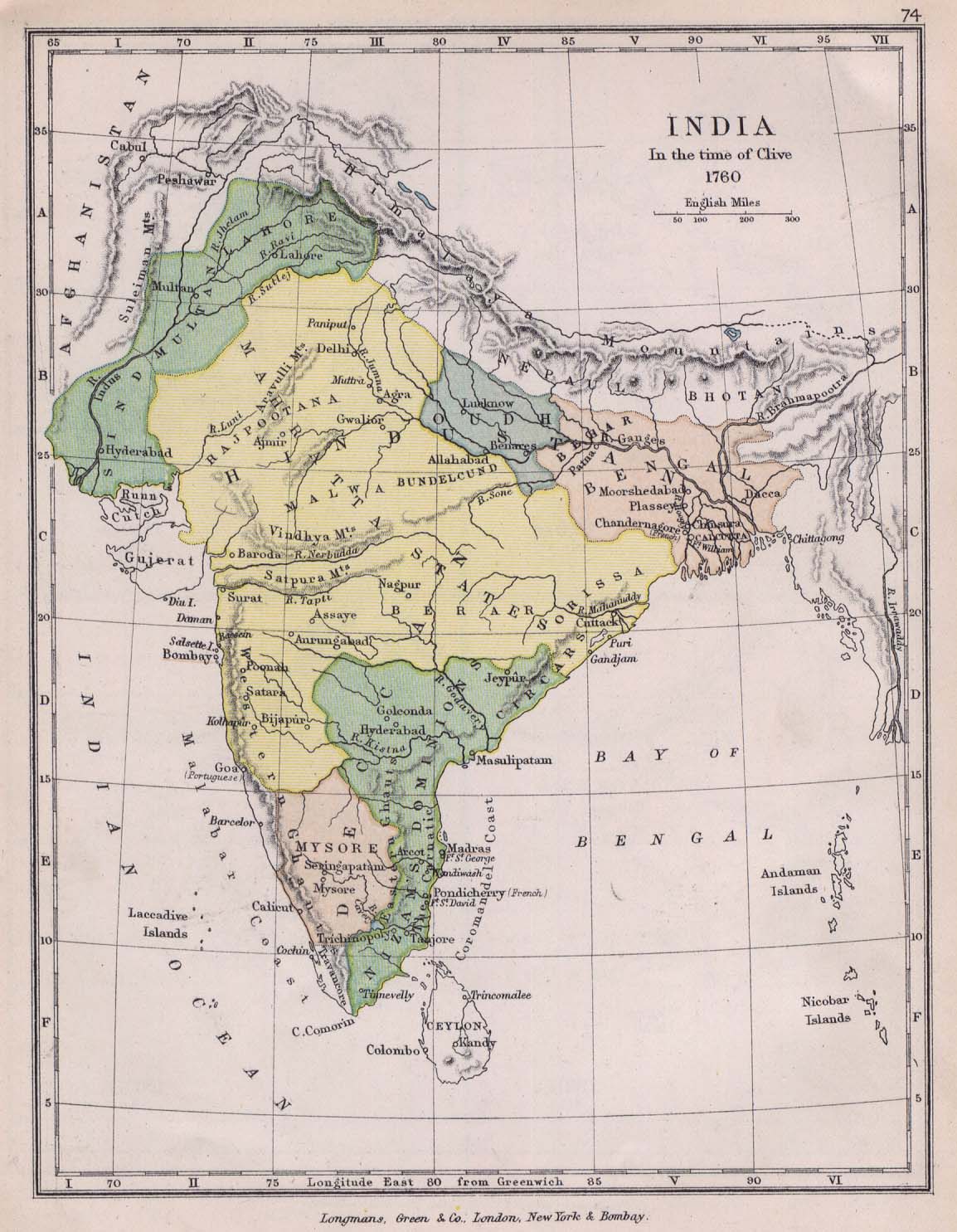
The Maratha Confederacy. The Maratha Confederacy (1674-1818) was the power that broke the Mughal Empire - a Hindu warrior state from the western Deccan that grew, in a single century, from a mountain revolt into the master of a third of the Indian subcontinent. Its founder was Shivaji, the legendary guerrilla king who defied both the Sultanate of Bijapur and the Mughals of Aurangzeb to found 'Hindavi Swarajya' - self-rule - crowned Chhatrapati in 1674. Aurangzeb spent the last quarter-century of his reign trying to crush the Marathas and bled his empire white in the attempt.
After Aurangzeb's death in 1707 the Maratha flood swept north under the Peshwas - the hereditary prime ministers at Pune who became the state's real rulers. Peshwa Bajirao I expanded the Maratha realm deep into northern India; by 1737 the Marathas, while still nominally acknowledging the Mughal emperor, in practice controlled Mughal politics. The confederacy took its mature form: the Peshwa at Pune leading four great independent Maratha houses - the Scindia of Gwalior, the Holkar of Indore, the Bhonsle of Nagpur, and the Gaekwad of Baroda - ruling some two and a half million square kilometers.
The high tide broke at Panipat: in 1761 the Durrani Empire of Afghanistan crushed the Maratha army at Panipat. Yet within ten years Peshwa Madhavrao I had recovered most of the lost ground. What the Afghans could not do, the Marathas did to themselves: after the Peshwa's authority collapsed in civil strife, the defeated Peshwa Baji Rao II threw himself on British protection in 1802.
That was the end. The great houses resisted the Company's encroachment in the Second and Third Anglo-Maratha Wars, and by 1818 the confederacy was destroyed, its lands absorbed into British India. The last power that could have built an Indian empire from within was gone - and the road to the British Raj lay open.
 Britannica: Maratha confederacy
 World History Encyclopedia: Anglo-Maratha Wars
 UNESCO World Heritage Centre: Maratha Military Landscapes of India
 UNESCO: ‘Maratha Military Landscapes of India’ inscribed on the UNESCO World