 Go Back

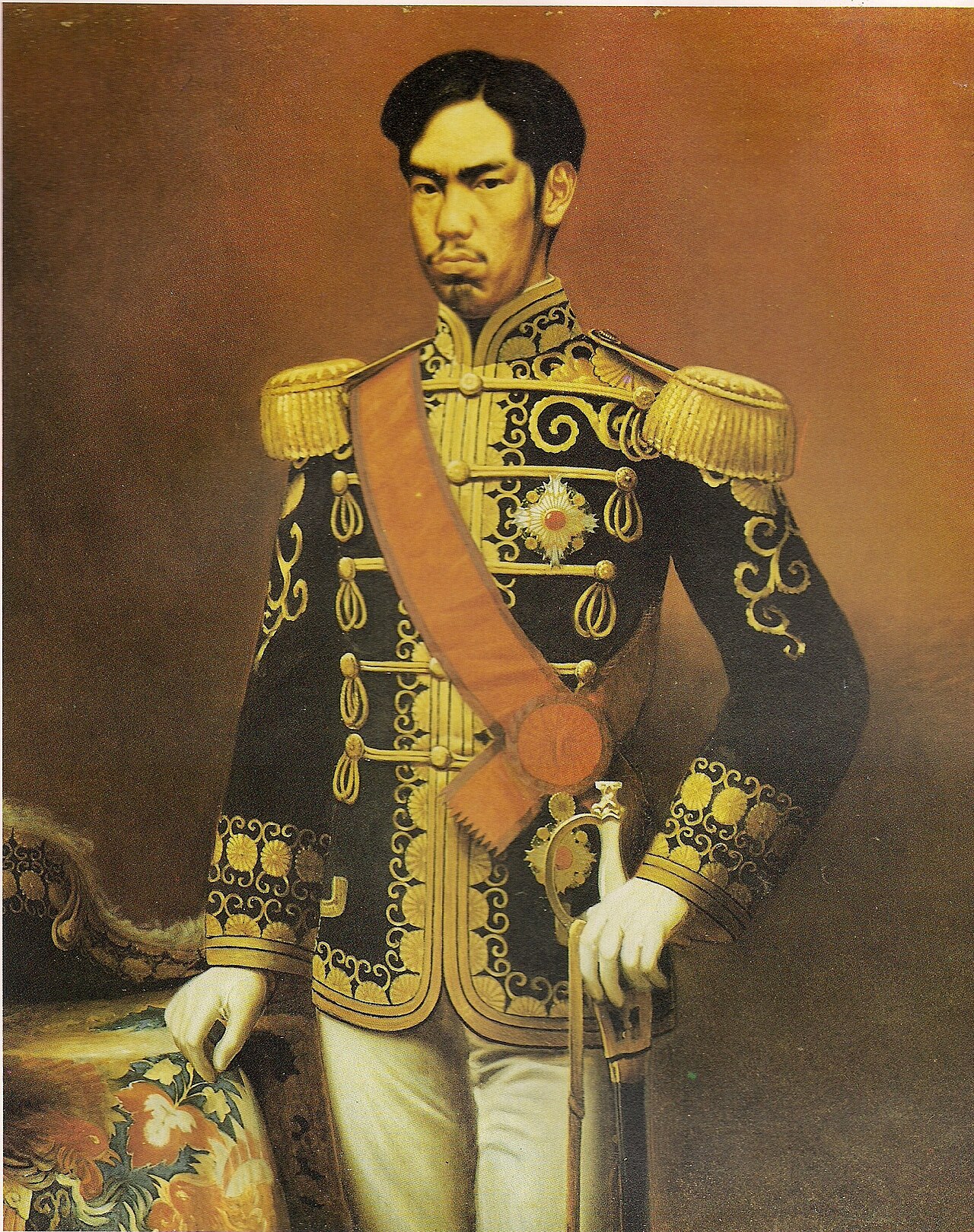
The Meiji Restoration. The Meiji Restoration of 1868 was the moment Japan reinvented itself - the fastest and most complete national transformation of the modern age. Fifteen years after Commodore Perry's black ships had forced Japan open, the samurai of the Satsuma and Choshu domains overthrew the Tokugawa shogunate and 'restored' the fifteen-year-old Emperor Meiji to power on 3 January 1868, promising in the Charter Oath to seek knowledge throughout the world.
The young leaders around the emperor - mostly lower-ranking samurai in their thirties - dismantled the old world in a single generation. They abolished the feudal domains (1871), ended the samurai class and its privileges, created a national conscript army (1873), and sent the Iwakura Mission around the world to study the West. Railways, telegraphs, banks, factories, and a modern education system followed with astonishing speed.
The transformation met resistance - most famously the Satsuma Rebellion of 1877, when the last great samurai uprising was crushed by the new conscript army it had helped create. (An earlier stand by Tokugawa loyalists, including a short-lived 'Republic of Ezo' in Hokkaido, had already failed in the Boshin War.) By 1889 Japan had the Meiji Constitution and an elected parliament and by 1905 - when it defeated Russia - it had become the first non-Western modern great power, with an empire of its own in Korea and Taiwan.
The Meiji Restoration saved Japan from the fate of China - but it also turned Japan into an empire. The same drive that built the railways and warships carried Japan into wars with China (1894-95) and Russia (1904-05), the annexation of Korea (1910), and into the global struggle of the First World War, from which Japan emerged holding Germany's former Pacific islands. Modern Japan was born in 1868.
 Britannica: Meiji Restoration
 World History Encyclopedia: Meiji Restoration
 Khan Academy: Client Challenge
 Smarthistory: Meiji period, an introduction