 Go Back

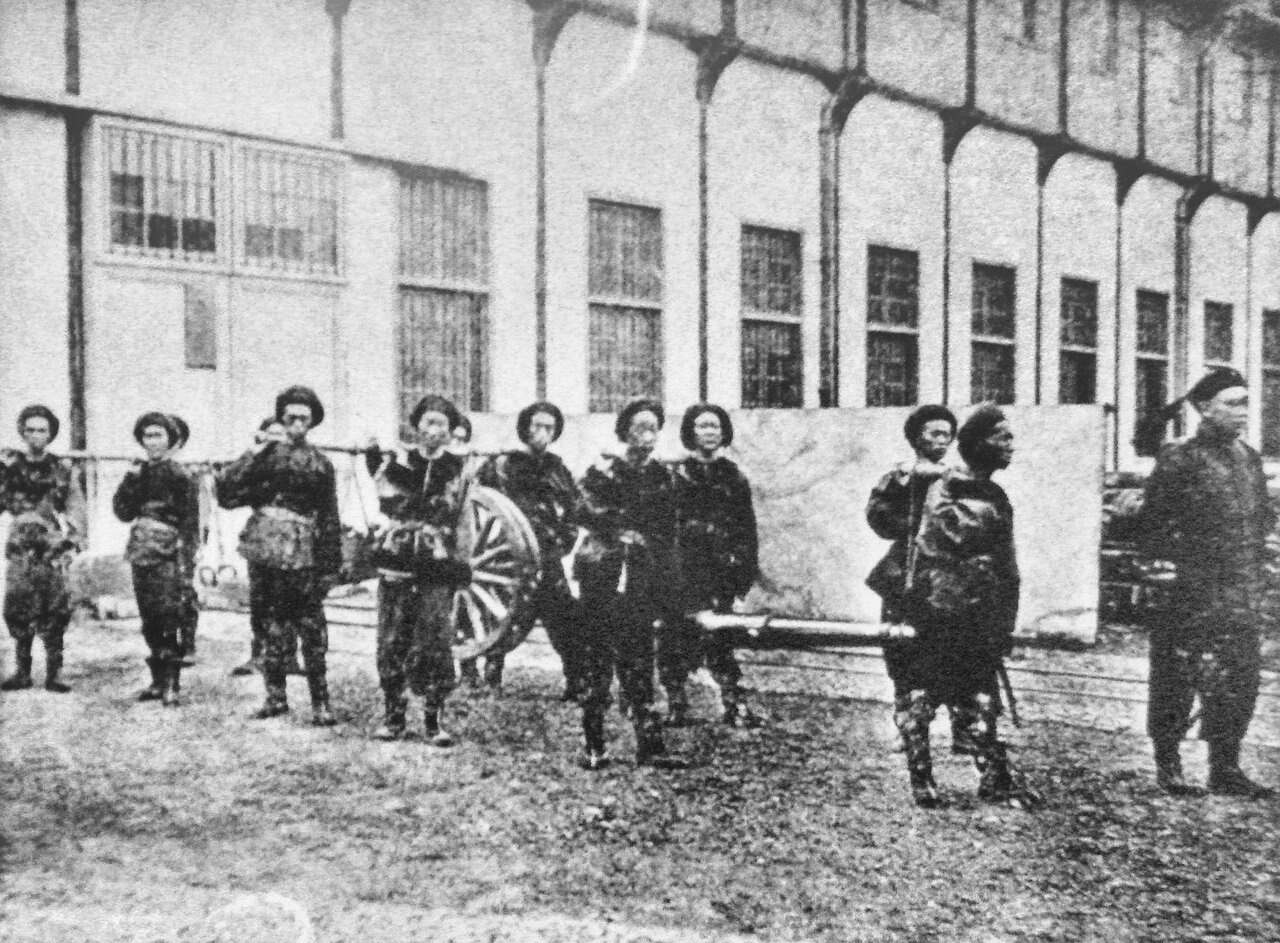
The Self-Strengthening Movement. The Self-Strengthening Movement (1861-1895) was Qing China's first systematic attempt to adopt Western technology to save the imperial system. Born from the double trauma of the Opium Wars and the Taiping Rebellion, it was led by the statesmen who had crushed the Taiping - Zeng Guofan, Li Hongzhang and Zuo Zongtang in the provinces, Prince Gong and Wenxiang at the court's new Foreign Office (the Zongli Yamen, 1861).
The formula, in the scholar Feng Guifen's phrase and Zhang Zhidong's later slogan, was 'Chinese learning as the foundation, Western learning for practical use': Confucian values untouched, Western guns, ships and factories adopted. Over three decades the movement built the Jiangnan Arsenal and the Fuzhou Navy Yard, steamship and telegraph companies, the Kaiping mines and the beginnings of a modern navy - the Beiyang Fleet, by the 1880s nominally Asia's strongest - and sent China's first students abroad and founded interpreters' colleges.
But self-strengthening fought uphill: conservative mandarins saw railways and chimneys as portents; funds were diverted - famously, naval money rebuilt the Empress Dowager Cixi's Summer Palace; the new enterprises were strangled by official corruption and 'official supervision, merchant management'; and the deeper institutions - the examinations, the bureaucracy, the fiscal system - went unreformed, for reforming them was precisely what 'foundation' forbade.
The verdict came in war: Japan, modernized root-and-branch by the Meiji Restoration, destroyed the Beiyang Fleet and took Taiwan in the Sino-Japanese War of 1894-1895. The failure radicalized a generation - toward the Hundred Days' Reform of 1898, then revolution - and left the enduring Chinese debate the movement began: whether technology can be borrowed without the ideas and institutions behind it.
 Britannica: Self-Strengthening Movement
Britannica: Li Hongzhang
Britannica: Feng Guifen