 Go Back

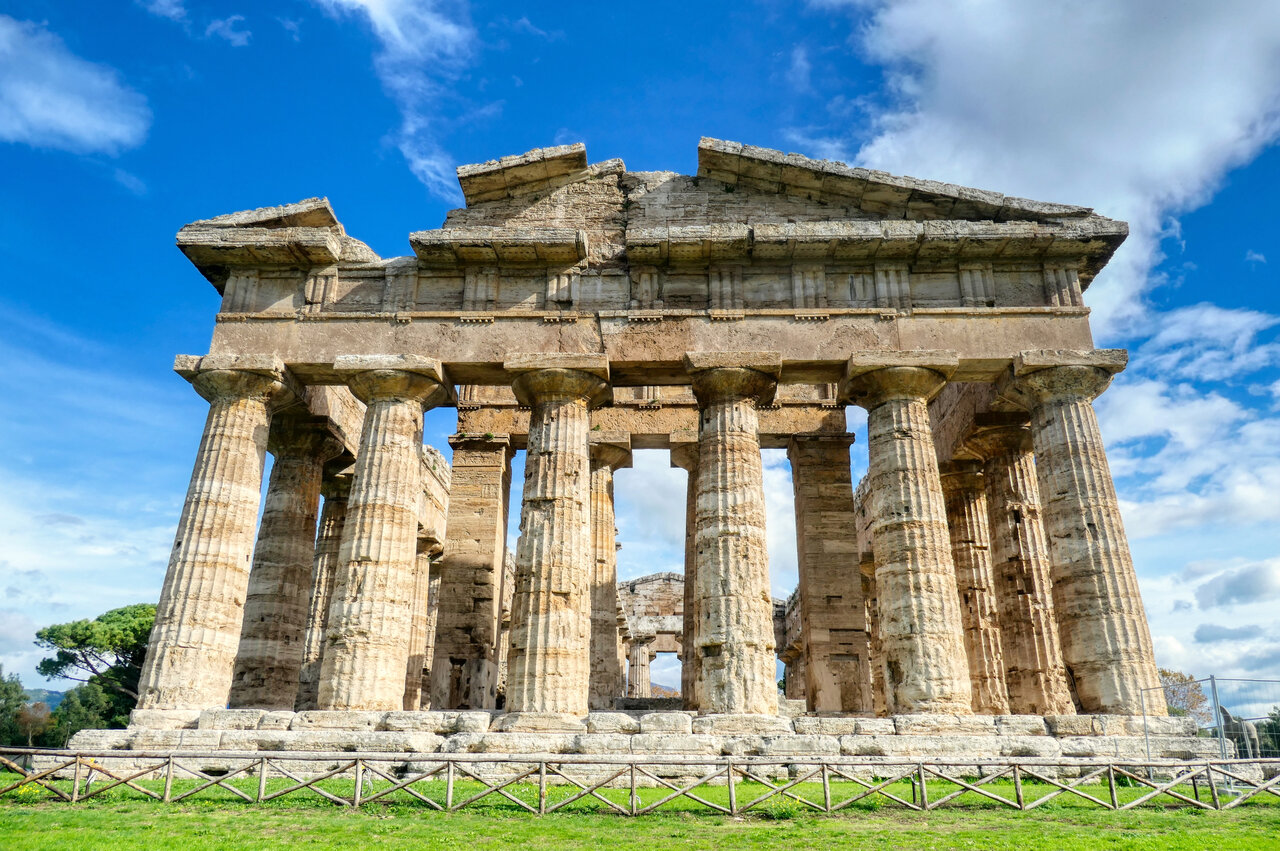
Magna Graecia, 'Greater Greece', was the name Romans gave to the Greek colonial world of southern Italy, where settlers from the 8th century BCE onward founded cities such as Sybaris, Croton, Tarentum, Rhegium and Locri, while Chalcidians and Corinthians colonized eastern Sicily. Fertile land and busy trade made cities like Sybaris bywords for wealth and luxury. The region produced some of the earliest Greek lawgivers and philosophers: Pythagoras taught at Croton, Parmenides at Elea, and the Pythagorean communities briefly dominated several cities. The colonies also warred constantly with each other and with their Italic neighbors, the Etruscans, and Carthage.
Syracuse, founded by Corinthians about 734 BCE on the island of Ortygia, became the greatest Greek city of the west. Under the tyrant Gelon it defeated a huge Carthaginian expedition at Himera in 480 BCE, the same year as Salamis by Greek tradition, and under Hieron I its navy smashed the Etruscans at Cumae (474 BCE). Syracuse's power, wealth and ambitions made it the focus of Athenian imperial dreams: the great Athenian expedition of 415-413 BCE ended in catastrophe in its harbor and quarries, destroying Athens' fleet and army. The city then fell under Dionysius I (405-367 BCE), who built the strongest military monarchy in the Greek world, fought Carthage to a standstill, and walled the heights of Epipolae.
After Dionysius' death Syracuse swung between tyranny, civil war and brief liberations: the Corinthian Timoleon restored its freedom and crushed Carthage at the Crimisus in 341 BCE, but Agathocles seized power in 317 BCE, took the title of king and carried the war into Africa. His death in 289 BCE brought renewed chaos, Pyrrhus' intervention, and finally the rule of Hieron II (269-215 BCE), under whom the city enjoyed a long, prosperous peace. Syracuse was then a center of science and letters, home to the mathematician Archimedes and the poet Theocritus.
During the Second Punic War, Hieronymus, Hieron's young grandson, switched Syracuse to the Carthaginian side, and Rome sent Marcus Claudius Marcellus to reduce the city. The siege of 214-212 BCE became legendary for Archimedes' war machines, cranes that lifted ships and mirrors said to have set them ablaze, but hunger and treachery finally opened the gates. Archimedes was killed in the sack, against Marcellus' orders. Syracuse became the capital of the Roman province of Sicily, and Magna Graecia's cities gradually Latinized, though Greek speech survived in southern Italy's remoter corners into the Middle Ages.
 Britannica: Magna Graecia
Britannica: Syracuse
 World History Encyclopedia: Syracuse