 Go Back

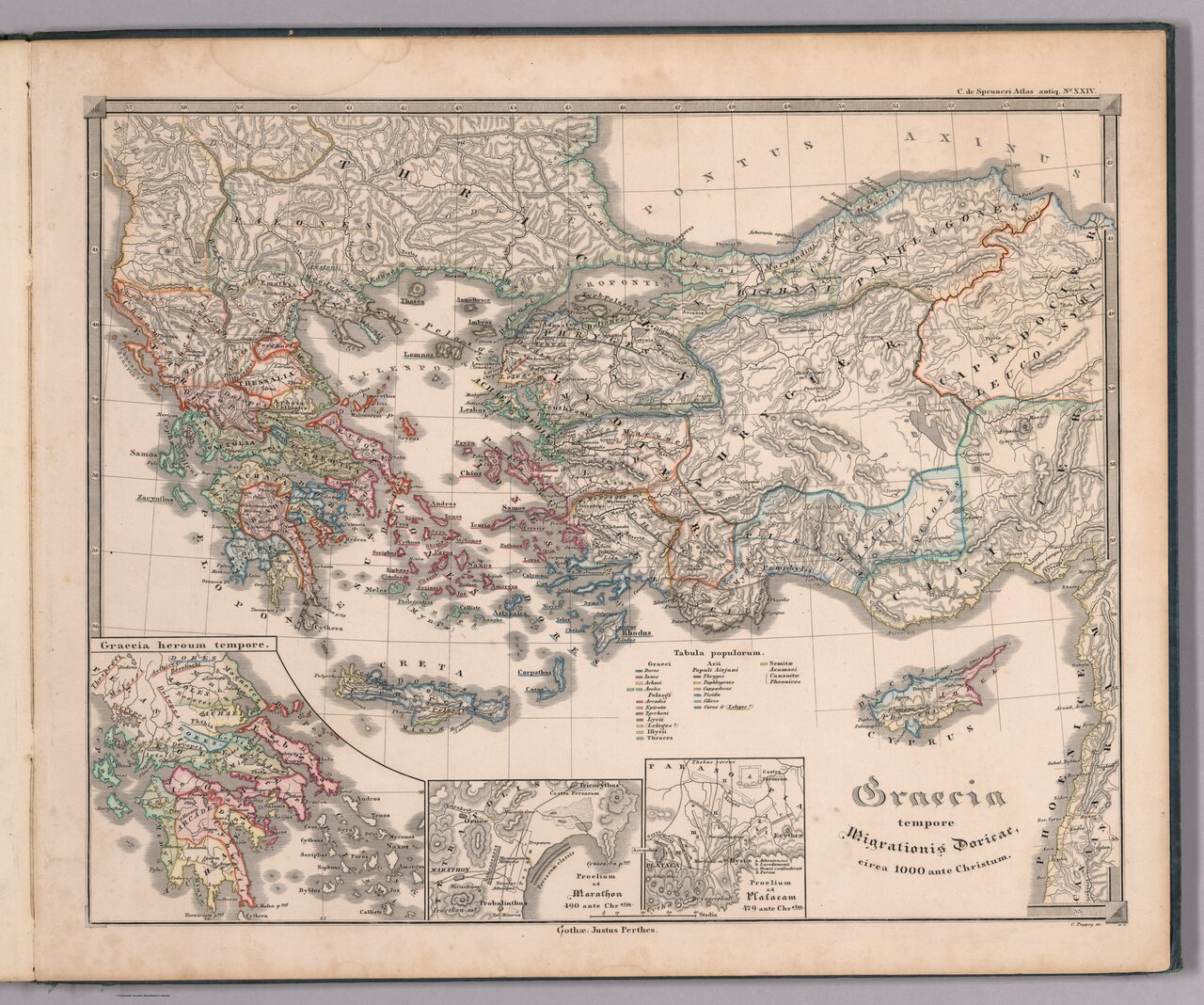
The Greek Dark Ages (c. 1100-750 BCE) followed the collapse of the Mycenaean palace kingdoms around 1200 BCE, when destructions, migrations and the breakdown of trade emptied the great citadels of Mycenae, Tiryns and Pylos. Writing in Linear B disappeared, monumental building stopped, and the population of Greece fell sharply. Communities became smaller, poorer and more mobile, and long-distance exchange with Egypt and the Near East contracted. Our picture of these centuries comes almost entirely from archaeology, since the Greeks of this era left no written records of their own.
Life slowly recovered. Iron gradually replaced bronze for tools and weapons, and new styles of painted pottery, first Protogeometric and then Geometric, show growing skill and contact between regions. Traditionally dated movements of Greek-speaking peoples, including the Dorians into the Peloponnese and Aeolians and Ionians across the Aegean to the coast of Asia Minor, gave the Greek world its lasting regional dialect map. By the 9th century BCE some communities, above all Athens and the Euboean towns, were again wealthy enough to trade with Cyprus and the Levant, as finds from the cemetery at Lefkandi show.
From about 750 BCE Greeks began founding colonies across the Mediterranean and Black Seas, a movement driven by land hunger, trade and political tension at home. Euboeans settled Pithekoussai and Cumae in Italy, Corinthians founded Syracuse and Corcyra, Megarians planted towns on the Bosporus, and Miletus and Phocaea sent settlers to the Black Sea and the far west. Colonies were independent poleis, not possessions, but they kept cult and kinship ties with their mother cities. Through them, Greek goods, alphabetic writing, adapted from the Phoenician script, and Greek religious practice spread far beyond the Aegean.
The recovery of the 8th century BCE created the world of the classical polis. Population grew, villages merged into city-states, and shared sanctuaries such as Olympia and Delphi linked the scattered Greek communities through festivals, games and oracles. The same era produced the Homeric epics, which gave Greeks a common heroic past, and the hoplite style of fighting that underpinned citizen armies. Colonization and trade enriched new classes who challenged old aristocracies, setting up the political struggles, and the lawgivers and tyrants, of the following Archaic age.
 World History Encyclopedia: Greek Dark Age
World History Encyclopedia: Greek Colonization
 Britannica: Ancient Greek civilization