 Go Back

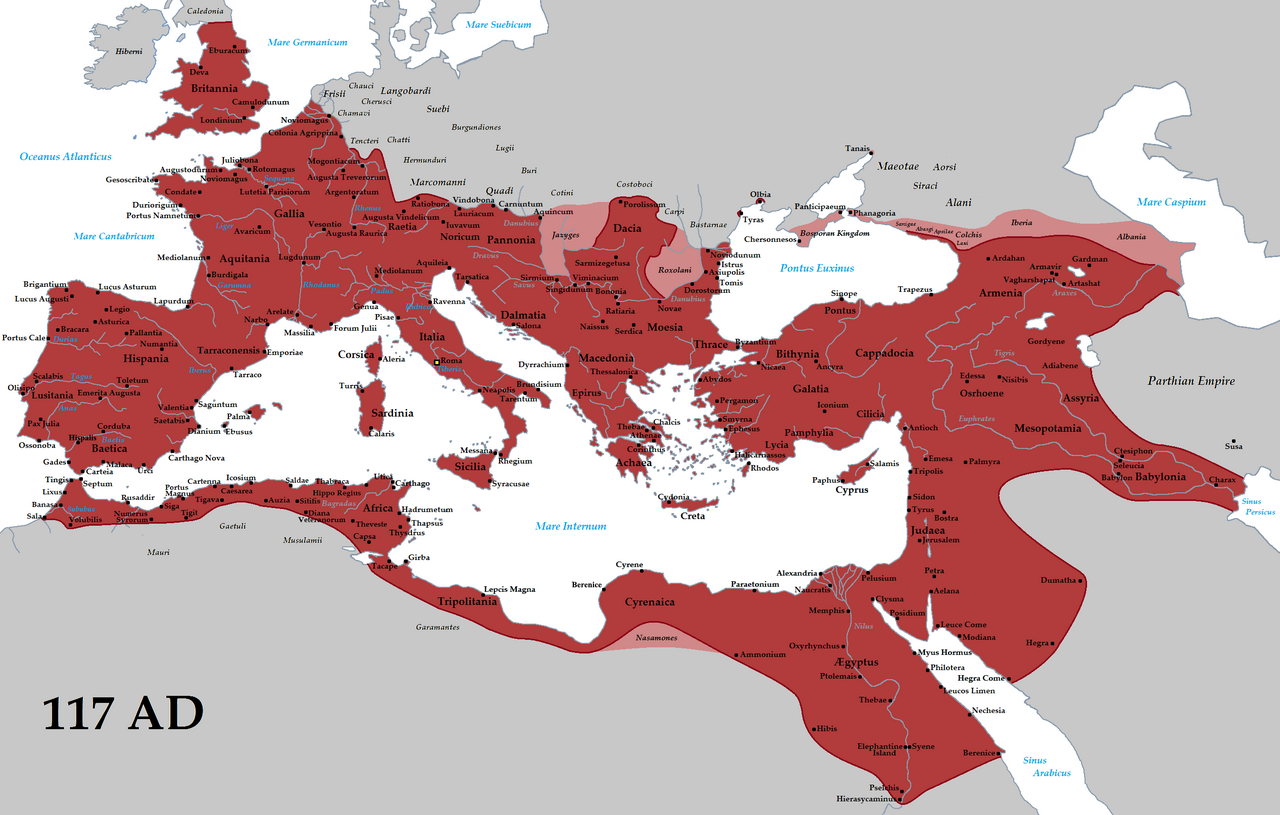
The Roman Kingdom, Republic, and Empire. Rome's story runs through three constitutions over twelve centuries: a small kingdom, a conquering republic, and a world empire. Tradition dates the Kingdom from Rome's founding by Romulus in 753 BC: seven kings - the later ones Etruscan - ruled the growing city until 509 BC, when, according to Roman tradition, the tyranny of Tarquin the Proud provoked a revolution that expelled the kings forever. (Modern scholars see a more complicated story behind the legend - but the Romans' hatred of kings was real, and it shaped everything that followed.)
The Republic (509-27 BC) made Rome master of the Mediterranean. Governed by annually elected consuls, the Senate, and citizen assemblies - and at near-perpetual war - Rome conquered Italy, destroyed its great rival Carthage in three Punic Wars (Hannibal's invasion included), and by 146 BC stood dominant from Spain to Greece. But conquest broke the Republic: wealth and slaves flooded in, generals raised personal armies, and a century of civil strife - reformers against the oligarchy, Marius against Sulla, slave revolts against the legions - ended with Julius Caesar crossing the Rubicon in 49 BC. Victorious but assassinated in 44 BC, Caesar left the stage to his heir Octavian, who defeated Antony and Cleopatra at Actium and, in 27 BC, took the name Augustus.
The Empire Augustus founded lasted five hundred years in the West - and, as Byzantium, fifteen hundred in the East. Its first two centuries, the Pax Romana, brought the Mediterranean world unprecedented peace and prosperity: across Europe, North Africa, and Western Asia, tens of millions of people shared Roman roads, Roman law, and Roman cities. Under Trajan the empire reached its greatest extent, some 5 million square kilometers.
Crisis came in the 3rd century - civil wars, plagues, invasions - before Diocletian reorganized and Constantine turned the empire Christian and moved its capital to Constantinople. The Western Empire fell to Germanic kings in 476; the Eastern (Byzantine) Empire endured until 1453. Rome's legacy is the West's foundation: its law, its languages, its roads, its calendar - and the very idea of a world ruled from one city.
 Britannica: How was the Roman Republic different from the Roman Empire?
 World History Encyclopedia: Ancient Rome
 Humanities LibreTexts: 17.6.6: Basic Chronology and Periods of Roman History
 PBS: The Roman Empire: in the First Century. The Roman Empire. Republic to Empire