 Go Back

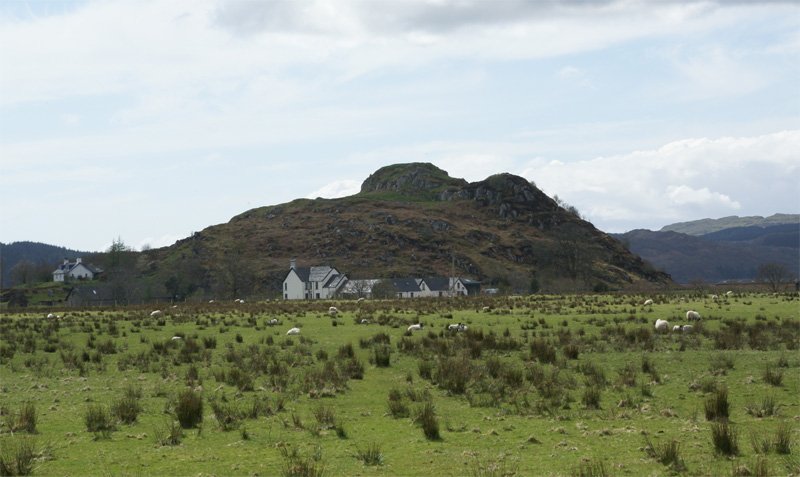
Dal Riata. Around the year 500, give or take a generation, Gaelic-speaking Scots from the Antrim coast of Ireland planted a kingdom in the sea-girt peninsula of Argyll, in what is now western Scotland. The kingdom of Dal Riata faced two ways at once: its boats crossed the narrow North Channel in hours, and for centuries its kings, kindreds and churchmen moved freely between the Irish and Scottish shores, treating the sea not as a border but as a road. Its heartlands were the rocky stronghold of Dunadd, the ridge-fort of Dunollie, and the islands of the Inner Hebrides.
Dal Riata was a maritime warrior society, divided among four great kindreds, and its kings led war-bands by sea against the Picts to the east, the Britons of Strathclyde, and their Irish cousins across the water. The annals record sea-battles and cattle-tribute; its warriors fought as far afield as the Orkneys. The kingdom's place in the power politics of the north was settled at the Convention of Druim Cett in 575, where the Irish over-king and the Dal Riatan king Aedan mac Gabrain divided their obligations: the Scottish Dal Riata would serve its own king, the Irish Dal Riata its own.
The kingdom's lasting fame is holy. In 563 Columba - Colum Cille - an Irish prince of the northern Ui Neill, came to Dal Riata and received the island of Iona. The monastery he founded there became the spiritual capital of the Gaelic west: from Iona went the missionaries who converted the Picts and taught the Northumbrians at Lindisfarne, and on Iona, most scholars believe, the scribes began the Book of Kells. The abbots of Iona for generations outranked bishops, and the island remained the burial place of kings - Scottish, Irish and even Norse.
Viking assault in the ninth century broke the sea-kingdom's world: Iona was burned and its monks martyred, and the Dal Riatan throne passed, through Kenneth mac Alpin, into union with the Picts. But Dal Riata's legacy was the greater one. It had carried the Gaelic language, the name Scot, and the Christian faith into mainland Scotland - so completely that the united kingdom of Alba thought of itself as Scottish, and the land of the Picts took its name from the Irish sea-kingdom on its western shore.
 Britannica: Dalriada
 World History Encyclopedia: Book of Kells
Britannica: Saint Columba