 Go Back

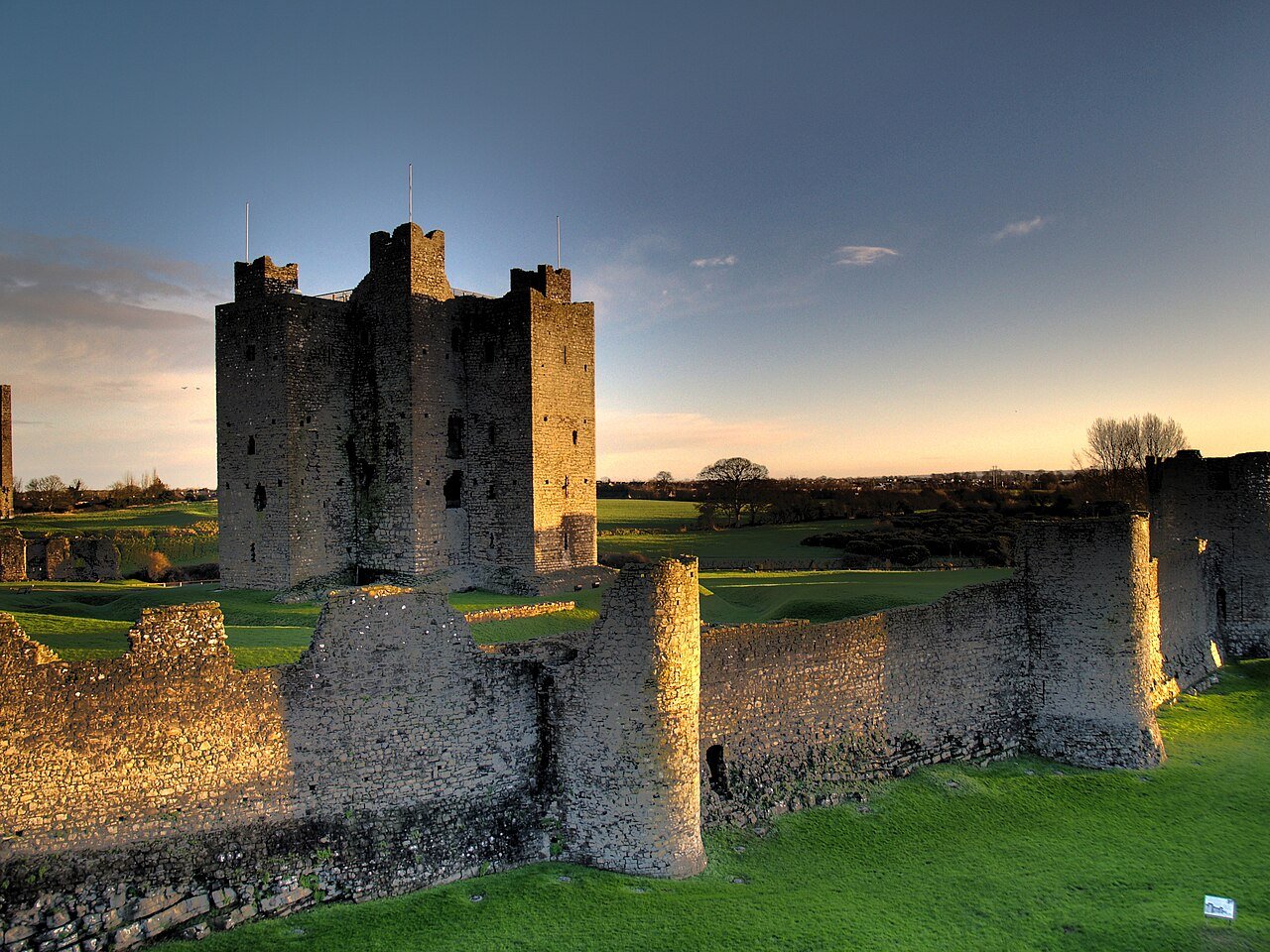
The Lordship of Ireland. From 1171 the kings of England were Lords of Ireland, ruling through a justiciar and a council seated in Dublin. But the lordship was never a conquest completed. The Norman barons - de Burghs in Connacht, FitzGeralds in Kildare and Desmond, Butlers in Ormond - built their castles and carved out liberties in which they were kings in all but name, while beyond the frontier the Gaelic chiefs, O'Neills in Ulster, O'Briens in Thomond, MacCarthys in Desmond, held their lands by their own ancient law. Medieval Ireland was a checkerboard of Englishry and Irishry.
The lordship's high water mark came early: by 1300 most of the island acknowledged Dublin's writ. Then the tide turned. The Bruce invasion of 1315-1318, when Edward Bruce landed with a Scottish army and had himself proclaimed King of Ireland, burned through the colony and proved it could not defend itself. Famine followed, then the Black Death, which fell hardest on the English towns. Gaelic chiefs recovered their lands, and the settler families beyond the frontier turned native, adopting the Irish language, dress and fosterage until the statutes complained they were more Irish than the Irish themselves.
Parliament answered with the Statutes of Kilkenny in 1366, forbidding the English of Ireland to marry the Irish, speak their language or use their law - the first great codification of the two nations on one island. They changed little on the ground. By the fifteenth century the area of secure English rule had shrunk to the Pale, a fortified strip around Dublin, defended by dykes and watch-towers; the rest of the island paid the Dublin government only an occasional black rent, protection money in reverse.
The fifteenth-century lordship became a pawn in English dynastic wars, dominated by the great earls of Kildare, who ruled as Lords Deputy almost as hereditary kings - until 1534, when Silken Thomas FitzGerald's rebellion gave Henry VIII the excuse to end their power. The failure of the medieval lordship convinced the Tudors that Ireland had to be conquered outright, and so the loose, fading medieval arrangement was replaced by a kingdom, a standing army and plantations.
 Britannica: Ireland - The Kildare Ascendancy
World History Encyclopedia: Lordship of Ireland
Britannica: Edward Bruce