 Go Back

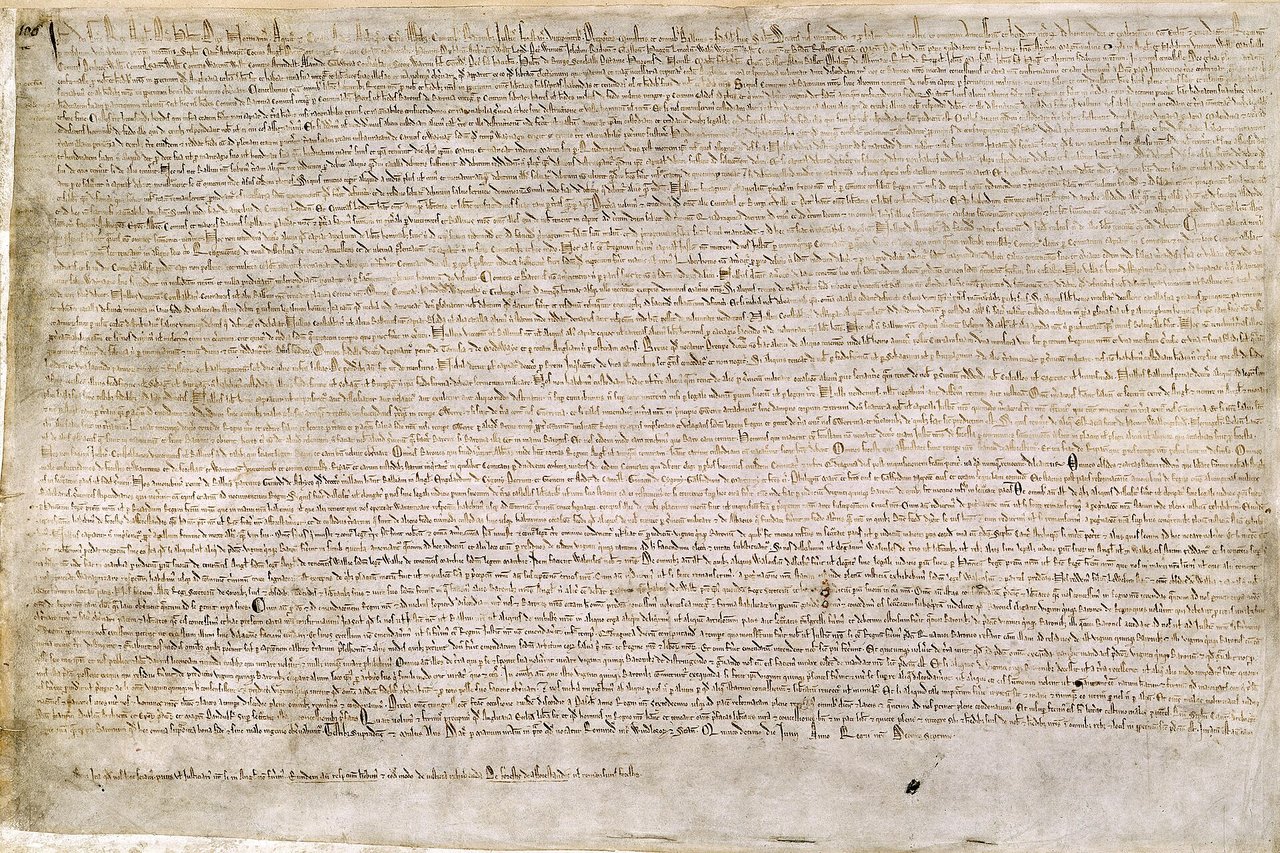
Magna Carta. King John of England lost an empire and broke a kingdom. By 1204 he had lost Normandy to the King of France, and for a decade he taxed, fined and bullied his barons to pay for its recovery - until the defeat at Bouvines in 1214 destroyed his last army and his credit. In the spring of 1215 the barons of the north renounced their homage, took London, and forced the king to meet them in the meadow of Runnymede. There, on 15 June 1215, John set his seal to the Great Charter: sixty-three clauses that bound the king himself to the law.
Most of the charter dealt with the grievances of the moment - reliefs, wardships, forest law, the abuses of royal officials. Buried among them were clauses 39 and 40: no free man was to be taken, imprisoned or dispossessed except by the lawful judgment of his peers or the law of the land, and to no one would the king sell, deny or delay right or justice. In those two sentences later generations found the foundation of due process of law, and of the principle that the ruler stands under the law, not above it.
As a peace treaty the charter failed within weeks. John had it annulled by the Pope, the barons called in Prince Louis of France, and England plunged into the First Barons' War. When John died in October 1216, his nine-year-old son Henry III was crowned with the charter reissued in his name - the proof that the idea was bigger than the quarrel. The war ended at Lincoln and Sandwich in 1217, and Magna Carta, confirmed again in 1225, became the settled law of the land.
The charter's logic kept working. Baronial reform under Simon de Montfort forced the Provisions of Oxford on Henry III, and when that failed, the Second Barons' War ended at Evesham in 1265, with Montfort dead but his parliament - the first to summon townsmen beside knights - remembered as a model. Edward I confirmed the charter in 1297, and four of the sixty-three clauses, including the two great ones, remain on England's statute book today. From Runnymede run straight lines to the Petition of Right, the Bill of Rights, and the Fifth Amendment.
 Britannica: Magna Carta
 The National Archives: Magna Carta
Britannica: Simon de Montfort