 Go Back

The Norman Invasion of Ireland. The conquest began as a private venture. In 1166 Diarmait Mac Murchada, the deposed king of Leinster, crossed the sea to beg help from King Henry II of England, and received permission to recruit among the Norman lords of Wales. In 1169 and 1170 their advance parties landed in Wexford: mail-clad knights and Welsh archers, led above all by Richard de Clare, called Strongbow. They took Waterford and Dublin, married Mac Murchada's daughter to Strongbow, and when Mac Murchada died in 1171, Strongbow claimed Leinster itself.
That was more than Henry II could allow. A subject building a kingdom across the Irish Sea was a threat, so in October 1171 Henry landed near Waterford with a great fleet and four thousand men - the first King of England to set foot in Ireland. The Norman adventurers submitted their conquests to him, and one Irish king after another came in to offer fealty. Henry granted Meath to his own baron, confirmed the Normans in Leinster, and sailed home leaving a royal governor in Dublin. What had begun as a mercenary adventure had become an English lordship.
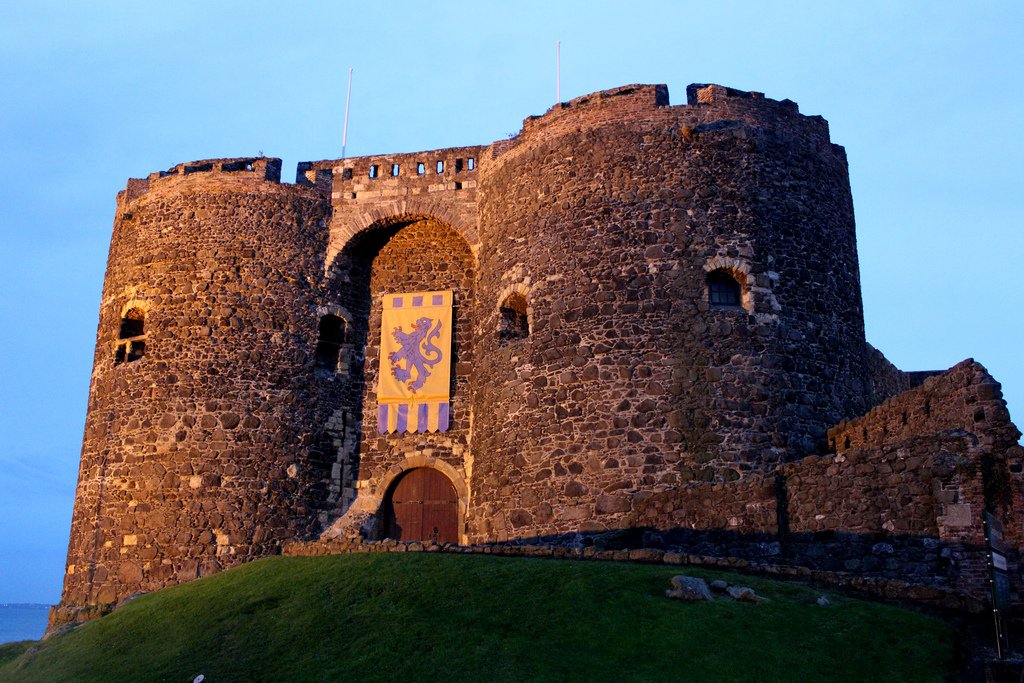
The conquest had a veneer of legality: the papal bull Laudabiliter, issued decades earlier by the English pope Adrian IV, was read as authorizing Henry to reform the Irish Church, and at the Synod of Cashel in 1172 the Irish bishops accepted his overlordship. The Normans brought castles - the great stone keeps at Trim and Carrickfergus - and carved eastern Ireland into feudal lordships, while the west remained under Gaelic kings who paid tribute and went their own way.
The settlement of 1169-1172 set the pattern for eight centuries: an English administration seated in Dublin, an area of direct control that shrank and grew, and a Gaelic Ireland that was never wholly subdued. The Lordship of Ireland born in those years lasted until 1542, when Henry VIII raised it into a kingdom. Every later chapter of the Irish story - plantations, penal laws, union and independence - runs back to Strongbow's archers at Baginbun, where, as the old rhyme had it, Ireland was lost and won.
 Britannica: Henry II
World History Encyclopedia: Lordship of Ireland