 Go Back

The Wars of Scottish Independence. In 1286 King Alexander III of Scotland died in a fall from his horse, and his only heir, the child Margaret, the Maid of Norway, died on the voyage to her kingdom in 1290. With the succession in ruins, Scotland's guardians asked Edward I of England to judge between the claimants. Edward chose John Balliol - and then treated him as a vassal, hearing appeals from his courts and summoning him like a servant. When the Scots defied him and allied with France in 1295, Edward invaded, sacked Berwick with terrible slaughter, deposed Balliol, and carried off the Stone of Destiny from Scone.
Scotland would not submit. In 1297 William Wallace, a knight of no great family, rose in arms, and with Andrew Murray destroyed an English army at Stirling Bridge. Edward answered in person and crushed Wallace at Falkirk in 1298; Wallace fought on as a fugitive until he was betrayed, taken to London, and hanged, drawn and quartered in 1305. Into the breach stepped Robert the Bruce, Earl of Carrick, who in 1306 killed his chief rival John Comyn in a Dumfries church and had himself crowned at Scone. Defeated and driven into hiding, he returned to wage a guerrilla war, castle by castle, until only Stirling held out.
The deliverance came at Bannockburn, in June 1314. Edward II marched north with one of the greatest armies England had ever raised, and Bruce met it on ground of his choosing, where streams and bogs broke the charge of the English knights. In two days of fighting the schiltrons of Scottish spearmen drove the flower of English chivalry into the Bannock Burn; Edward fled, and English power in Scotland collapsed. It was, as the Scots said, the day the kingdom was won back.
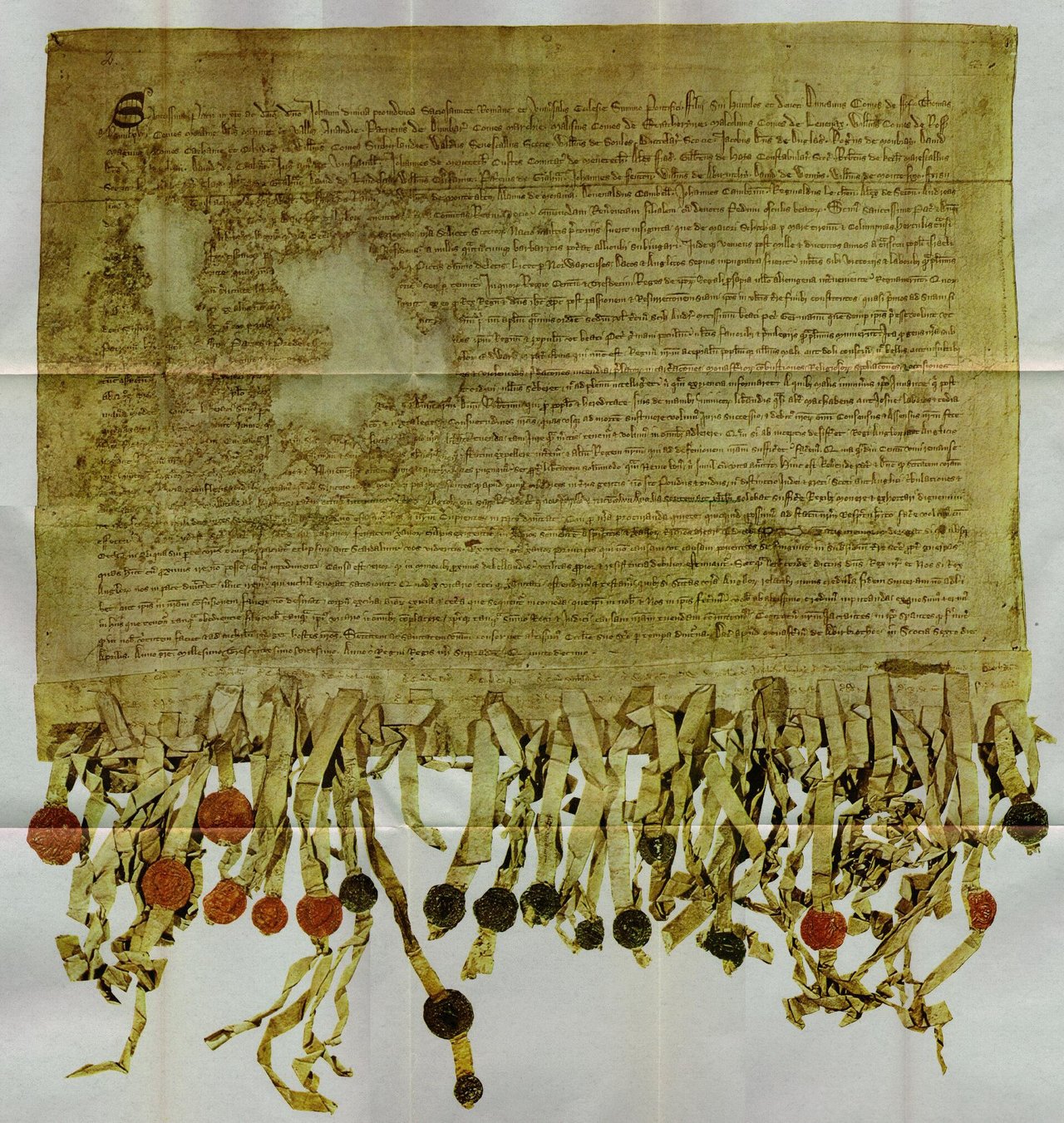
War dragged on: Scottish raiders harried northern England, and in 1320 the Scottish barons sent the Declaration of Arbroath to the Pope, proclaiming that they fought not for glory or riches but for freedom alone. Pope John XXII recognized Robert as king, and in 1328 the Treaty of Edinburgh-Northampton saw England renounce all claim to overlordship. Scotland had kept its independence - the only kingdom in the British Isles, beside England itself, to survive the Middle Ages unconquered.
 Britannica: Battle of Bannockburn
Britannica: William Wallace
Britannica: Robert the Bruce
National Records of Scotland: Declaration of Arbroath 700th Anniversary Booklet