 Go Back

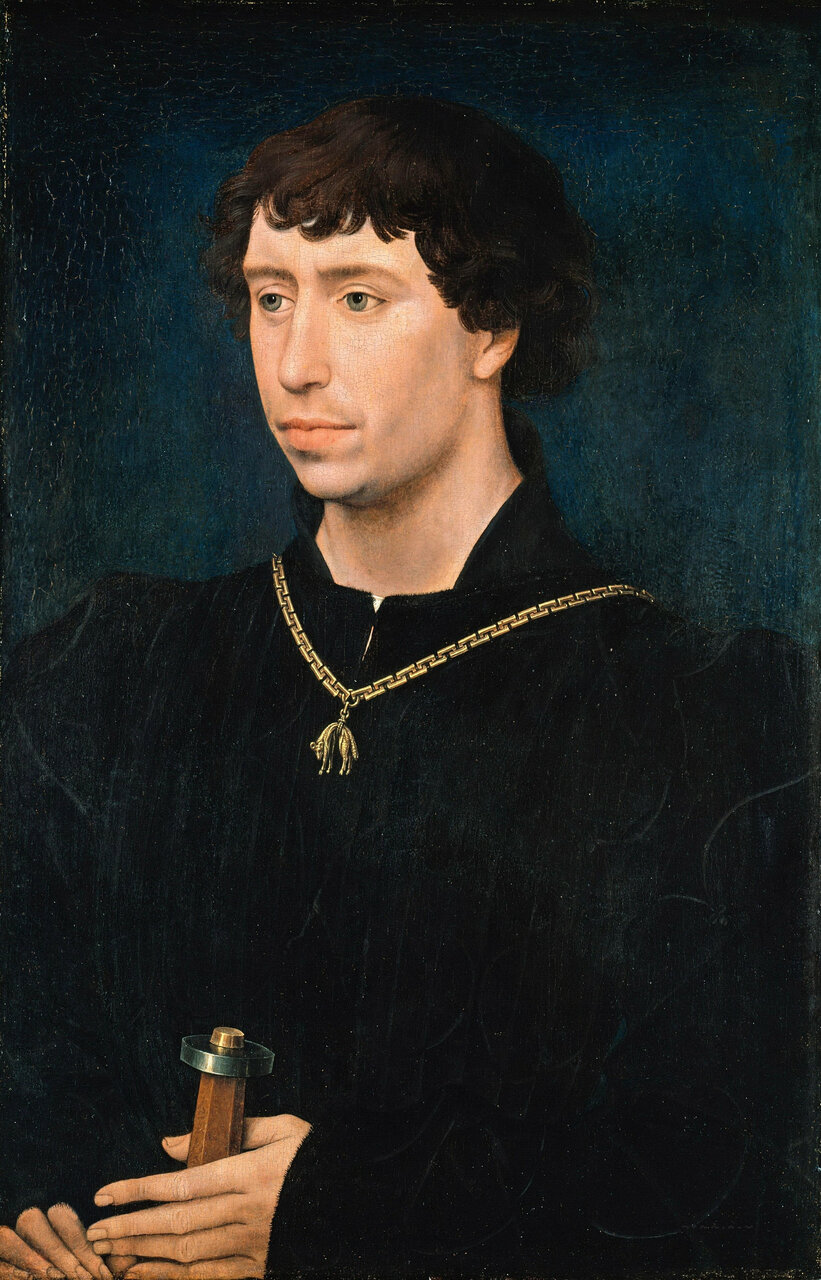
The Burgundian Wars (1474-1477) destroyed the Valois Burgundian state of Charles the Bold, the last and most ambitious of the Burgundian dukes. Charles ruled a wealthy chain of territories from Flanders to Franche-Comte and dreamed of welding them into a kingdom between France and Germany. His relentless expansion, the seizure of Alsace, wars on the Rhine, and pressure on Lorraine, alarmed both King Louis XI of France, his feudal overlord and mortal enemy, and the Swiss Confederation, whose trade and security his plans threatened. Louis wove the coalition that would ruin him: the League of Constance (1474) united the Swiss, the Alsatian towns, and Sigismund of Austria against Burgundy.
Charles besieged the small Alsatian town of Neuss (1474-1475), wasting a campaigning season while an imperial army gathered, and had to withdraw. He then conquered Lorraine (1475) and turned on the Swiss, whom his agents and garrisons had provoked beyond endurance. The war that followed was a catastrophe for Burgundy. At Grandson (March 1476) the Swiss infantry routed his magnificent army and captured its artillery and his fabulous camp treasure; at Morat (June 1476), after Charles had rebuilt his forces, the Swiss destroyed his army in an hour and massacred the survivors, leaving thousands dead around the lake.
Charles would not yield. He raised a third army and besieged Nancy, the capital of the revolted Lorraine, in midwinter. On 5 January 1477 the Swiss and Lorrainers attacked in a snowstorm, the Burgundian army collapsed, and Charles's naked body was found two days later in a frozen ditch, the head split by a halberd. He was thirty-three. The death of the last Valois duke of Burgundy ended the Burgundian state as an independent power: Louis XI seized the duchy of Burgundy itself and Picardy, arguing it was a lapsed fief, while Charles's daughter Mary preserved the rest by marrying Maximilian of Habsburg in August 1477.
The settlement took a generation: the Treaty of Arras (1482) and Senlis (1493) divided the inheritance between France and the Habsburgs. France kept the duchy; Maximilian's son Philip the Fair carried the Netherlands and Franche-Comte to the Habsburgs, and through his marriage to Joanna of Castile to the Spanish crown. The Burgundian Wars thus fixed the Franco-Habsburg frontier that would dominate European wars for three centuries, made the reputation of the Swiss pike square, the most feared infantry of the age, and ended the possibility of a middle kingdom between France and Germany.
 Britannica: Burgundy
 Encyclopedia.com: Charles the Bold