 Go Back

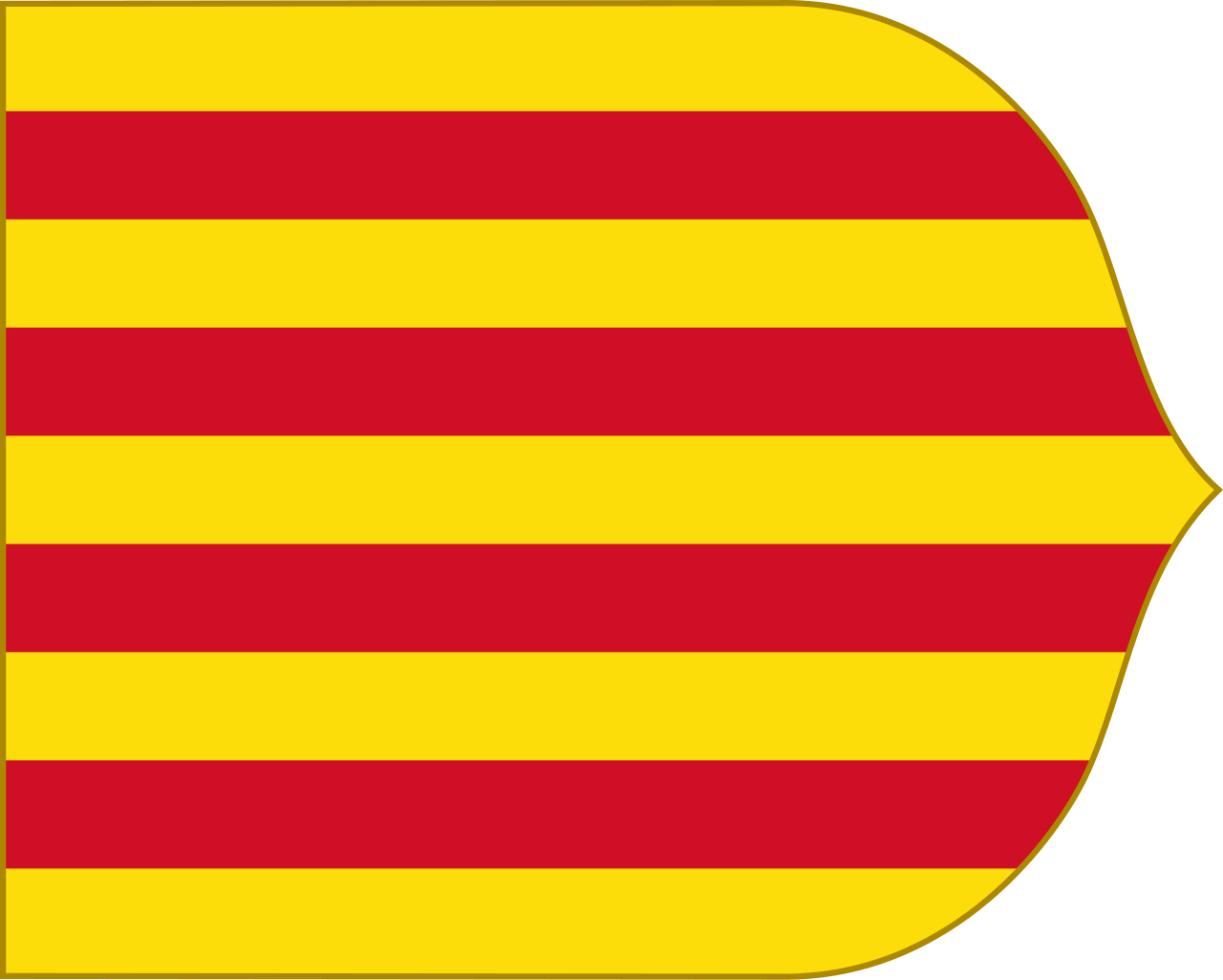
The Crown of Aragon. The Crown of Aragon was medieval Spain's other great power - and the opposite of Castile in almost every way. Born in 1162 of the union between the Kingdom of Aragon and the County of Barcelona, it was a 'composite monarchy': a family of lands - Aragon, Catalonia, Valencia, and later Majorca, Sicily, Sardinia, and Naples - each keeping its own laws, parliaments, and privileges under one king.
Where Castile expanded south into al-Andalus, Aragon expanded east into the sea. Its kings - above all James I the Conqueror, who took Majorca (1231) and Valencia (1238-1245) - and its Catalan merchants and sailors built a great Mediterranean empire: Sardinia was conquered between 1324 and 1420, and for a time the Crown even held parts of Greece. Barcelona became one of the great trading cities of Europe, and at its height in the 14th and 15th centuries the Crown was a thalassocracy - a sea-power ruling the Balearics, Sicily, Corsica, Sardinia, Malta, and, from 1442, southern Italy itself.
The Crown of Aragon stood early for limited monarchy: it was officially 'a feudal monarchy subject to the fueros' - the chartered liberties of each land - and its parliaments, the Corts of Aragon, Catalonia, and Valencia, were among the most powerful in medieval Europe.
In 1469 Ferdinand II of Aragon married Isabella of Castile, and their grandson inherited both crowns. Aragon's distinct identity persisted within Spain until the 18th century, when the Bourbons abolished its institutions after the War of the Spanish Succession. But Catalonia's memory of its medieval Mediterranean empire - and of its lost liberties - is still very much alive.
 Britannica: Kingdom of Aragon
 UNESCO: Santa Fe Capitulations
 Smarthistory: The Catalan Atlas
Britannica: Catalonia