 Go Back

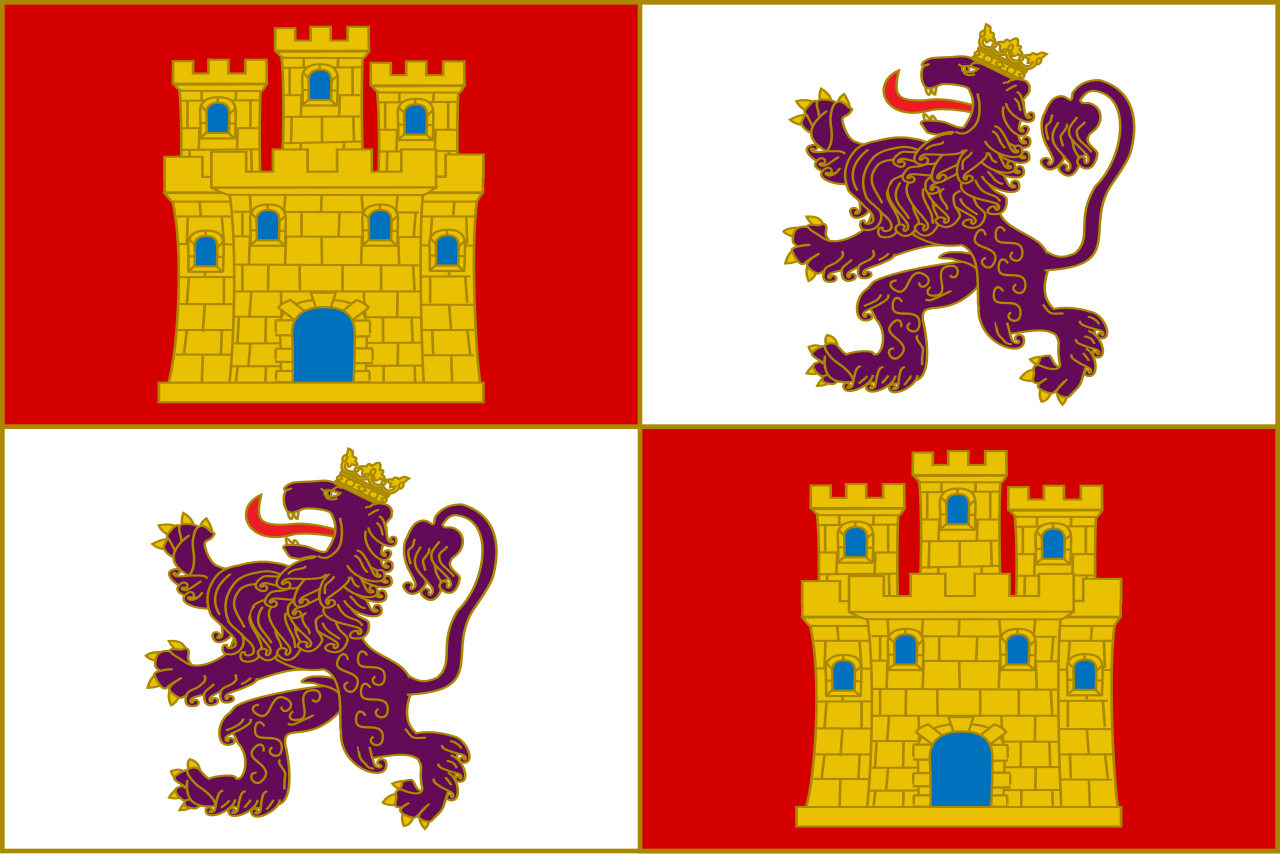
The Crown of Castile. The Crown of Castile was the powerhouse of the Reconquista and the foundation of Spain. Castile began as the frontier land of castles facing Muslim al-Andalus, and in 1230 was permanently united with Leon under Ferdinand III, who had inherited Castile in 1217 and Leon in 1230. From its Meseta heartland, Castile led the great 13th-century advance south: Ferdinand III himself conquered the Guadalquivir valley - Cordoba in 1236 and Seville in 1248 - and his son Alfonso X added Murcia, leaving Muslim rule confined to Granada. Castilian kings piled kingdom into their titles: 'King of Castile, Leon, Toledo, Galicia, Murcia, Jaen, Cordoba, Seville...'
Castile was a warrior society organized for frontier war - and a precocious political one: its Cortes, with nobles, clergy, and representatives of the towns sitting as three estates, became one of medieval Europe's earliest parliaments, and its language - Castilian - spread with its conquests to become what the world now calls Spanish.
The 15th century made Castile the center of a world power. The marriage of Isabella I of Castile to Ferdinand II of Aragon in 1469 joined the two great Spanish crowns; in 1492 their armies took Granada, ending Muslim rule in Spain, and in the same year Castile - and Castile alone, in law - sponsored Columbus and claimed the Americas. Within a generation, Castilian conquistadors had destroyed the Aztec and Inca empires, and silver from Castile's American empire made it the greatest power in Europe.
Yet Castile remained legally distinct even within a united Spain - with its own laws, Cortes, and administration - until the Bourbon reforms of the 18th century dissolved the old crowns into a single Spanish state. Modern Spain is, in language and institutions, above all Castile's child.
 Britannica: Castile
 World History Encyclopedia: Isabella I of Castile
 Humanities LibreTexts: 7.10: Spain in the 15th and 16th centuries- Renaissance
 National Geographic: Queen Isabella of Castile's rise to power in Spain