 Go Back

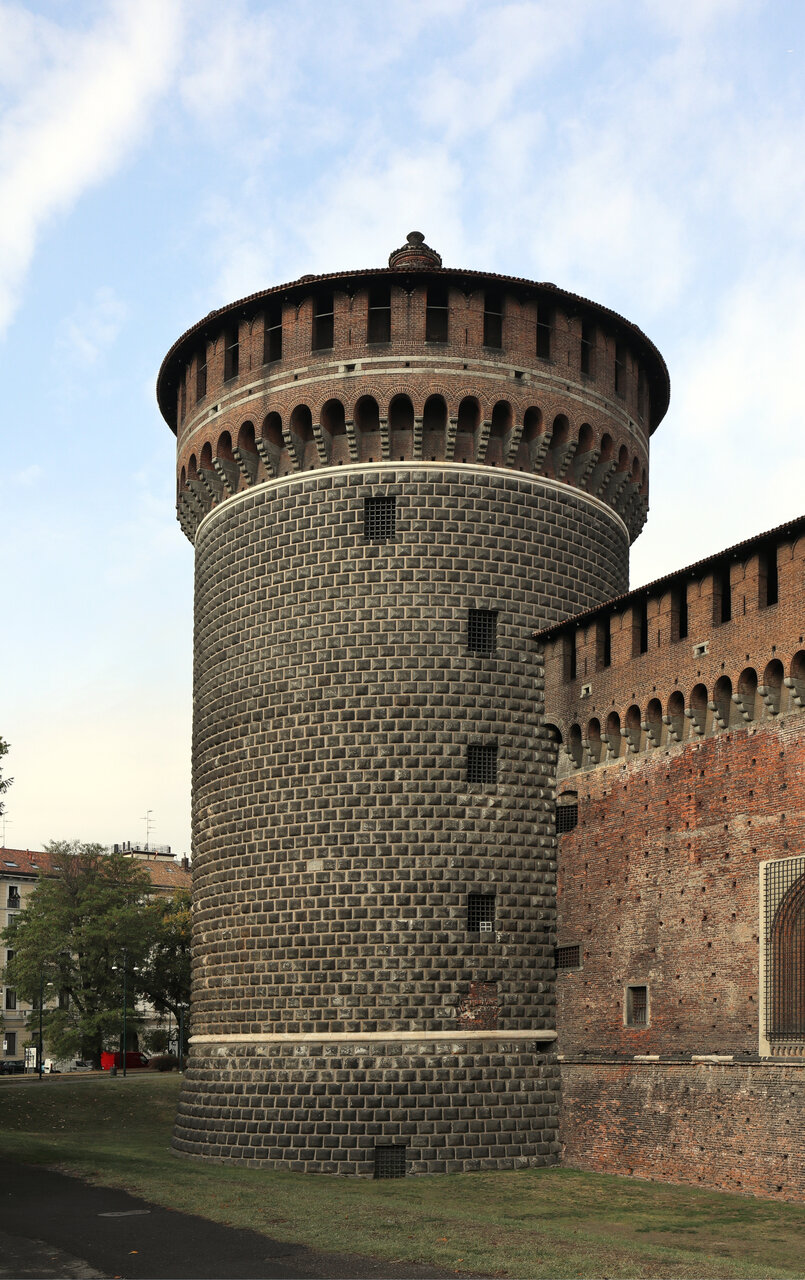
The Duchy of Milan (1395-1535) grew from the signoria of the Visconti family, lords of Milan since Archbishop Ottone seized power in 1277. The Visconti built a state in Lombardy through force and marriage, and Giangaleazzo Visconti (1378-1402) carried it furthest: he conquered Verona, Vicenza, Padua, Pisa, Siena and much of Umbria, bought the hereditary title of Duke of Milan from the emperor Wenceslaus in 1395, and was advancing on Florence when he died of plague. His duchy was the most modern government in Italy, with salaried officials, systematic taxation, canals and the beginnings of the Duomo and the Certosa of Pavia.
After Giangaleazzo's death the conquests fell away and had to be retaken by his ruthless son Filippo Maria (1412-1447), the last Visconti duke, who ruled through condottieri, mercenary captains such as Francesco Bussone, called the Carmagnola, and Francesco Sforza. When Filippo Maria died leaving only a daughter, Milan proclaimed the short-lived Ambrosian Republic (1447-1450), which hired Sforza to defend it; Sforza starved the city into surrender instead and entered Milan as duke in 1450. The Sforza dukes, Francesco, Galeazzo Maria, murdered in church in 1476, and the usurper Ludovico 'il Moro', made Milan a center of Renaissance splendor: Ludovico employed Leonardo da Vinci, who painted The Last Supper for the refectory of Santa Maria delle Grazie, and Bramante rebuilt the city's churches.
It was Ludovico who opened Italy to invasion. Threatened by the Aragonese of Naples, he encouraged Charles VIII of France to claim the Neapolitan throne in 1494, beginning the Italian Wars. The French discovered they liked Milan better than its duke: in 1499 Louis XII, himself a Visconti descendant, took the duchy, and Ludovico died a prisoner in France (1508). For thirty-five years Milan was the chief prize of the wars between Valois France and Habsburg Spain, passing between them at Pavia (1525), where Francis I was captured, and through the Sack of Rome's aftermath.
In 1535 the last Sforza duke died childless, and Emperor Charles V annexed Milan, granting it to his son Philip of Spain in 1540. Spanish Milan, ruled by governors from the Castello Sforzesco, remained the keystone of Habsburg Italy for 170 years, famed for its citadel, its taxes and St Charles Borromeo's reforming archbishopric. The duchy's legacy is the Lombard state it created: canals and rice fields, the great cathedral, and the model of centralized territorial government that other Italian states, and their conquerors, imitated.
 Britannica: Milan
 Encyclopedia.com: Milan