 Go Back

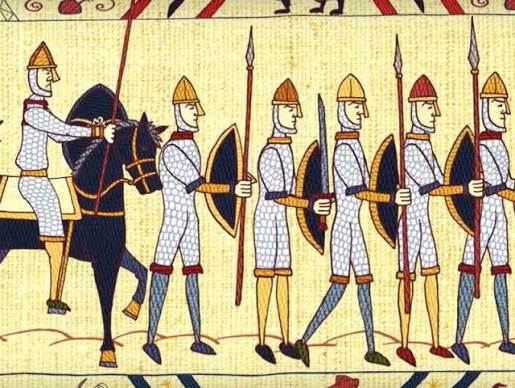
The Kingdom of England (Anglo-Saxon and Norman). The Kingdom of England was born from the wreckage of the Viking invasions. In the 9th century the Danes overran every English kingdom but one: Alfred the Great of Wessex held out against them, retook London in 886, and styled himself King of the Anglo-Saxons. His son Edward the Elder and grandson Athelstan finished the work: in 927 Athelstan conquered the last Viking kingdom, York, and became the first king of all the English - the founder of a kingdom that would last, in one form, until 1707.
Anglo-Saxon England was wealthy, administered, and cultivated - and fought over. Danish kings returned: in 1016 Cnut the Great made England part of his North Sea empire. But the decisive break came in 1066. When Edward the Confessor died childless, William, Duke of Normandy, claimed the crown, landed with his army, and killed King Harold at Hastings on 14 October 1066. On Christmas Day he was crowned King of England.
The Norman Conquest was a revolution more total than almost any in European history. Within twenty years virtually all English land had passed to a few hundred Norman barons, held from the king by military service; castles rose everywhere; a French-speaking aristocracy ruled an English-speaking people; and the capital moved from Winchester to Westminster and London. Norman barons owed the king the service of their knights - the famous feudal levy of England - and the Conquest's castles, from the Tower of London outward, stamped the new order onto the landscape.
Out of the fusion of conqueror and conquered came medieval England: its common law, its Parliament, and eventually the English language itself, reborn from the blending of Anglo-Saxon and French. Under Henry II (1154-1189), the first Angevin king, England became the heart of an Angevin realm with vast holdings in France - and the stage on which the struggles of crown, barons, and church would forge the institutions England still has.
 Britannica: United Kingdom - Anglo-Saxon, England, History
 World History Encyclopedia: Norman Conquest of England
 BBC: Why was the Norman Conquest important? - BBC Bitesize
 National Geographic: What was the Battle of Hastings and how did it transform England?