 Go Back

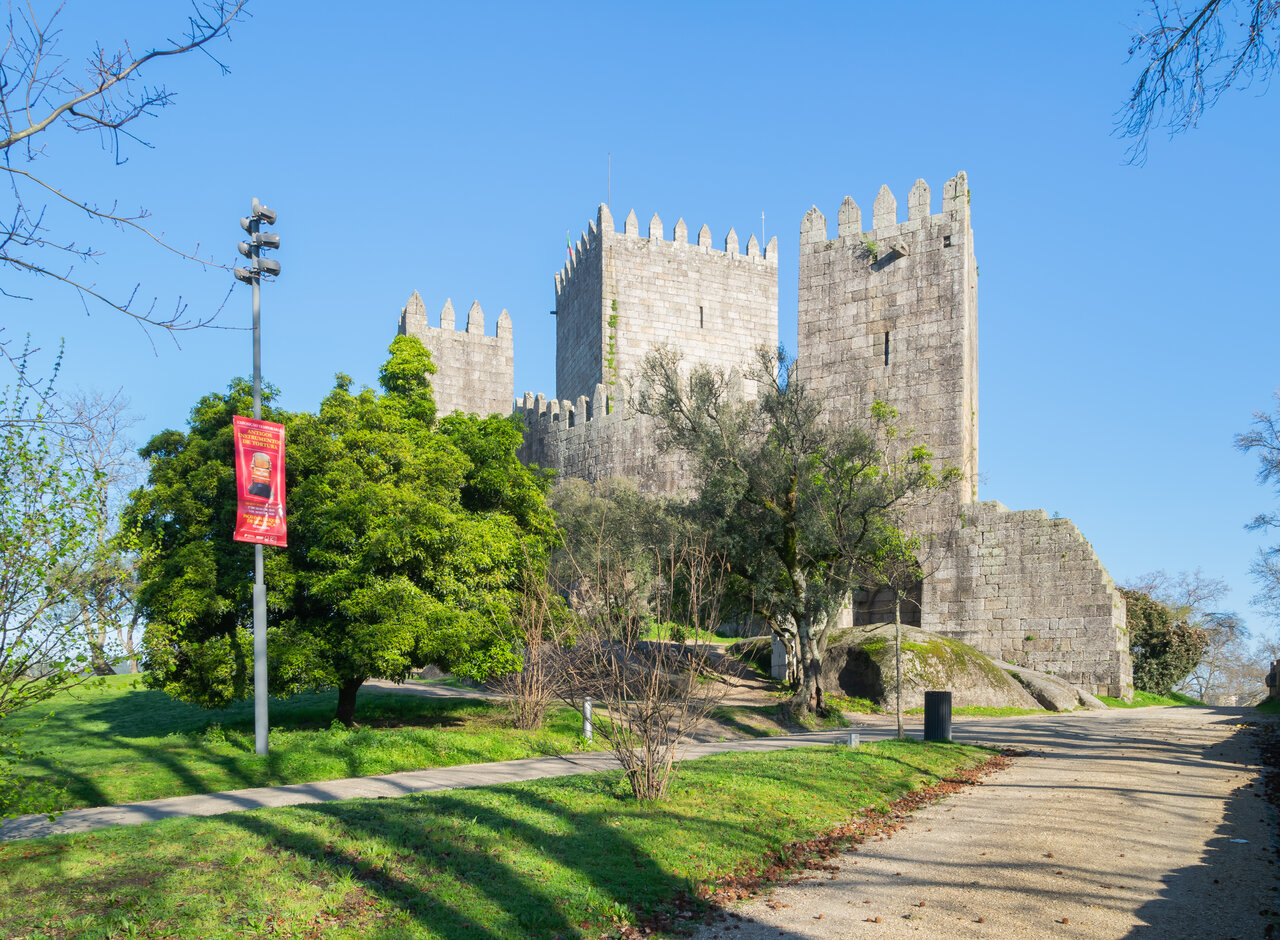
The Kingdom of Portugal emerged in the twelfth century from the County of Portugal, a fief of the kingdom of Leon-Castile granted to Henry of Burgundy in 1096. His son, Afonso Henriques, defeated his own mother's forces at Sao Mamede (1128), won a famous victory over the Almoravids at Ourique (1139), and after it styled himself king. Leon accepted the title by the Treaty of Zamora (1143), and the papacy, won over by his crusading participation in the Reconquista, recognized his kingship in 1179. Afonso's conquest of Lisbon in 1147, with the help of English and Flemish crusaders bound for the Second Crusade, gave the new kingdom its future capital.
Under Afonso's successors the kingdom pushed south at the expense of the Muslim taifas, the frontier fortified by the crusading military orders, the Templars and the Portuguese Order of Avis. The advance was checked by the Almohad caliphs but resumed after their collapse, and in 1249 Afonso III captured Faro, completing the Portuguese Reconquista. Portugal thus fixed its borders, roughly unchanged to the present, earlier than any other European kingdom, which freed it from peninsular entanglements. The reign of Dinis (1279-1325) consolidated the state: he founded the University of Lisbon (1290), made Portuguese the language of administration, built castles and the pine forests of Leiria, and developed agriculture and commerce.
After a dynastic crisis in 1383-1385, when Castile claimed the crown, the master of Avis, Joao I, won the throne with the backing of Lisbon's people, beating Castile at Aljubarrota (1385), and founded the Aviz dynasty. His alliance with England, sealed by the Treaty of Windsor (1386), endures as one of the oldest diplomatic alliances in the world. His sons, including Prince Henry the Navigator, began Portugal's oceanic enterprise: Ceuta was taken in 1415, Madeira and the Azores settled, and Portuguese caravels worked down the African coast. Vasco da Gama reached India in 1498, and within decades Portugal commanded a seaborne trading empire from Brazil to the Moluccas.
The empire's wealth funded the golden age of Manuel I, the Manueline style of the Jeronimos monastery and the Tower of Belem, but the small kingdom strained to hold a world. In 1578 King Sebastian and much of the nobility died at Alcazarquivir in a disastrous Moroccan crusade, leaving the throne to an aged cardinal and then, in 1580, to Philip II of Spain, who united the crowns. Sixty years of Iberian Union cost Portugal colonies and independence until a noble revolt restored national kingship in 1640 under John IV of Braganza. Portugal recovered its empire piecemeal, lost Ceylon and Malabar to the Dutch, and reoriented toward Brazil, whose gold and diamonds financed the eighteenth-century monarchy.
 Britannica: Portugal
 World History Encyclopedia: Portugal & the Age of Exploration
World History Encyclopedia: Vasco da Gama
 Encyclopedia.com: Portugal
Encyclopedia.com: Afonso I of Portugal