 Go Back

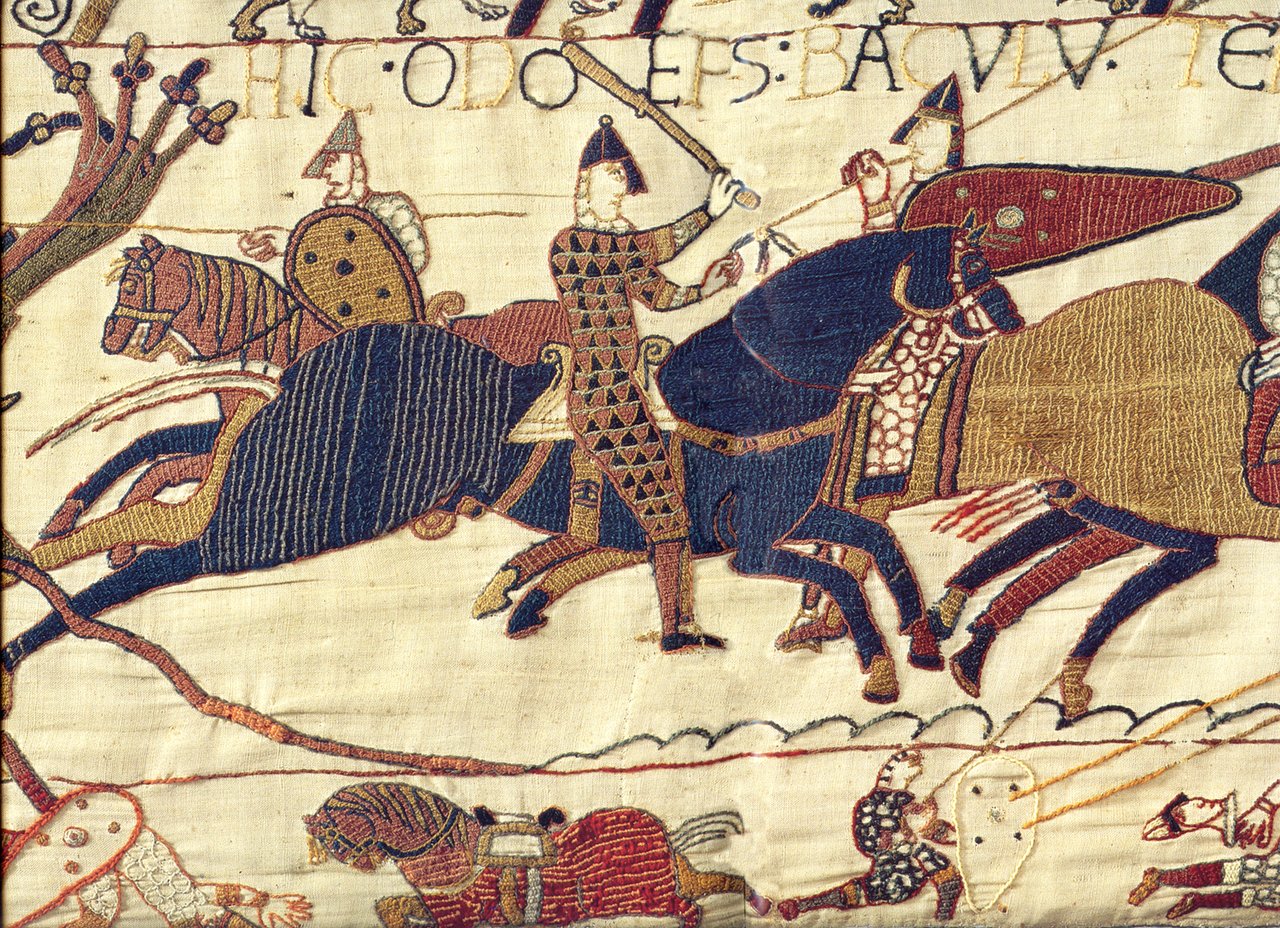
The Norman Conquest. On 5 January 1066 Edward the Confessor, King of England, died childless, and the witan chose Harold Godwinson, Earl of Wessex, the most powerful man in the kingdom. Across the Channel, Duke William of Normandy claimed that Edward had promised him the throne and that Harold had sworn to support him. Harold swore anyway - on sacred relics, the Normans said - and William prepared an invasion with the Pope's banner behind him. First, though, another claimant struck: in September the Norwegian king Harald Hardrada landed in the north with Harold's own brother Tostig, and Harold Godwinson force-marched his army to destroy them at Stamford Bridge on 25 September.
Three days later William landed at Pevensey. Harold turned his exhausted army around and marched it two hundred and fifty miles south, meeting the Normans on a ridge near Hastings on 14 October 1066. All day the English shield-wall held against Norman arrows and cavalry; late in the afternoon the feigned retreats drew the English downhill and broke their line, and Harold fell, struck - the Bayeux Tapestry's ambiguous figure suggests - by an arrow and cut down by knights. By Christmas, William was crowned King of England in Westminster Abbey.
Conquest followed coronation. William ground down resistance in the west and north - the Harrying of the North in 1069-70 left Yorkshire a wasteland - and secured his kingdom with castles: within a generation the motte-and-bailey and then the stone keep, from the White Tower of London to Dover, stood over every town of consequence. In 1086 he ordered the survey of his whole kingdom, recorded in Domesday Book, the most complete record any medieval state ever made of itself.
The conquest replaced a ruling class wholesale: by 1086 only a handful of English landowners remained, and Norman French became the language of court, castle and law for three centuries, while English went underground and emerged transformed. England was bound into the politics of France, pulling its kings into continental wars for four hundred years, and its church, law and administration were remade on continental lines. No event in English history cut deeper: a new aristocracy, a new architecture, a new language of power - and the last successful invasion of England.
 Britannica: Norman Conquest
Britannica: Battle of Hastings
 The National Archives: Domesday Book