 Go Back

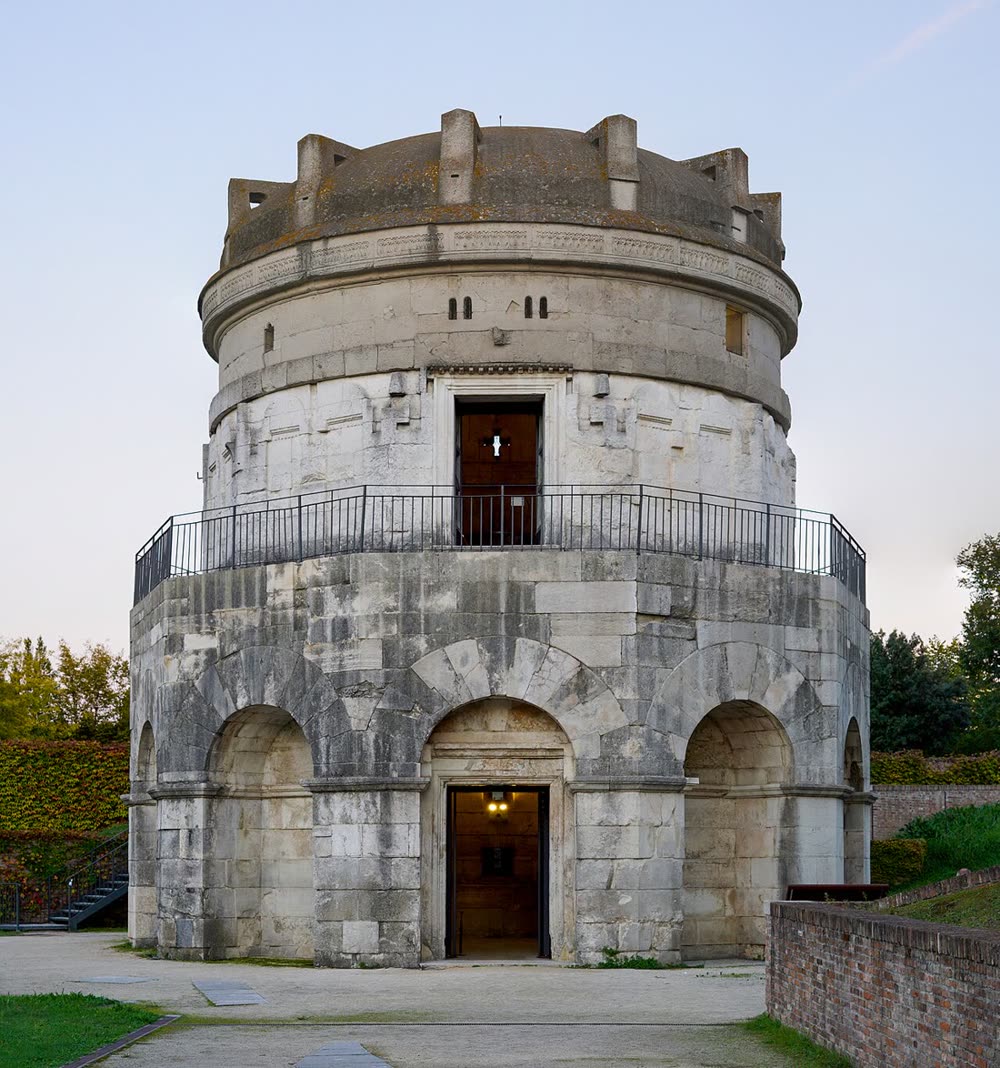
When the Western Roman Empire collapsed in 476, Italy passed through two Germanic kingdoms before the Middle Ages truly began. The first was the Ostrogothic (493-553). Theodoric the Great, who had spent his youth as a hostage at Constantinople, came to Italy with the Eastern emperor Zeno's commission, overthrew Odoacer - the soldier who had deposed the last Western emperor - and ruled from Ravenna for thirty-three years. He kept the Roman administration, the Senate, and Roman law largely intact, governing Italy more peacefully than it had known for generations; his great stone mausoleum still stands at Ravenna.
Theodoric's kingdom died with his dynasty. After his daughter Amalasuntha's overthrow, the emperor Justinian sent his armies west in 535 to restore Italy to direct Roman rule. The general Belisarius took Ravenna and captured the Gothic king Witiges, but the Goths rallied around Totila, who reversed nearly the whole conquest and even took Rome itself. The war ground on for nearly twenty years until the aged eunuch-general Narses destroyed the last Gothic armies - Totila fell at Taginae in 552, and the last king, Teia, at Mons Lactarius in 553. Italy was Byzantine again, and ruined: a generation of sieges, sacks, and famine had emptied its cities.
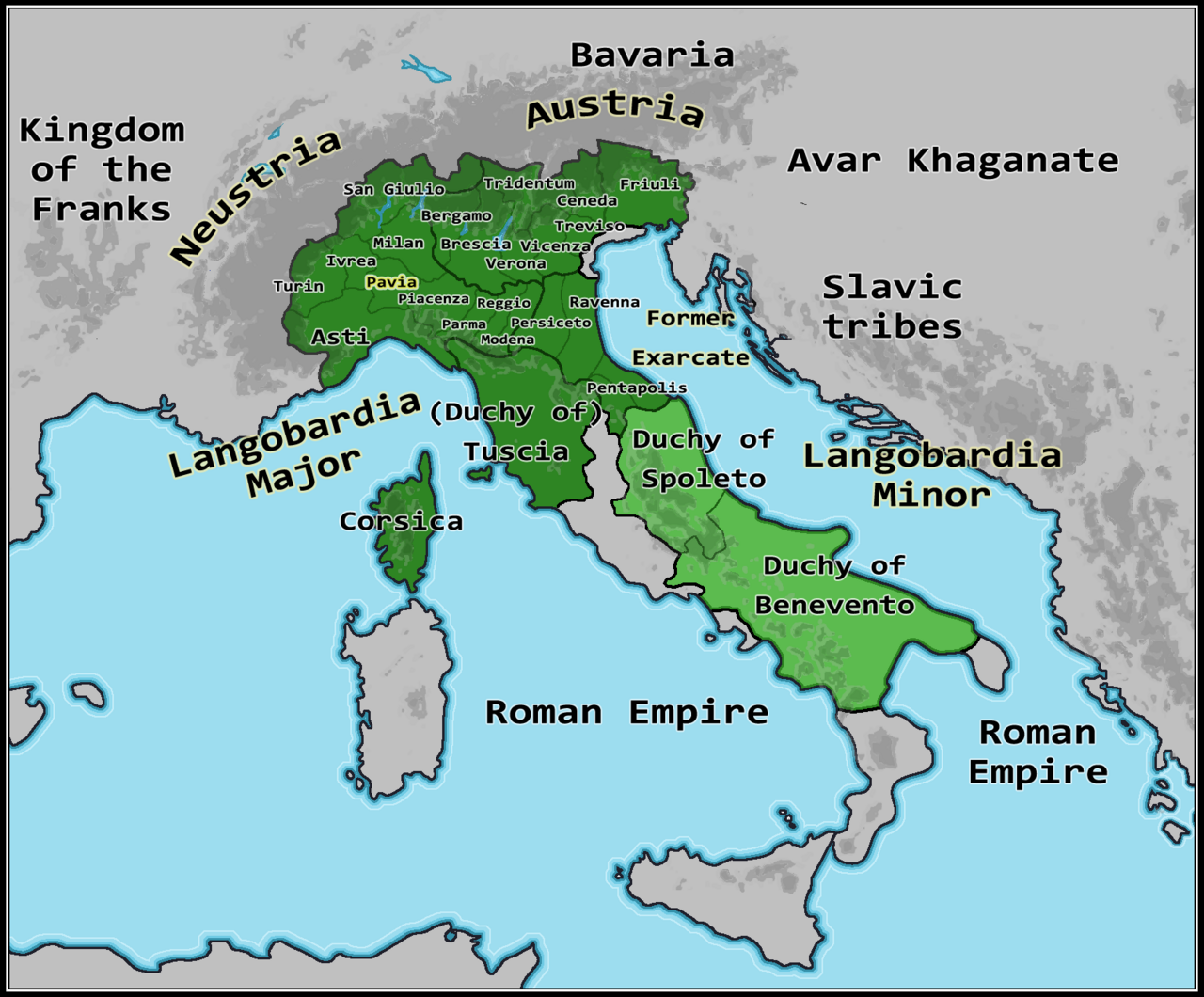
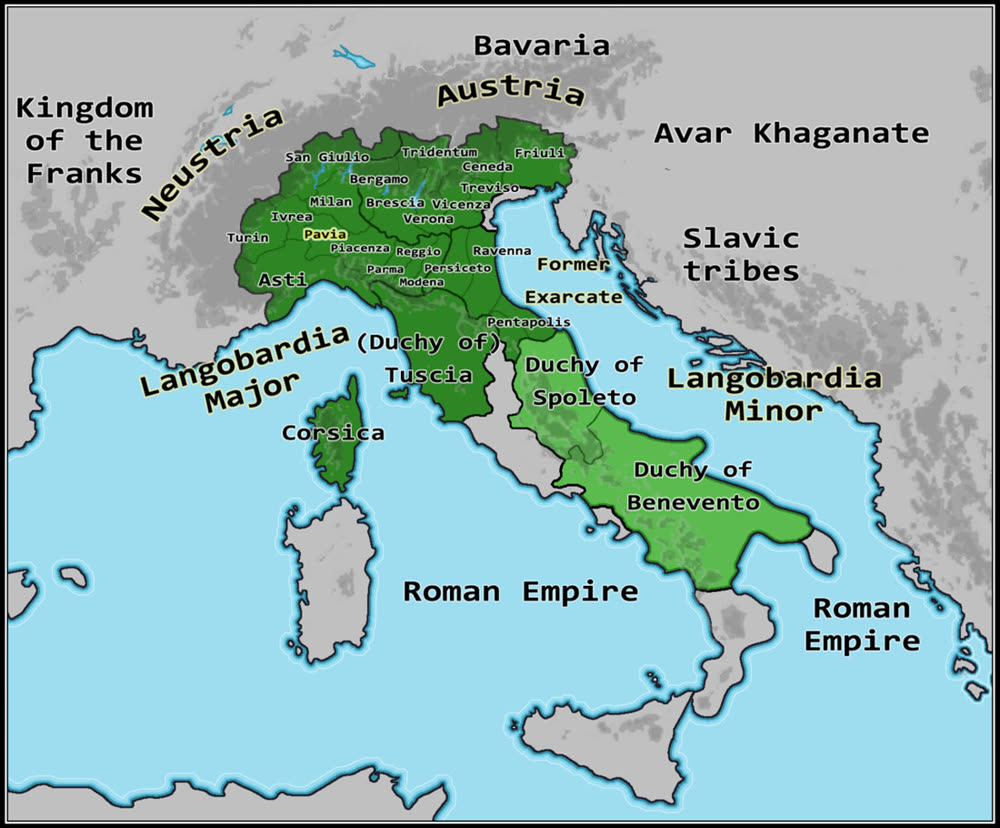
The Lombards filled the vacuum almost at once. In 568 their king Alboin led his people over the Alps from Pannonia, and within a few years they held most of the peninsula - Pavia, their future capital, fell in 572 after a three-year siege. The Lombard kingdom never mastered all of Italy: the Byzantines kept Ravenna, Rome, and strips of coast, and the great southern duchies of Spoleto and Benevento obeyed the kings at Pavia only loosely. Over two centuries the Lombards gradually Romanized - their speech, dress, and custom faded, and they converted from Arian Christianity and paganism to Catholicism - while the kingdom reached its height under King Liutprand (712-744), Italy's dominant power.
The end came from the north. When the last Lombard king, Desiderius, marched on Rome itself in 772, Pope Hadrian I called in the Franks. Charlemagne crossed the Alps, took Pavia in 774, sent Desiderius to a monastery, and crowned himself King of the Lombards. Italy's last Germanic kingdom was ended - though Lombard dukes held out in Benevento for centuries more, and the very name of Lombardy keeps their memory.
 Britannica: Lombard
 World History Encyclopedia: Ostrogoth
 The Metropolitan Museum of Art: Italian Peninsula, 500–1000 A.D.
 Wikipedia: Ostrogothic Kingdom