 Go Back

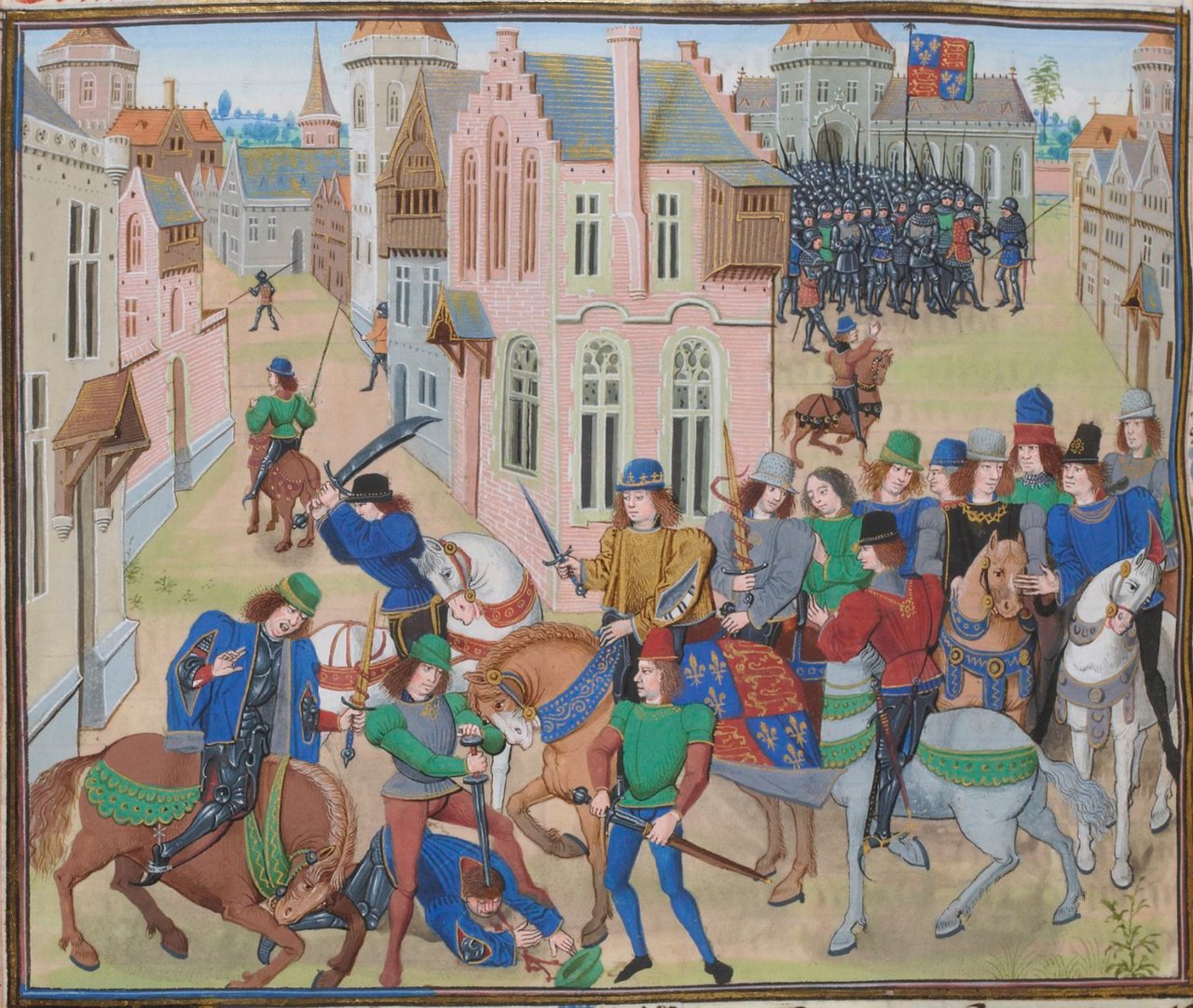
The Peasants' Revolt. A generation after the Black Death carried off perhaps half of England, the survivors found their labor precious and their prospects rising - and their lords determined to hold them down. The Statute of Labourers froze wages, the lawyers of the manor dug up old dues, and villeinage, the bondage of the unfree peasant to his lord, was enforced more harshly as it became less bearable. Into this resentment the government of the boy-king Richard II dropped three poll taxes in four years, and the third, in 1380, fell on every adult in the realm, rich and poor alike.
In May 1381 the tax collectors came to Essex, and Essex refused to pay. The revolt spread through Kent, where the rebels freed the itinerant preacher John Ball from prison - his rhyme, when Adam delved and Eve span, who was then the gentleman, became the slogan of the rising - and chose as their captain Wat Tyler, perhaps an old soldier. On 12 June the Essex and Kentish men, tens of thousands strong, camped on Blackheath outside London, and the next day sympathizers opened the city to them.
For three days London was theirs. The rebels burned the Savoy, John of Gaunt's great palace, opened the prisons, beheaded the Lord Chancellor and the Lord Treasurer on Tower Hill, and met the fourteen-year-old king twice in parley. At Mile End, Richard granted them charters of freedom and pardon, and most of the Essex men went home believing they had won. At Smithfield the next day, in the middle of a tense negotiation, the Lord Mayor of London suddenly cut Wat Tyler down, and the rebel army wavered, bows half-drawn - until the boy-king rode forward alone and told them: I am your captain, follow me.
It was a rescue, not a surrender. Once the danger passed, the charters were revoked - villeins you are and villeins you shall remain, Richard told the suppliants of Essex - and the rebel leaders were hunted down and hanged. Yet the revolt had burned itself into the mind of the governing class: no poll tax was attempted again for six hundred years, and villeinage, broken in practice, faded away within a generation. The rebels of 1381 lost every battle but the last one.
 Britannica: Peasants' Revolt
 World History Encyclopedia: Peasants' Revolt
Britannica: Richard II