 Go Back

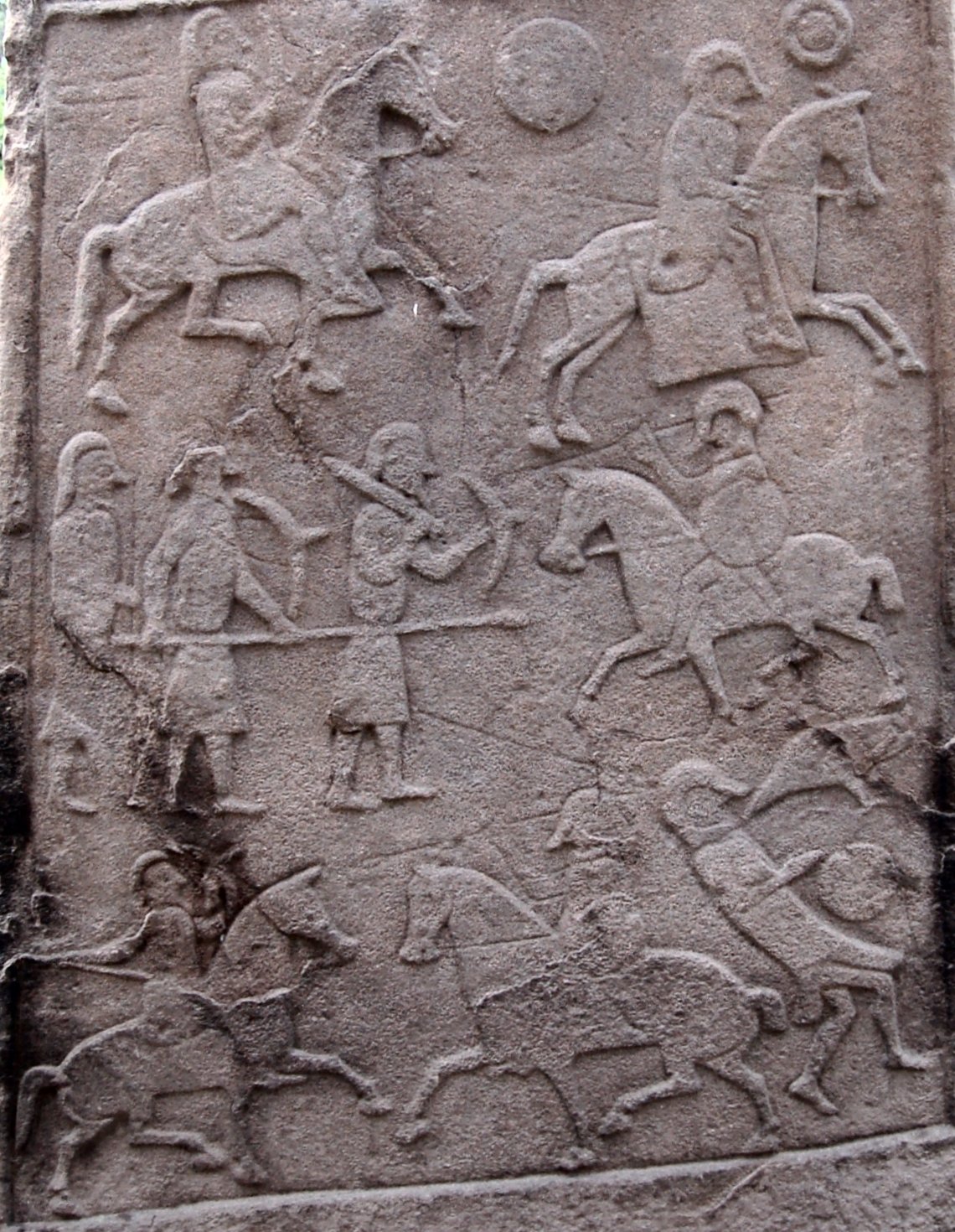
The Picts and the Birth of Alba. North of the Roman wall lay the people the Romans called Picti, the painted ones. The Picts were not one tribe but a confederation of peoples of northern and eastern Scotland, farmers and formidable warriors who had broken Roman expeditions and, in 685, destroyed a Northumbrian army at Dun Nechtain, one of the great battles of early Britain. They left no writings of their own, but they left their art: hundreds of carved stones incised with the enigmatic Pictish symbols - beasts, mirrors, combs and crescents - and later cross-slabs of breathtaking workmanship, and hoards of silver like the treasure of St Ninian's Isle.
Pictish kingship passed not from father to son but, most scholars hold, through the mother's line, a system that kept the crown moving between kindreds. Pictland was divided into great provinces, each with its own mormaer, and the overking ruled from fortresses like Burghead and Dunnottar. Conversion came in the sixth and seventh centuries, traditionally through Columba of Iona, and the Pictish church with its monasteries at St Andrews and Dunkeld became a partner of the kings.
West of the Picts, in Argyll, stood Dal Riata, the kingdom of the Scots - Gaelic speakers whose kindred spanned the North Channel to Antrim in Ireland. For centuries Picts and Scots fought, married and traded. Then, in the ninth century, under pressure from Viking assaults that shattered both peoples, the two crowns united: Kenneth mac Alpin, king of Dal Riata, took the Pictish throne about 843, and his descendants ruled a merged realm that called itself Alba.
The union was the birth of Scotland. The Pictish language and symbols faded away, absorbed into Gaelic culture so completely that historians still argue over how, while the kingship of Alba moved its heart to Scone, where Scottish kings were inaugurated on the Stone of Destiny. When Macbeth and later Malcolm III ruled in the eleventh century, they were kings of a Gaelic-speaking Alba that reached from the Mounth to the Forth - the core of the kingdom to come.
 Britannica: Pict
 World History Encyclopedia: Picts
Britannica: Kenneth I