 Go Back

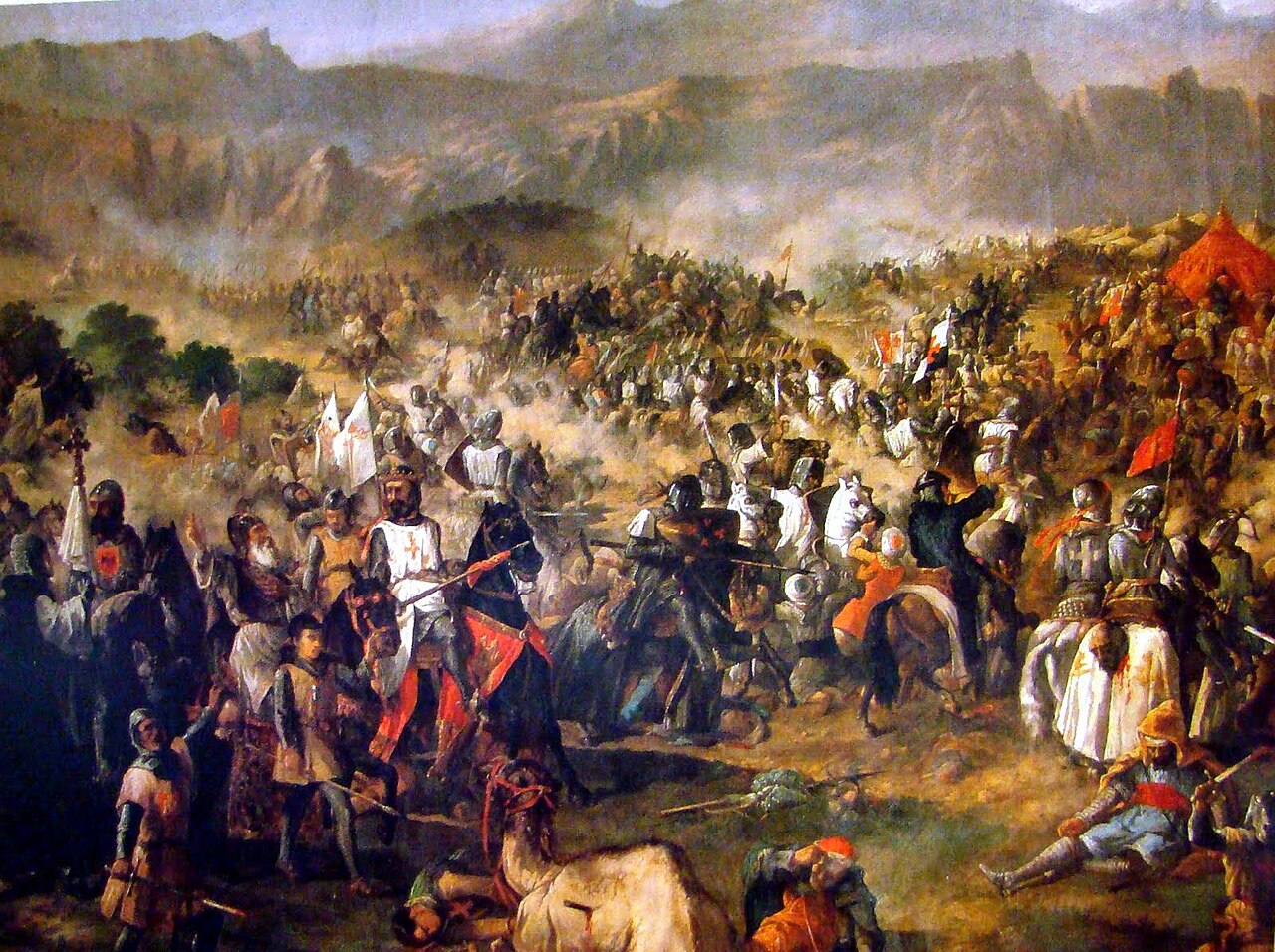
The Reconquista. The Reconquista - the 'reconquest' of Spain from Muslim rule - was the longest war in European history: nearly 780 years from the first Christian victory at Covadonga (traditionally 718 or 722) to the fall of Granada in 1492. It began with a remnant: after Muslim armies destroyed the Visigothic kingdom in 711, survivors held out in the northern mountains of Asturias, and from that foothold the Christian kingdoms of Spain slowly grew.
The advance came in waves. By the early 11th century the Caliphate of Cordoba had shattered into petty taifa states, which the northern kings raided and milked for tribute (parias). Toledo, the old Visigothic capital, fell permanently in 1085. Muslim Africa struck back twice - the Almoravids and then the Almohads - but the crusade of 1212 broke their power at Las Navas de Tolosa, and in a single generation the great cities fell: Cordoba in 1236, Valencia in 1238, Seville in 1248. Only Granada survived, as a tributary state, for 250 more years.
The Reconquista was never a simple war of religions: Christian kings fought each other as readily as Muslims, Muslim taifas allied with Christian princes, and for centuries Christians, Muslims, and Jews lived mixed in the frontier society of convivencia. But as the frontier moved south, tolerance thinned.
The end came on 2 January 1492, when the Catholic Monarchs, Ferdinand and Isabella, received the surrender of the last Muslim ruler of Granada. Within months came the Alhambra Decree expelling Spain's Jews - some 200,000 people - and over the following century Spain's Muslims were forcibly converted and then expelled too. The Spain the Reconquista built was unified, militant, and intolerant - and, in the very year of Granada's fall, about to become a world empire.
 Britannica: Reconquista
 World History Encyclopedia: Reconquista
 Humanities LibreTexts: 17.4: Reading: Spain and Catholicism
 BBC: BBC World Service - Patterns of Faith, Convivencia or Conflict