 Go Back

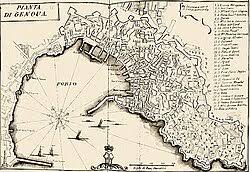
The Republic of Genoa (1099-1797) was Venice's great rival: the smaller, scrappier maritime republic of the Ligurian coast, whose merchants and sailors contested the Mediterranean for three centuries. Hemmed in by mountains on a strip of coast too steep to farm, Genoa had no choice but the sea - and it made the sea pay. Sacked by Muslim raiders from North Africa in 935, the city answered by taking the war to its attackers: in 1087 Genoese and Pisan fleets struck North Africa and burned the Arab fleet at Mahdia, winning control of the western Mediterranean.
Then came the Crusades, and Genoa's fortune. Genoese ships carried the First Crusade, blockading Antioch in 1098, and Genoese crossbowmen fought at the siege of Jerusalem in 1099. The payback was trading quarters in the new Crusader ports of the Levant - the first stepping stones of a commercial empire. In 1099 the Genoese organised themselves into a compagna communis, and the republic was born.
Genoa's real empire was not land but trade routes. In 1261 the republic backed the Byzantine emperor Michael VIII Palaiologos in retaking Constantinople from the Latins, and the reward was enormous: the quarter of Pera (Galata) opposite Constantinople and access to the Black Sea, which Venice had dominated. Genoese merchants settled at Caffa in the Crimea - held from 1266 to 1475 - and pushed east along the caravan roads to Tabriz and beyond, trading grain, slaves, furs and alum; at Phocaea on the Anatolian coast they held the alum monopoly, and the island of Chios (1264-1566) gave them its precious mastic. Lesbos, Ainos, Samos and trading posts from La Tana to Trebizond followed.
Closer to home, Genoa first eliminated its oldest rival. At the Battle of Meloria in 1284 its fleet crushed Pisa so thoroughly that Pisa never recovered as a sea power, leaving Genoa master of Corsica (held 1284-1768) and for a time much of Sardinia. Even tiny Tabarca off Tunisia, an island of coral fishers, stayed Genoese from 1540 to 1742.
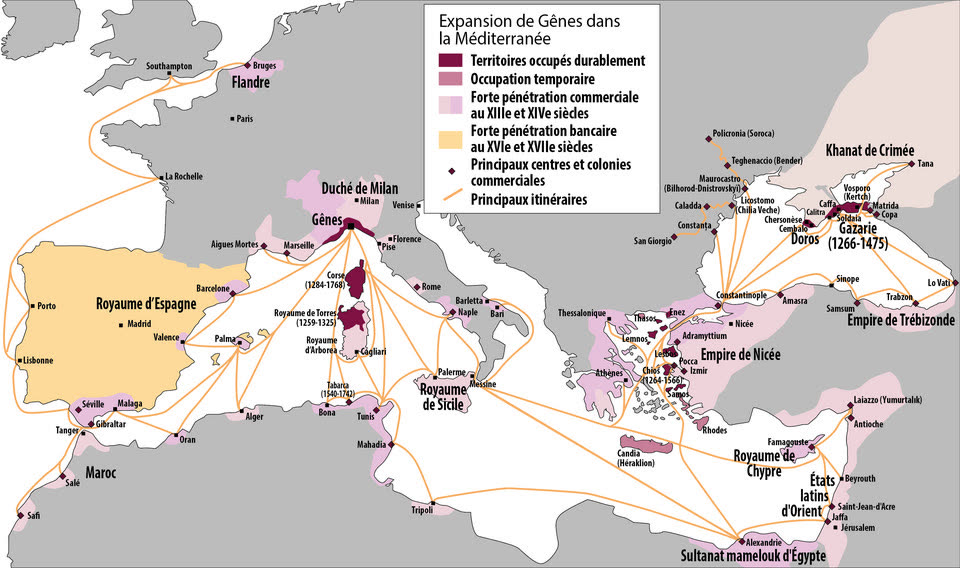
For over a century Genoa and Venice fought for supremacy - four wars, raids, piracy and massacres from the Aegean to the Adriatic. The rivalry climaxed in the War of Chioggia (1378-1381): Genoa occupied the very lagoon of Venice, and Venice came within sight of ruin. But the Venetians turned the siege around, and by the Treaty of Turin in 1381 Genoa quit the contest for the East for good. It kept its colonies, but the wind had changed: the fall of Constantinople in 1453 strangled the Black Sea trade, and in 1475 the Ottomans took Caffa and the Crimea, ending Genoa's eastern empire. Genoa turned west instead: to Spain, and to finance.
In the 16th century Genoa reinvented itself as the banker of Europe. The mighty Bank of Saint George, founded back in 1407 to manage the republic's debt, had grown into a state within the state - it ran Corsica, collected taxes and lent to kings. Under Andrea Doria's constitution of 1528 the republic tied itself to Spain, and Genoese bankers became the long-lasting financial partners of the Spanish Empire: they moved the silver of the Americas, financed the fleets and armies of Charles V and Philip II, and for much of the century between about 1557 and 1627 - the "age of Genoa" - the republic, its colonies gone, was one of the major financial centres of Europe.
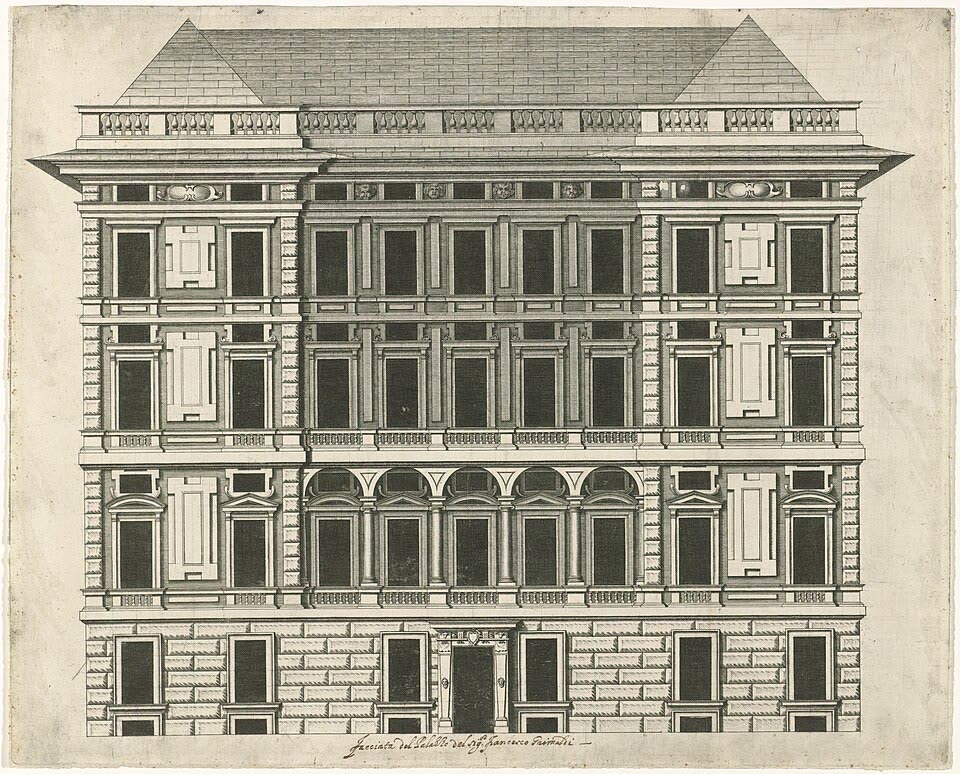
The profits were built into stone. Genoa's new nobles raised entire streets of palaces - the Strade Nuove and the Palazzi dei Rolli, today a UNESCO World Heritage site - advertising their fortunes in marble while their money worked in Madrid, Antwerp and Seville.
The republic declined with Spain. As Spanish bankruptcies multiplied and the Atlantic trade passed Genoa by, the city of bankers faded into a genteel backwater, clinging to its aristocratic constitution while Europe changed around it. It lost Corsica, its last great colony, to France in 1768. The end came in 1797, when Napoleon's armies swept into Italy and turned the ancient republic into the Ligurian Republic; by 1805 it was annexed to France outright, and the Congress of Vienna handed the wreck to the Kingdom of Sardinia.
Its legacy is larger than its territory ever was: a model of merchant finance that helped invent modern capitalism, the bank as an institution of state, and nearly seven centuries of proud Ligurian independence - proof that a small city with ships, credit and nerve could rival empires.
 UNESCO World Heritage Centre: Genoa: Le Strade Nuove and the system of the Palazzi dei Rolli
 UNESCO: The Residences that Supported a City-State - Genoa: Le Strade Nuove and the system of the Palazzi dei Rolli
 Encyclopaedia Iranica: GENOA
 Britannica: Genoa