 Go Back

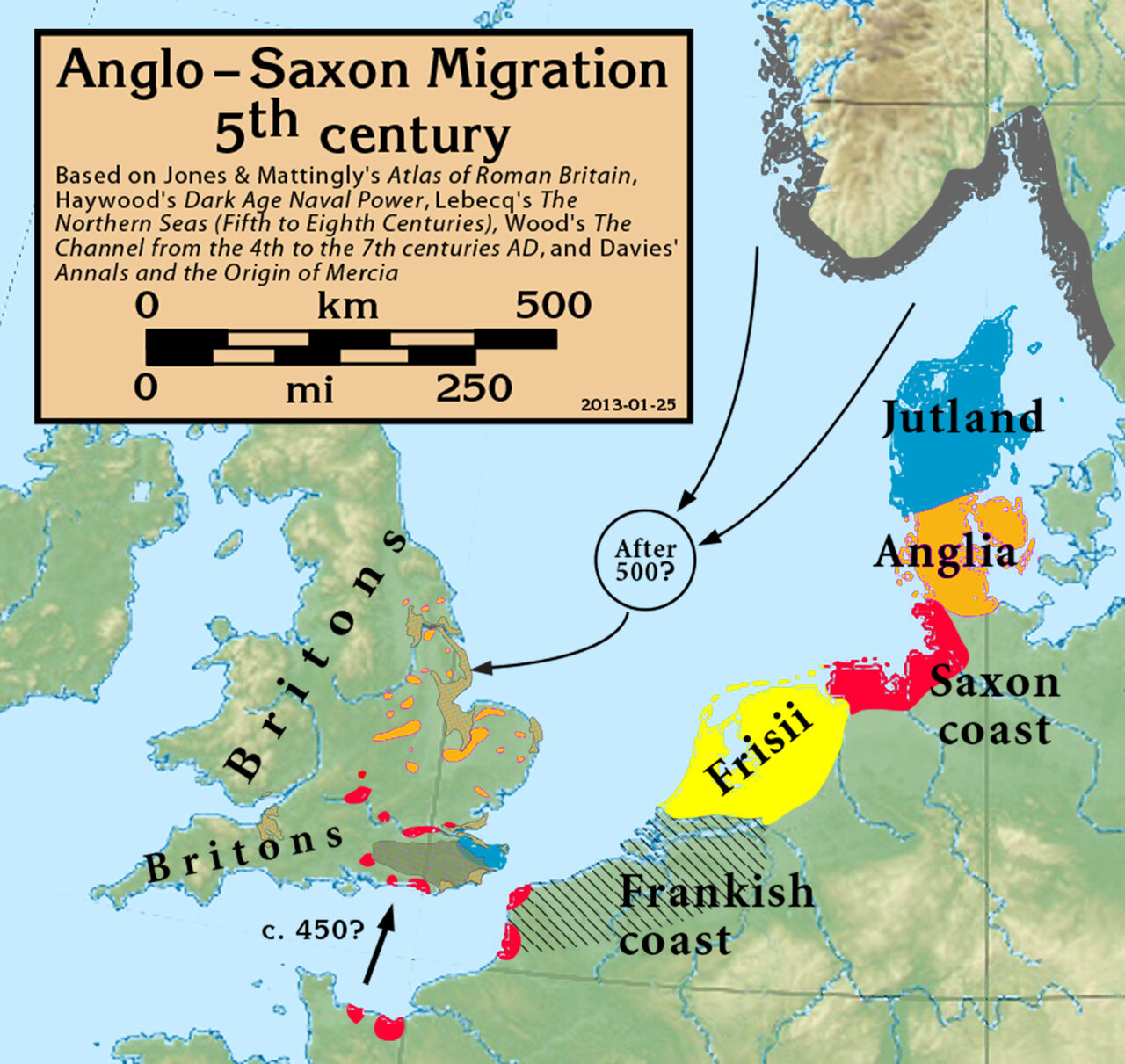
The Saxons, Angles and Jutes were Germanic peoples of the North Sea coastlands - the Saxons from the lower Elbe region, the Angles from the Schleswig-Angeln peninsula, and the Jutes, probably, from Jutland - who migrated to Britain in the fifth and sixth centuries CE. After Rome withdrew its legions around 410, the Romano-British towns faced Pictish and Irish raiding. According to the tradition preserved by the monk Bede, the British king Vortigern hired Saxon mercenaries to defend the land - and the mercenaries, seeing the country worth having, sent for their kinsmen and turned on their hosts.
Settlement came by small groups of warriors, farmers, and families rather than by any coordinated conquest, and British resistance was real. The Britons won a major victory at Mount Badon, traditionally dated about 500 and associated in later legend with King Arthur, which checked the invaders for a generation. But the balance tipped decisively in the later sixth century, as Anglian and Saxon warbands carved out permanent kingdoms. In the process much of Romano-British civilization - towns, roads, the Latin language, Christianity - faded from the lowlands, though modern archaeology shows the newcomers mixed with, more than exterminated, the native population.
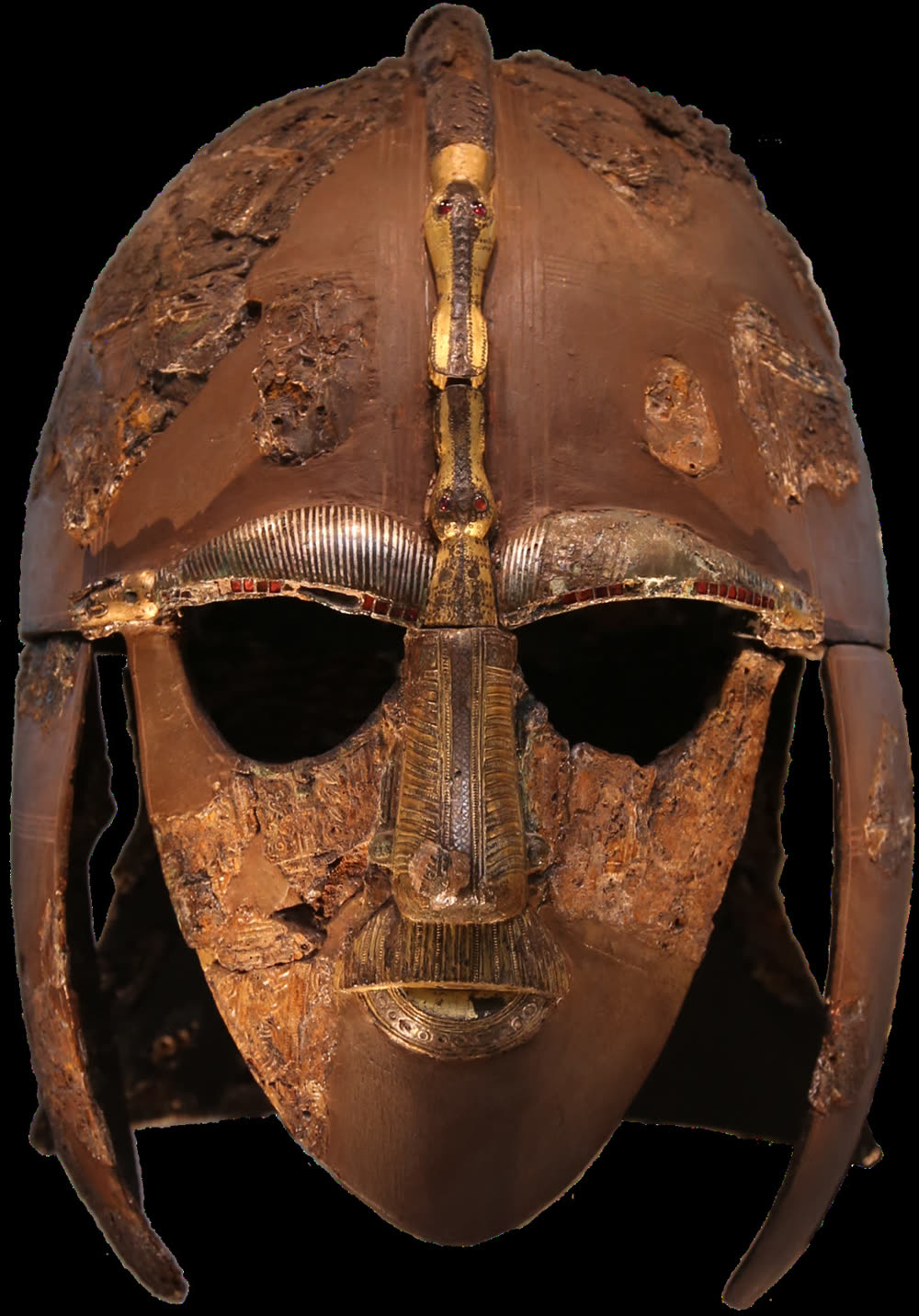
By about 600 the settlers had formed a patchwork of kingdoms traditionally called the Heptarchy: Kent, linked to the Jutes and famous for its early written law code; the Saxon kingdoms of Sussex, Wessex, and Essex; the Anglian kingdoms of East Anglia, Mercia, and Northumbria; and smaller peoples such as the Hwicce and the Middle Angles. These kingdoms fought constantly for overlordship, and their kings traced their descent from the god Woden. Pagan royal graves such as Sutton Hoo in East Anglia - where a king was buried in a ship with a hoard of gold, garnets, and a magnificent helmet - reveal a warrior aristocracy with trade links reaching to Byzantium.
The conversion of the English began when Pope Gregory the Great sent Augustine to Kent in 597; King Aethelberht, whose wife was a Frankish Christian princess, allowed the mission to preach, and Canterbury became the center of the English church. Irish monks from Iona converted Northumbria from the 630s, and the Synod of Whitby in 664 aligned the English kingdoms on Roman practice. Christianity brought literacy back, and with it charters, written law codes, and monasteries like Wearmouth and Jarrow, where Bede wrote the history that is our main source for the whole age.
Out of these peoples came England itself: the very name means 'land of the Angles,' and their language - Old English, the tongue of Beowulf - is the root of English today. The kingdoms of the Heptarchy would eventually be hammered into one kingdom under the kings of Wessex, in the fires of the Viking invasions of the ninth century.
 Britannica: Anglo-Saxon
 World History Encyclopedia: Saxons