 Go Back

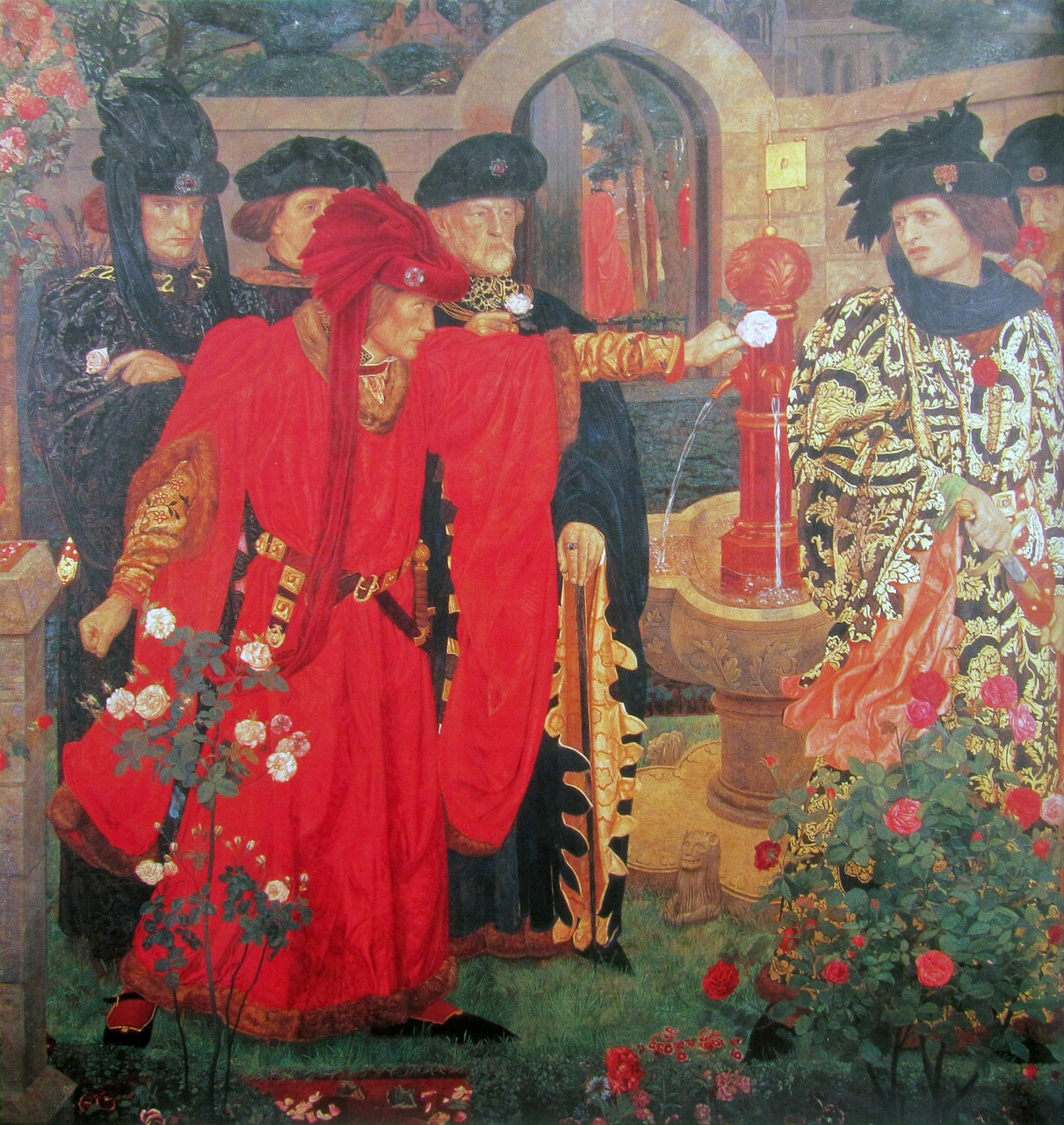
The Wars of the Roses (1455-1487) were a series of civil wars between the rival branches of the English royal house, the Lancastrians, symbolized by the red rose, and the Yorkists, by the white. The underlying cause was the weakness of Henry VI of Lancaster, pious, gentle and intermittently insane, whose government lost the Hundred Years' War in France and fell into debt, while rival magnates, over-mighty subjects with private retinues, fought for control of the court. The dynastic question opened in 1460 when Richard, Duke of York, heir presumptive after the birth of Henry's son displaced him, claimed the throne itself as the senior descendant of Edward III.
The first war began at St Albans in 1455. Yorkist and Lancastrian fortunes swung violently: York himself was killed at Wakefield (1460), but his son Edward, Earl of March, crushed the Lancastrians at Towton (1461), the bloodiest battle fought on English soil, and was crowned Edward IV. Margaret of Anjou, Henry VI's formidable queen, kept resistance alive in exile until Edward won twice in 1471, at Barnet, where the turncoat Earl of Warwick, the 'Kingmaker', died, and at Tewkesbury, where the Lancastrian Prince Edward was killed. Henry VI died in the Tower days later, and the Yorkist dynasty seemed secure.
Edward IV ruled capably until his sudden death in 1483, leaving two young sons. His brother Richard, Duke of Gloucester, seized the throne as Richard III, declared the princes illegitimate, and imprisoned them in the Tower of London, where they disappeared, almost certainly murdered. The usurpation split the Yorkist party and opened the way for an improbable claimant: Henry Tudor, Earl of Richmond, whose claim to the Lancastrian inheritance ran through the legitimized Beaufort line. In August 1485 Henry landed in Wales, gathered support, and killed Richard III at Bosworth Field, where the king, betrayed by the Stanleys, died fighting. Henry was crowned Henry VII on the battlefield.
Henry VII ended the wars by marriage and management. He married Elizabeth of York, uniting the two houses in the Tudor rose, and defeated the last serious Yorkist rising, the pretender Lambert Simnel, at Stoke Field (1487), often counted as the wars' true end. His reign then systematically broke the over-mighty subjects: retainers were restricted by law, royal finance rebuilt, and dynastic rivals executed. The old military aristocracy that had made and unmade kings for thirty years emerged decimated and cowed, and the Wars of the Roses left England a stronger, more centralized monarchy under the Tudors than it had been under the Plantagenets.
 Britannica: Wars of the Roses
 World History Encyclopedia: Wars of the Roses
World History Encyclopedia: Causes of the Wars of the Roses