 Go Back

The Welsh Kingdoms. When the Anglo-Saxons took the lowlands of Britain, the Britons of the west kept their hills. Medieval Wales was never one realm but a family of kingdoms - Gwynedd in the mountains of the northwest, Powys in the east, Deheubarth in the southwest - whose princes warred with the English, with each other, and within their own houses, for Welsh law divided a man's inheritance among all his sons, and every succession was a contest. Yet the Welsh shared one language, one law - the code of Hywel Dda, the tenth-century king who ruled most of Wales - and one fierce sense of being the true Britons, the old people of the island.
The Norman tide broke on the Welsh border. After 1066 the English kings planted barons along the frontier - the March, from Chester to Chepstow - and these Marcher lords conquered what they could hold, building the mightiest castles in Britain and ruling their lordships like little kings, with their own courts and armies, owing the crown little more than loyalty. Against them the Welsh princes fought a long, grinding war of raid and revolt, and slowly the balance turned: the twelfth and thirteenth centuries saw the rise of native principality, above all in Gwynedd.
Under Llywelyn the Great and his grandson Llywelyn ap Gruffudd, Gwynedd forced the other Welsh dynasties and even the Marchers to accept its leadership. In 1267 Henry III of England, by the Treaty of Montgomery, acknowledged Llywelyn ap Gruffudd as Prince of Wales - the first and last native prince formally to bear the title. It was the high point of Welsh independence, and it lasted fifteen years.
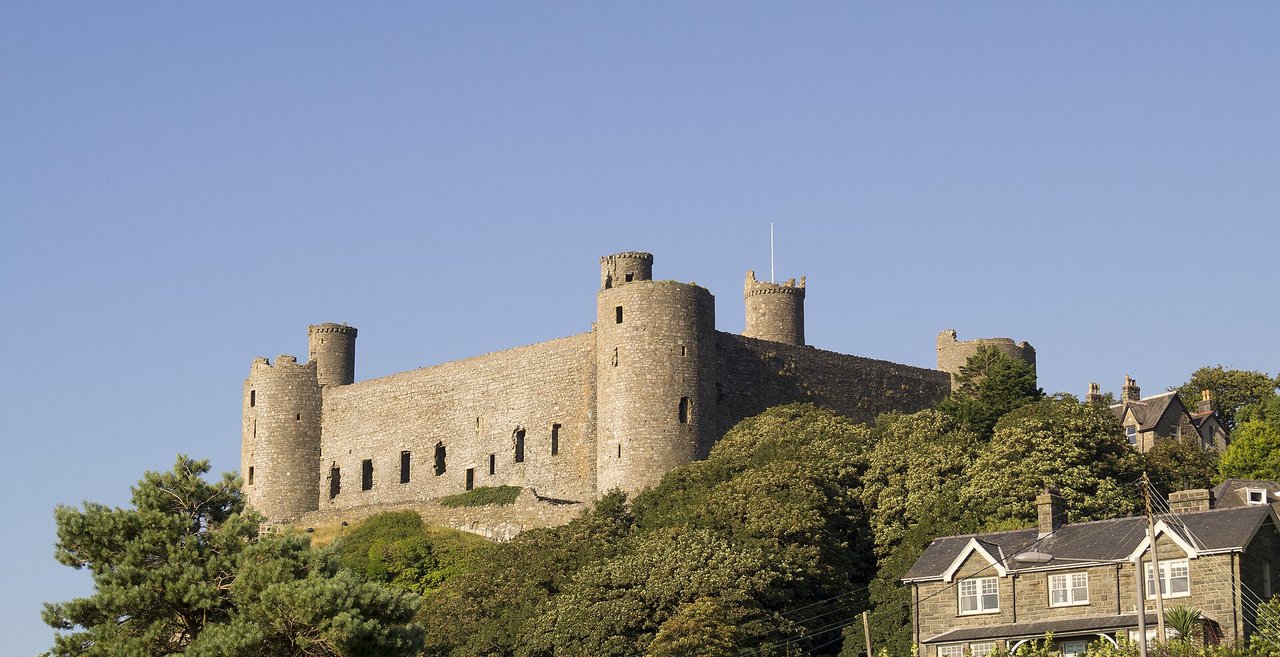
Edward I ended it. His armies overran Gwynedd in 1277 and again in 1282-83; Llywelyn was killed in a skirmish at Cilmeri, and his brother Dafydd was captured and executed. Edward ringed Snowdonia with the greatest castle-building program of the Middle Ages - Conwy, Caernarfon, Harlech, Beaumaris, today a World Heritage Site - and by the Statute of Rhuddlan in 1284 annexed the principality to the English crown. Wales would rise once more under Owain Glyndwr, but the age of the native princes had ended at Cilmeri.
 Britannica: Llywelyn ap Gruffudd
 UNESCO: Castles of King Edward in Gwynedd
Britannica: Marcher Lordships