 Go Back

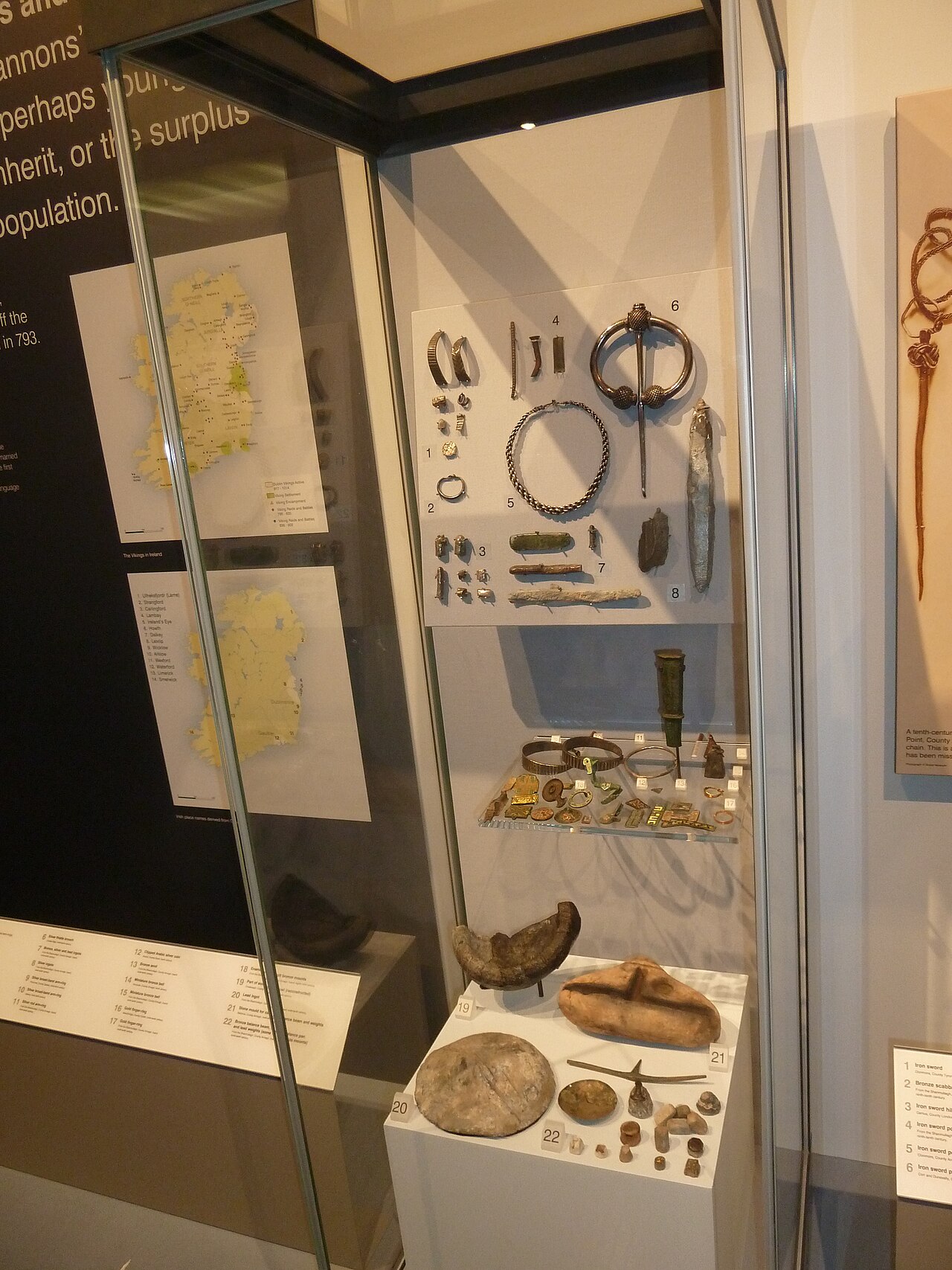
Viking Dublin. The first Viking longships appeared off Ireland in 795, when raiders fell on the island monasteries of Rathlin, Inishmurray and Iona. For a generation the Norsemen came to plunder: monasteries, rich in gold vessels and stored food, were their favorite targets, and the annals of the ninth century read as a roll of burned churches and carried-off shrines. Irish kings, endlessly at war with each other, sometimes allied with the raiders against their rivals, and so the strangers were drawn into Irish politics almost at once.
In 841 the Vikings wintered for the first time at Dublin, fortifying a longphort where the River Poddle met the Liffey - at Dubh Linn, the black pool. The raiding base became a town, and the town became a kingdom. Norse Dublin grew rich on trade: slaves above all, but also silver, furs, wine and walrus ivory, linking Ireland to a commercial world that ran from Scandinavia to Byzantium. The Vikings gave Ireland its first true towns - Dublin, Waterford, Wexford, Limerick and Cork were all Norse foundations - and its first coinage, minted in Dublin around 997.
The high point of Norse power came under kings like Olaf Guthfrithson, who in the 930s ruled Dublin and York together. The turning of the tide is traditionally fixed at the Battle of Clontarf in 1014, when the aged High King Brian Boru broke a Dublin-Leinster army at the cost of his own life. The tale is more tangled than the legend - Irishmen fought on both sides - but after Clontarf the Norse towns steadily lost independence and became prizes fought over by Irish kings.
The Norse towns survived their conquerors. Dublin remained the richest port in Ireland, which is why both the last High Kings and the Norman invaders of 1169 made it their first objective. Excavations at Wood Quay have uncovered entire streets of the Viking town, and the Norse legacy runs quietly through Irish life: in coastal place-names like Howth and Wexford, in words for ships and trade, and in the very existence of the capital city itself.
 Britannica: Dublin
 World History Encyclopedia: The Vikings in Ireland
Britannica: Brian Boru