 Go Back

Archaic cultures were ancient cultures of North and South America that developed from Paleo-Indian traditions and led to the adoption of agriculture. Britannica says they are defined by shared characteristics rather than a particular date or place. Their Paleo-Indian predecessors were highly nomadic, specialized hunters and gatherers. Archaic peoples lived in larger groups, stayed in one place for part of the year, and ate a highly varied diet. In the Southwest, the National Park Service dates the Archaic from the end of the Paleoindian period, with the earliest dates around 8,500 BC, to the adoption of agriculture in the north and pottery in the south, as late as the first few centuries AD in some places.
Archaic peoples were generalists. Their food remains include rabbits, antelope, deer, elk, moose and bison, water birds and land birds, fish and shellfish, and plant foods such as tubers, roots, seeds, fruits and nuts, chosen according to the season. They made tools not seen before in the Americas. Basketry and netting helped collect and store new plant foods, and grinding stones, including manos and metates, made hard seeds edible. Hunting kit included tanged and side-notched projectile points, atlatl weights, nets for birds and small game, and fishhooks. Britannica suggests that new foods and new tools probably developed together.
A more reliable food supply let larger groups gather, and people became more settled and more socially complex. In the late Archaic, people began to tend plants to a limited degree. East of the Mississippi River they focused on pigweed and related species, while groups in Mesoamerica worked with wild maize. Even then they depended mostly on hunting and gathering. The National Park Service divides the Southwest Archaic into Early (8,500 to 4,000 BC), Middle (4,000 to 2,000 BC) and Late (2,000 BC to as late as AD 500) phases, and notes a large increase in human presence and in settled life in the Late Archaic, tied to growing use of plant foods.
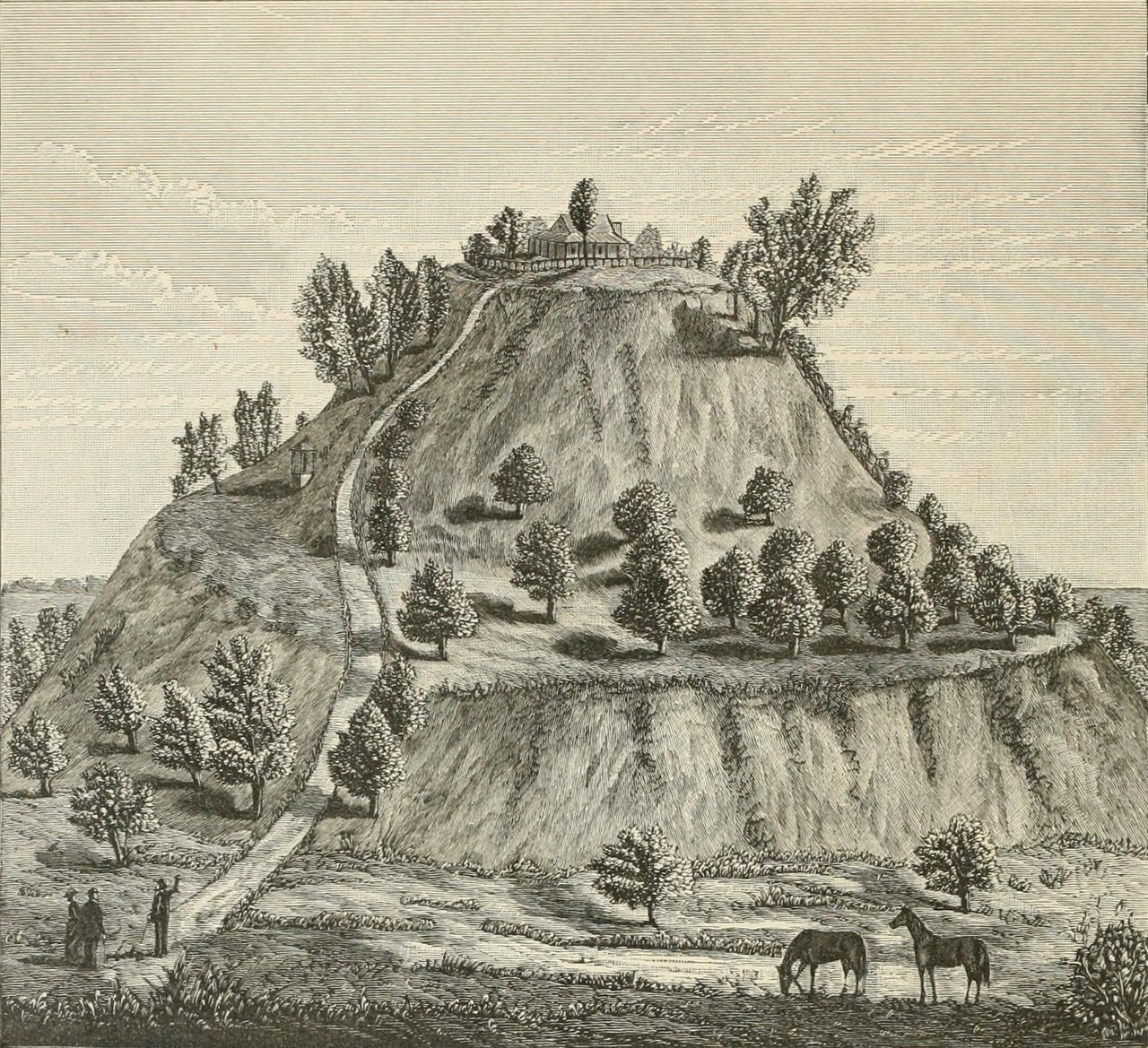
When a population puts more weight on producing food, Britannica says it is generally classed as a Woodland culture in the Eastern Woodlands, Southeast and Plains, or as an early Puebloan culture in the Southwest. The National Park Service reports farming in the Southwest as early as 2,000 BC and irrigation by 1,000 BC even in the north. The picture on this page is an 1882 engraving of Monks Mound at Cahokia. It belongs to a much later society. OpenStax describes Cahokia at its height, about AD 1100, as a city of more than ten thousand people with about 120 earthen mounds, which declined after AD 1300. It is shown here as a later example of mound building, not as an Archaic site.
 Britannica: Archaic Culture
 National Park Service: The Archaic Period
 OpenStax U.S. History: The Americas