 Go Back

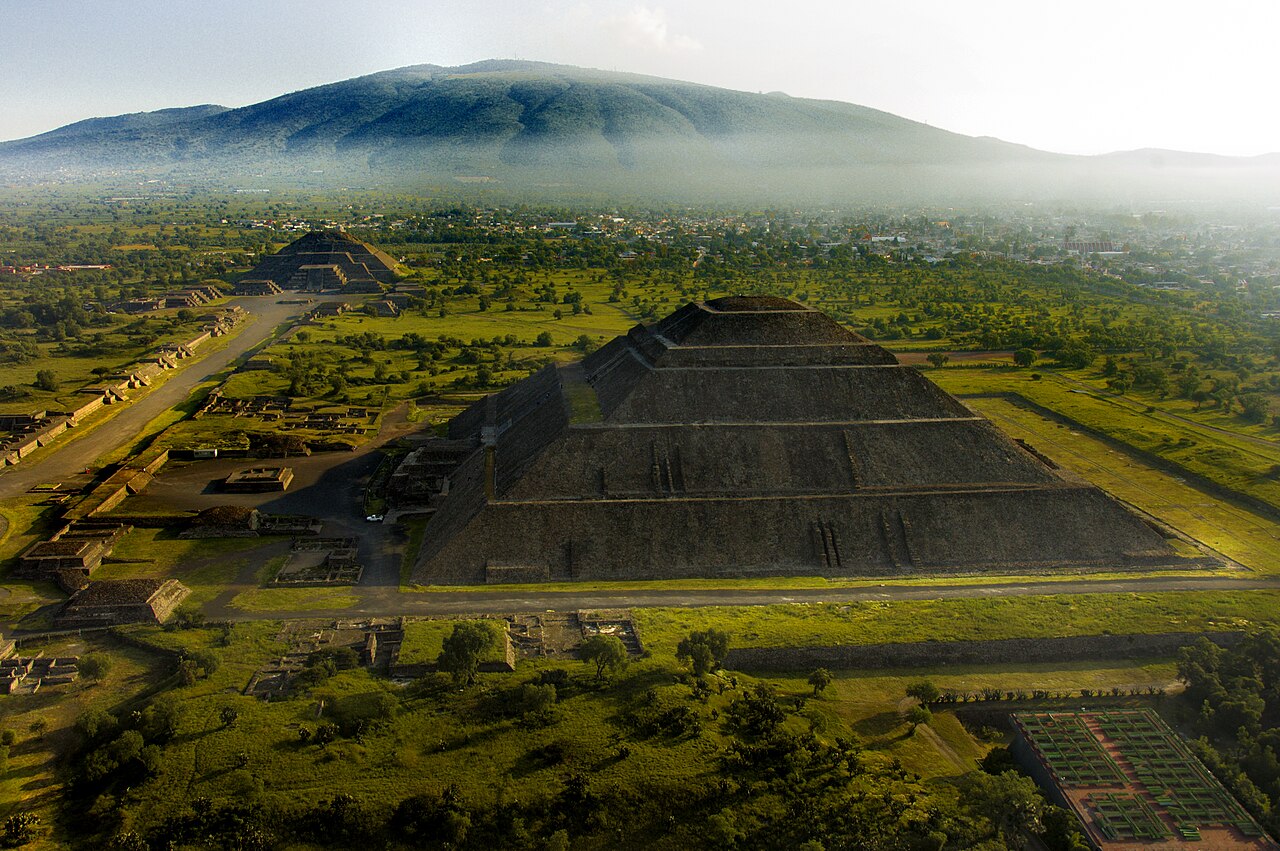
Teotihuacan. Teotihuacan was the first great metropolis of the Americas. Founded around 100 BCE in the highlands near today's Mexico City - it began as a religious center of the Mexican Plateau, its great monuments under continuous construction until about 250 CE - it grew until, at its zenith in the first half of the first millennium CE, it was the largest city in the Americas - around 100,000 people, possibly the sixth-largest city in the world at that epoch. It was not an Aztec city: it predated the Aztec Empire by many centuries, and the Aztecs themselves named it, in awe, 'the place where gods were born.' The city was a planned wonder: the Pyramid of the Sun and the Pyramid of the Moon - among the most architecturally significant pyramids of the pre-Columbian Americas - rose along the great Avenue of the Dead, while the common people lived in multi-floor apartment compounds unique in the ancient Americas; eighty to ninety percent of the valley's population lived in the city, which covered 21 square kilometers and exported obsidian tools across Mesoamerica.
Teotihuacan's influence reached astonishing distances: its presence is documented at sites in Veracruz and deep in the Maya region, where it intervened in the dynastic politics of Maya cities - whether it was the center of a territorial empire is debated; its cultural empire is not. Around 550 CE the city's great monuments were sacked and systematically burned - possibly amid the climate catastrophes of those years - and Teotihuacan slowly emptied. But the later peoples of Mexico never forgot it: the Aztecs claimed common ancestry with its builders and made pilgrimages to its ruins, believing the gods had created the universe there.
 Britannica: Teotihuacán civilization
 World History Encyclopedia: Teotihuacan
 Humanities LibreTexts: 12.2: Teotihuacan
 UNESCO World Heritage Centre: Pre-Hispanic City of Teotihuacan