 Go Back

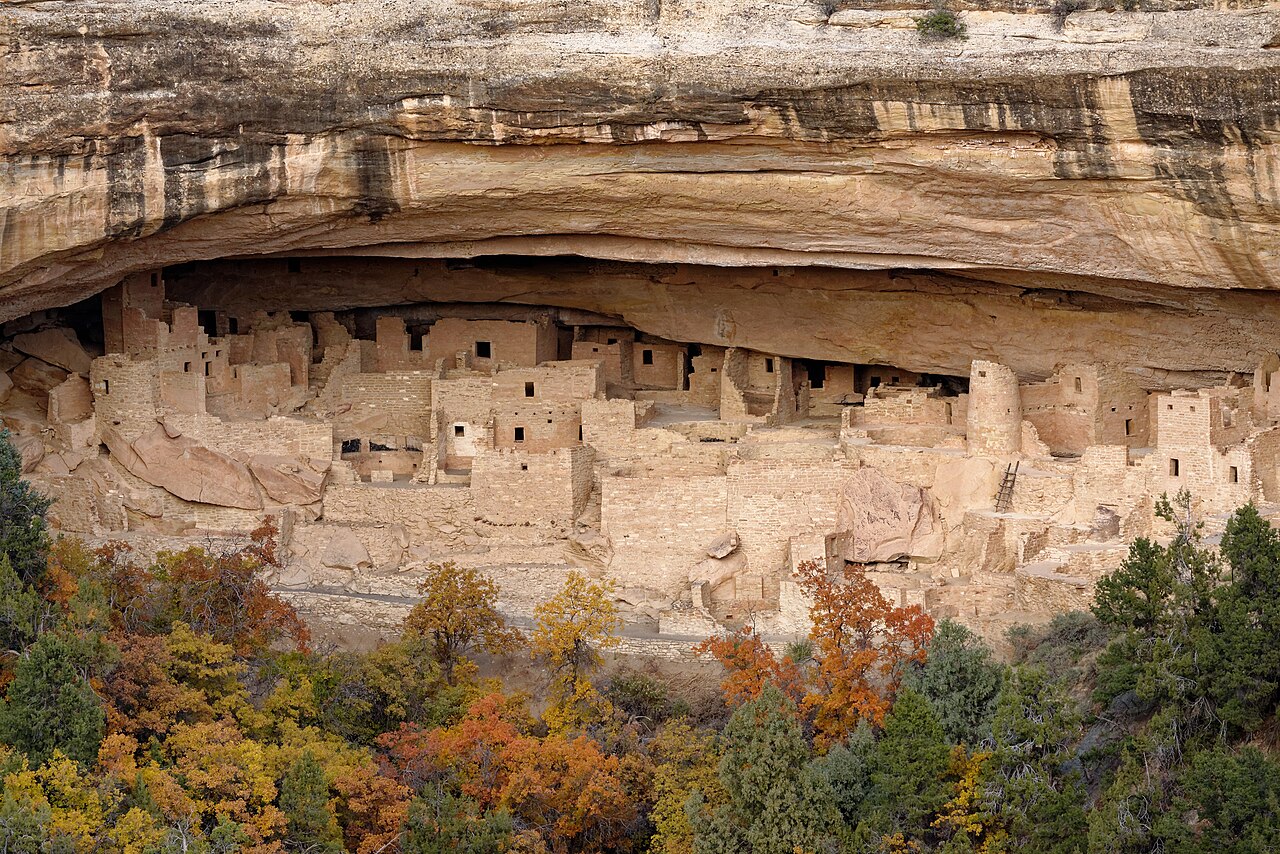
The Ancestral Puebloans. The Ancestral Puebloans were the great civilization of the American Southwest - the ancestors of today's Pueblo peoples. They lived across the Colorado Plateau in pit houses, clan houses, grand stone pueblos, and the famous cliff dwellings of Mesa Verde, built into canyon walls for defense; three UNESCO World Heritage Sites - Mesa Verde, Chaco Canyon, and Taos Pueblo - preserve their achievement. Their roots run deep - archaeologists trace the culture's emergence back many thousands of years in the Southwest - and their world was connected by a complex network of roads and communities centered on the great houses of Chaco Canyon; the kiva, the circular ceremonial chamber, was the heart of every community, and their architecture itself encoded a sophisticated knowledge of celestial cycles.
For centuries this civilization flourished in an unforgiving land of mesas and canyons, farming maize where rain was scarce and building their knowledge of the sky into the very alignment of their walls; then, in the 13th century, the great cliff dwellings and canyon cities were abandoned, their people migrating south and east to the pueblos along the Rio Grande where their descendants live today. The older name 'Anasazi' is now avoided: it comes from the Navajo word for 'ancestors of our enemies,' and today's Pueblo peoples consider it derogatory - a reminder that these ruins were never a vanished race's but the homes of a living people's ancestors, whose community at Taos is still inhabited after a thousand years. The cliff dwellings were first brought to wide attention when the rancher Richard Wetherill explored Mesa Verde in 1888-1889, and it was he who applied the Navajo exonym that archaeology later retired.
 Britannica: Chaco Culture National Historical Park
 World History Encyclopedia: Chaco Canyon
 Humanities LibreTexts: 8.2: Ancestral Puebloans (700 CE – 1300 CE)
 UNESCO World Heritage Centre: Mesa Verde National Park