 Go Back

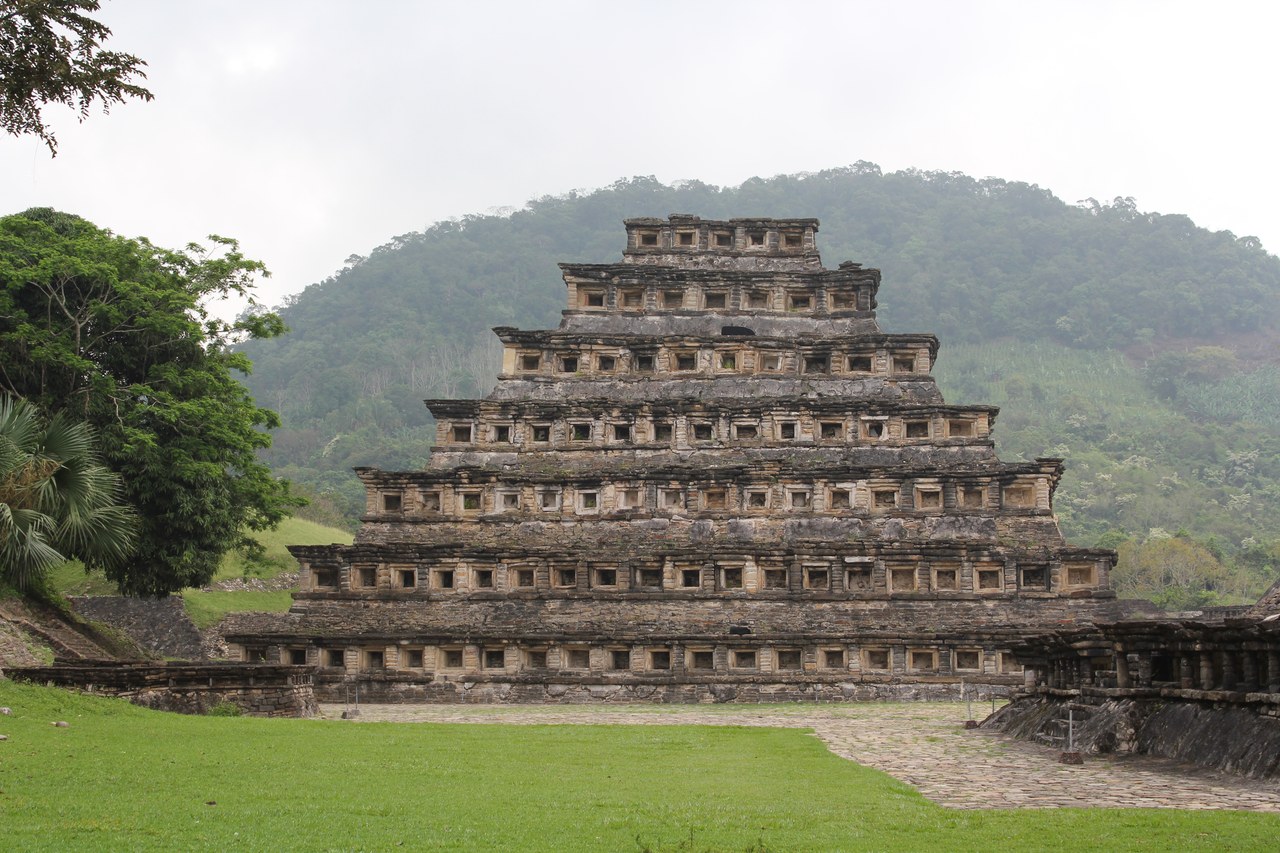
The Classic Veracruz Culture. The Classic Veracruz culture (c. AD 600-1200) flourished along the Gulf coast of Mexico in the centuries after the fall of Teotihuacan. Its people built ceremonial cities dominated by stepped pyramids, palaces, and ballcourts, the greatest of them El Tajin, near the modern city of Papantla. At its height El Tajin was one of the largest cities in Mesoamerica, its plazas framed by pyramids decorated with recessed niches, carved panels, and flying cornices, the most famous being the Pyramid of the Niches, whose 365 niches are often linked to the solar year.
The culture is renowned above all for its art of the ballgame. The ritual ballgame, played with a heavy rubber ball, had deep religious meaning across Mesoamerica, and Veracruz artists carved its equipment and its mythology in extraordinary detail: the famous palmas, yokes, and hachas, ornate stone objects worn or displayed in connection with the game, show players, deities, and scenes of sacrifice. El Tajin alone has more than a dozen ballcourts, and its carved panels depict the ritual death that followed the sacred game.
Classic Veracruz society was a world of rival city-states sharing a common elite culture. Its rulers traded and warred along the coast, its sculptors worked in a distinctive style of interlaced scrolls and figures, and its influence reached deep into the Mexican highlands and toward the Maya region. Scholars still debate the ethnicity of its people, who may have been ancestors of the Totonacs of the region today.
The culture declined around 1200 as new powers rose in central Mexico, and El Tajin was abandoned to the forest, its ruins hidden until the eighteenth century. Rediscovered and excavated, it is now a UNESCO World Heritage site, and its pyramids and ballcourt carvings stand among the masterpieces of ancient Mexico.
 Smarthistory: Classic Veracruz
 UNESCO World Heritage Centre: El Tajin, Pre-Hispanic City
 World History Encyclopedia: El Tajin
 Wikipedia: Classic Veracruz Culture