 Go Back

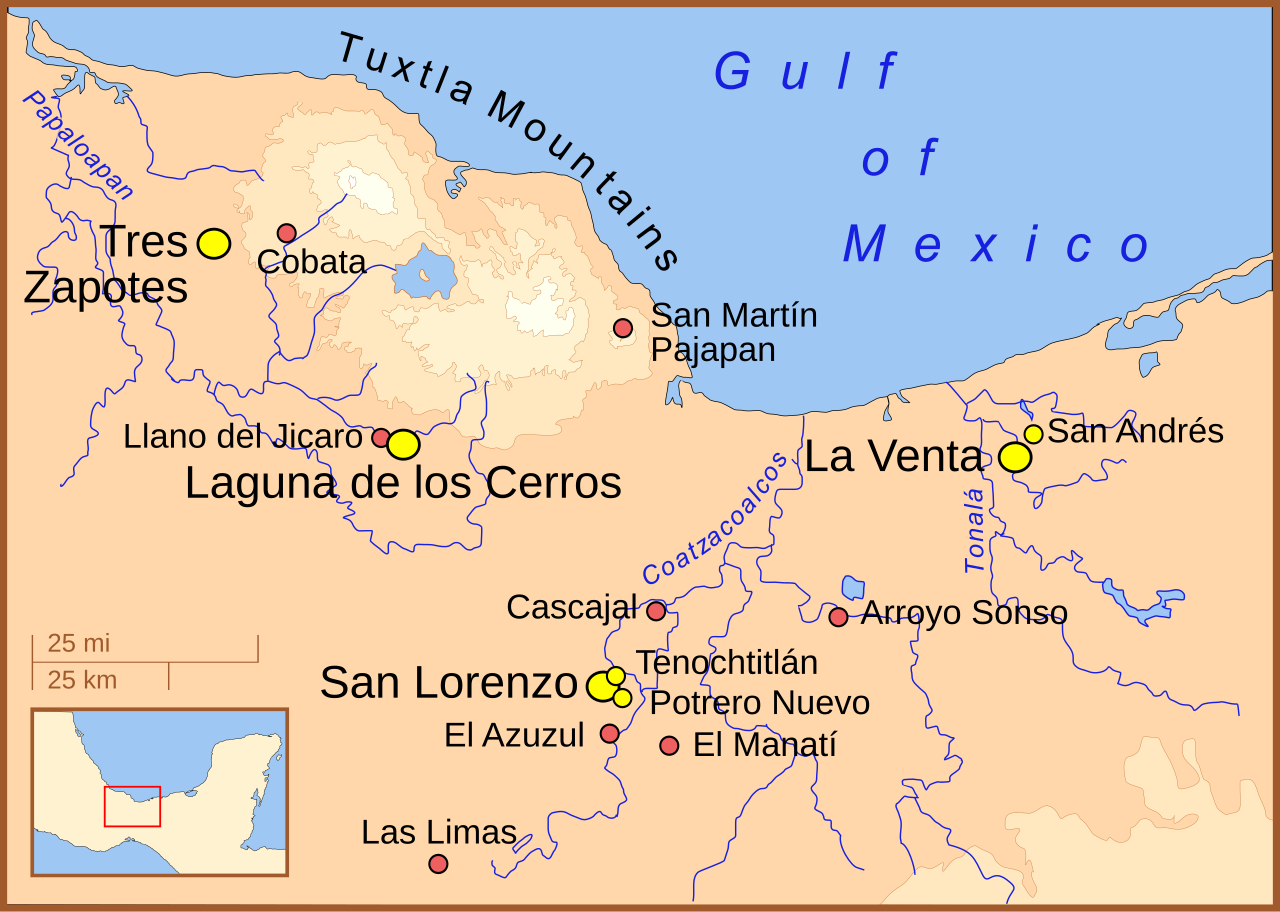
The Olmec Civilization. The Olmecs were the first great civilization of Mesoamerica - often called its 'mother culture.' From roughly 1200 to 400 BC, they flourished in the tropical lowlands of today's Veracruz and Tabasco, on Mexico's Gulf Coast, at a time when most of the Americas knew only villages; they are counted among the cradles of civilization in the Americas. Their first center was San Lorenzo Tenochtitlan; when it declined, they moved to La Venta, with other major sites at Tres Zapotes and Laguna de los Cerros. The Olmecs are famous above all for their colossal heads: massive basalt sculptures, up to several tons each, portraying what are assumed to be individual rulers - the first monumental portraits in the Americas. One head from San Lorenzo stands 1.8 meters tall; a famous seated figure known as 'The Wrestler' shows the same mastery in miniature - Olmec artists were equally at home with six-ton monuments and tiny figurines.
Much of what defines Mesoamerican civilization appears first with the Olmecs: monumental ceremonial centers, the ballgame, long-distance trade in jade and obsidian, and religious imagery that later cultures would inherit. By about 400 BC the great Olmec centers had been abandoned and the population of the eastern heartland dropped precipitously - but elements of their tradition lived on in successor societies, and the pattern they set of cities, kings, gods, and art became the template for every civilization that followed in Mesoamerica, from the Maya to the Aztecs. For centuries afterward the Olmec heartland saw only intermittent occupation, its former glory remembered by the cultures that inherited its gods and its art. They were, in the truest sense, a cradle of American civilization.
 Britannica: Olmec
 World History Encyclopedia: Olmec Civilization
 Humanities LibreTexts: 12.24: The Olmec
 The Metropolitan Museum of Art: Olmec Art