 Go Back

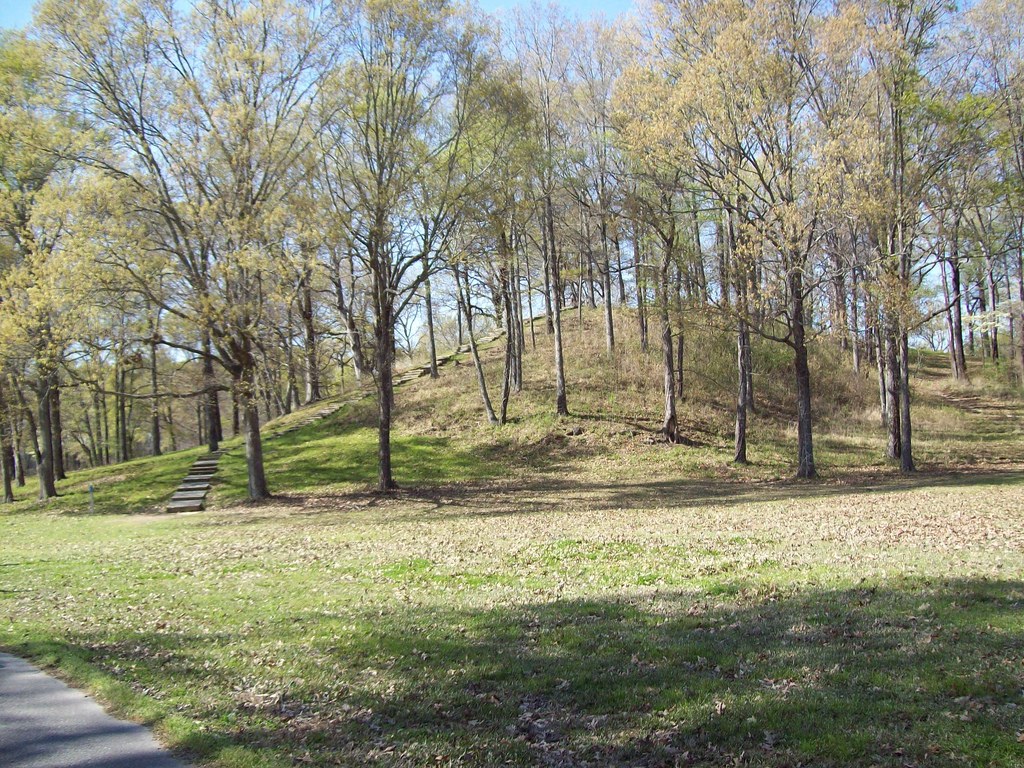
The Poverty Point Culture. The Poverty Point culture (c. 1700-1100 BC) built the first great monumental earthworks of North America, centuries before farming transformed the continent. Its center, the site called Poverty Point in northeastern Louisiana, was the hub of a network of hunter-gatherer communities stretching across the lower Mississippi valley and the Gulf coast. There, around 1500 BC, people raised an enormous complex of six concentric earthen ridges, broken by radiating aisles, together with great mounds, including one, known as Mound A, that rises over twenty meters high.
The scale of the work is astonishing. The earthworks at Poverty Point required the movement of hundreds of thousands of cubic meters of soil, carried in basket loads by people who had no agriculture, no pottery tradition to speak of, and no beasts of burden. Yet these were no wandering bands: the site supported a large settled population sustained by the rich fish, game, and wild plants of the bayous, and its workshops produced beads, pendants, and tools on a remarkable scale.
Poverty Point stood at the center of a vast exchange network. Copper from the Great Lakes, galena from Missouri, flint from the Ohio valley, shells from the Gulf, and steatite from the Appalachians all flowed into the site, evidence of trade or gift routes reaching across much of eastern North America. Clay cooking balls, animal figurines, and finely carved beads and effigies are the signatures of the culture at sites across the region.
By about 1100 BC the center faded and the network dissolved, for reasons still debated. Poverty Point was largely forgotten until aerial photography revealed the design of its ridges in the mid-twentieth century. Today it is a UNESCO World Heritage site, recognized as proof that monumental architecture and far-flung exchange in North America began not with farmers or chiefs, but with communities of hunter-gatherers three and a half thousand years ago.
 UNESCO World Heritage Centre: Monumental Earthworks of Poverty Point
 National Park Service: Poverty Point World Heritage Site
 Metropolitan Museum of Art: Poverty Point (2000-1000 B.C.)
 Wikipedia: Poverty Point Culture