 Go Back

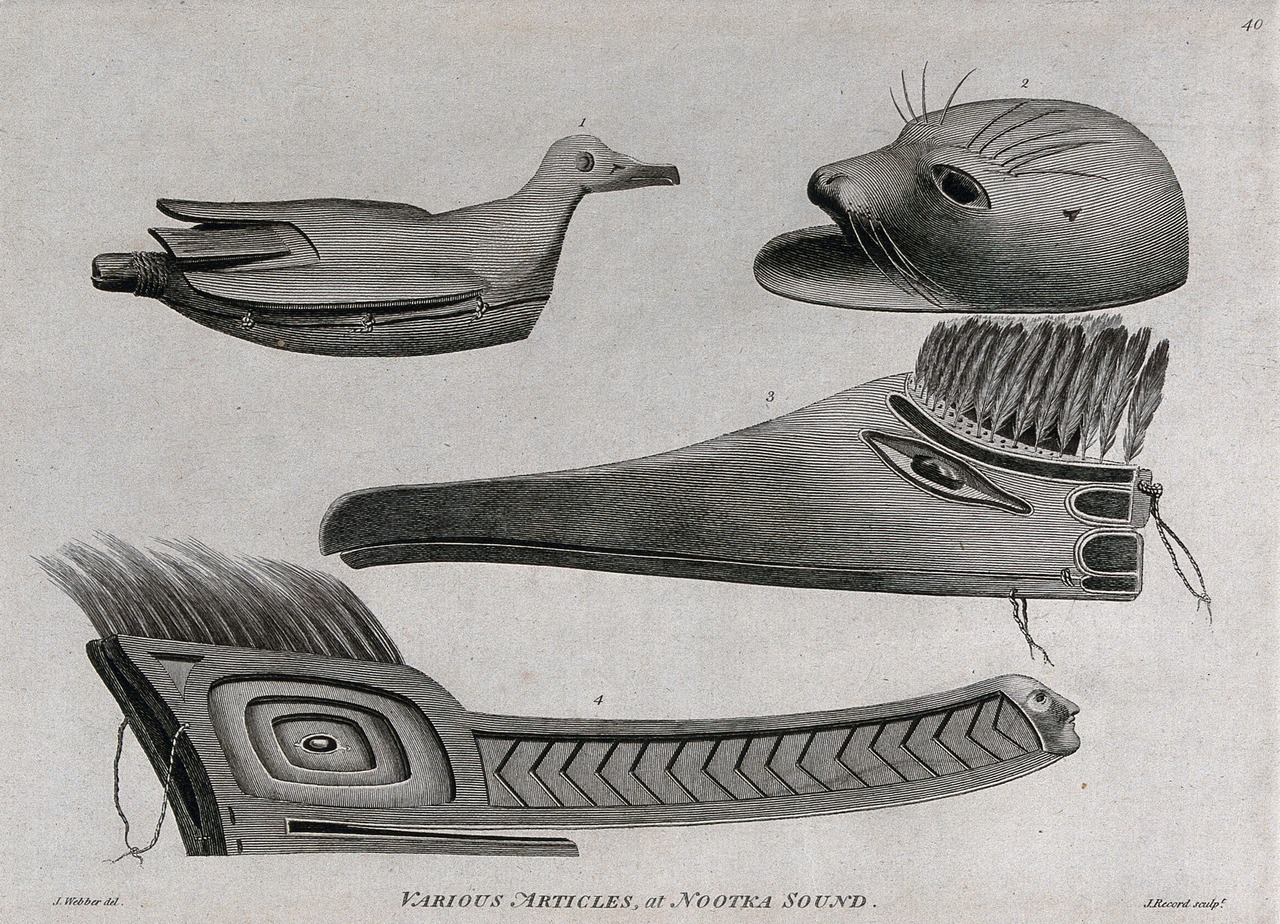
Along the foggy, island-strewn coast from northern California to Alaska, Indigenous peoples built one of the most remarkable non-agricultural civilizations in world history. Tlingit, Haida, Tsimshian, Kwakwaka'wakw, Nuu-chah-nulth, Coast Salish and other nations drew their wealth from the sea: five species of salmon, halibut, herring, shellfish, sea mammals and, for some, whales. This maritime abundance supported large permanent villages of massive cedar-plank houses, dense populations and elaborate art, all without farming.
Northwest Coast society was ranked and competitive. House groups held inherited rights to fishing sites, hunting grounds and trade routes, and chiefs validated their status through the potlatch, great feasts at which hosts distributed enormous quantities of goods, blankets, canoes, carved boxes and coppers, to witnesses. The more a chief gave away, the greater his renown. Enslaved war captives formed a lower class in many communities. Monumental carved poles raised before houses proclaimed lineage histories and crests, while masks, bentwood boxes and woven Chilkat blankets displayed a sophisticated art style governed by strict aesthetic rules.
The region's peoples were master mariners and traders. Haida and Tlingit seagoing canoes, carved from single giant cedars, could carry dozens of paddlers on voyages of hundreds of kilometers for trade, war and ceremony. Grease trails carried coastal products such as eulachon oil and dentalia shells deep into the interior, returning furs, obsidian and copper. Dentalia shells circulated as a standard of value along the whole coast. Warfare and slave-raiding were real parts of this competitive world, but so were peace marriages, trade partnerships and shared ceremonies linking distant villages.
European and American ships entered this world in the late eighteenth century, seeking sea otter furs for the China trade. Coastal nations quickly became shrewd trading partners, and chiefs such as the Tlingit leader Kowee and the Haida chief Cuneah grew wealthy managing the exchange. But contact also brought smallpox and other epidemics that killed immense numbers, sometimes half a village in a single outbreak. Even so, Northwest Coast peoples adapted rather than vanished: by the early twentieth century their potlatches, carving arts and nations had carried through the worst of colonial pressure, battered but unbroken.
 Britannica: Northwest Coast Indian
 The Canadian Encyclopedia: Northwest Coast Indigenous Peoples
 The Metropolitan Museum of Art: Northwest Coast Musical Instruments