 Go Back

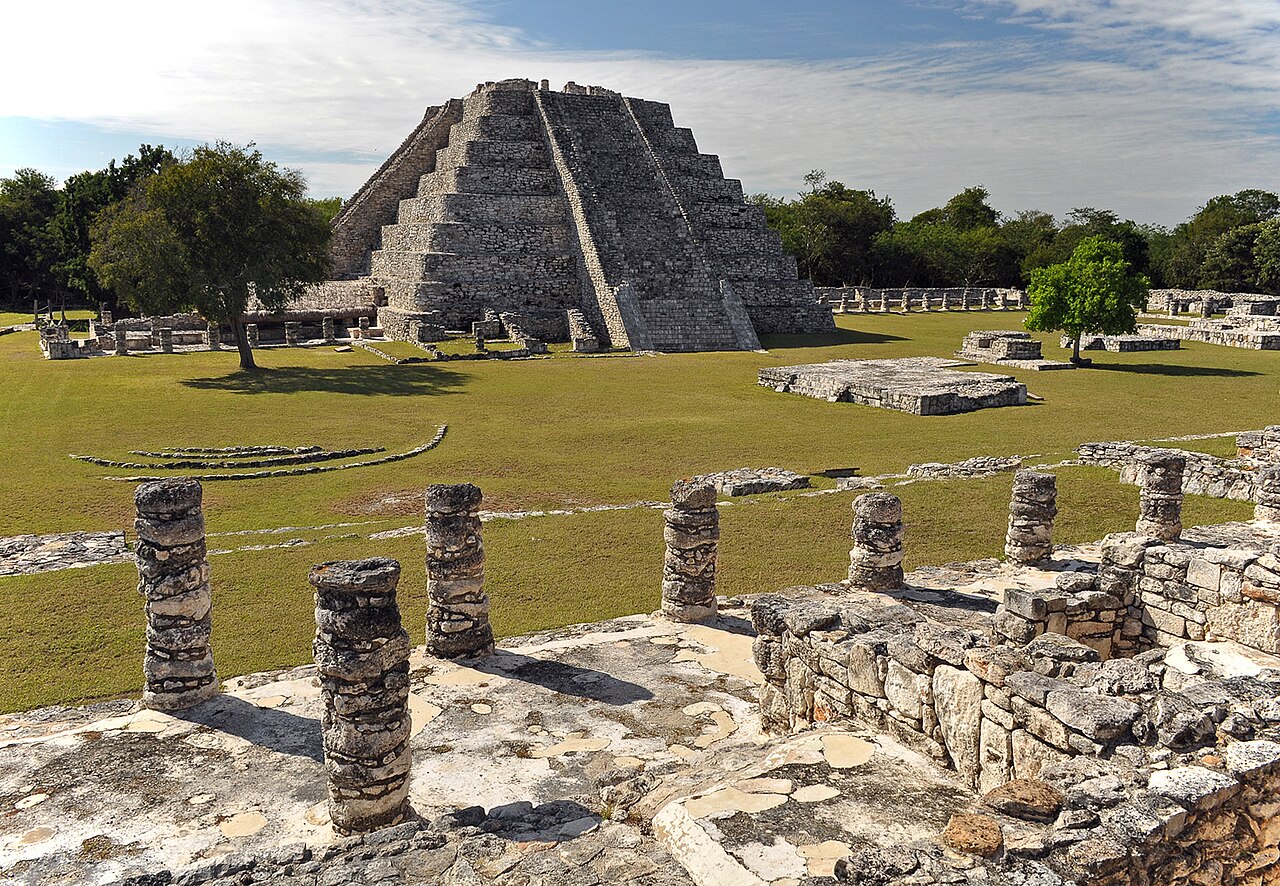
The Postclassic Maya: Chichen Itza and Mayapan. When the Classic Maya cities of the south collapsed in the 9th century, Maya civilization did not die - it moved north. In the northern Yucatan, Chichen Itza rose to dominate the peninsula from the Terminal Classic into the Postclassic (c. 900-1200 AD): a city whose architecture blends Maya Puuc and Chenes styles with striking central-Mexican forms - once read as conquest from Tula, now mostly understood as cultural diffusion across a connected Maya-Mexican world. Its great pyramid, the Castillo of Kukulkan, stands over a hidden cenote never yet seen by archaeologists - the whole city sits on the buried rim of the Chicxulub impact crater, whose fractured rock feeds the sinkholes that were its water supply in a land without rivers - and its Sacred Cenote, dredged by Edward Thompson from 1904 to 1910, yielded gold, jade, pottery, incense, and human remains bearing wounds consistent with sacrifice to the rain god Chaac.
As Chichen Itza declined around 1200, Mayapan inherited the leadership of the northern Maya for another two centuries, before the peninsula fragmented into rival provinces - the divided political landscape that the Spanish would later exploit. The Postclassic period in the Maya chronology runs from about 950 to the conquest era, and modern scholars treat these period divisions as conveniences of dating rather than true cultural decline. The Postclassic was the Maya world's last indigenous age: the K'iche' kingdom expanded in the Guatemalan highlands, and Maya resistance to Spain was so stubborn that the last independent Maya city, Nojpeten in the Peten lakes, fell only in 1697 - more than 170 years after the conquest began.
 Britannica: Mayapan
 World History Encyclopedia: Chichen Itza
 Humanities LibreTexts: 12.6: The Decline of the Maya
 The Metropolitan Museum of Art: Maya Area, 1000–1400 A.D.